We are processing your request.
Please, don’t close or refresh the page.
Barcelona Tickets Sagrada Familia Inside The Basilica
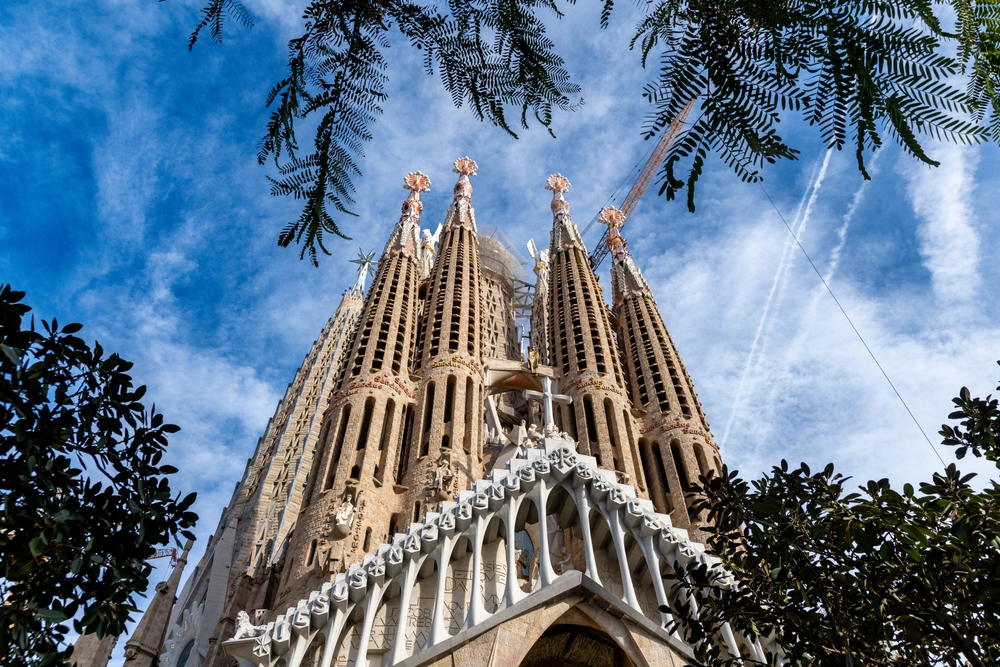
Sagrada Familia basilica in Barcelona

Inside the Sagrada Familia: What to See in the Basilica

Tree-like columns, a 45-metre nave, 289 skylights and stained glass that glows blue in the morning and orange in the evening: a section-by-section guide to the interior.

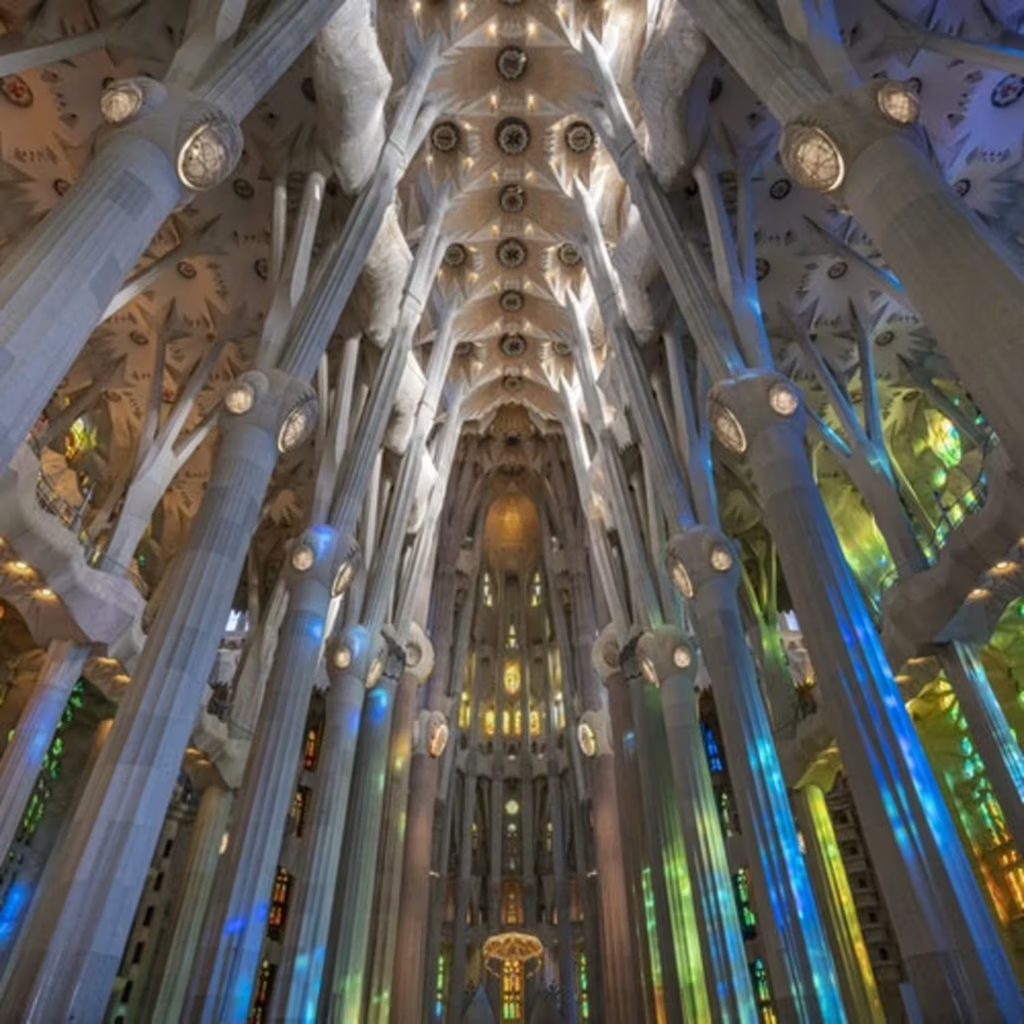
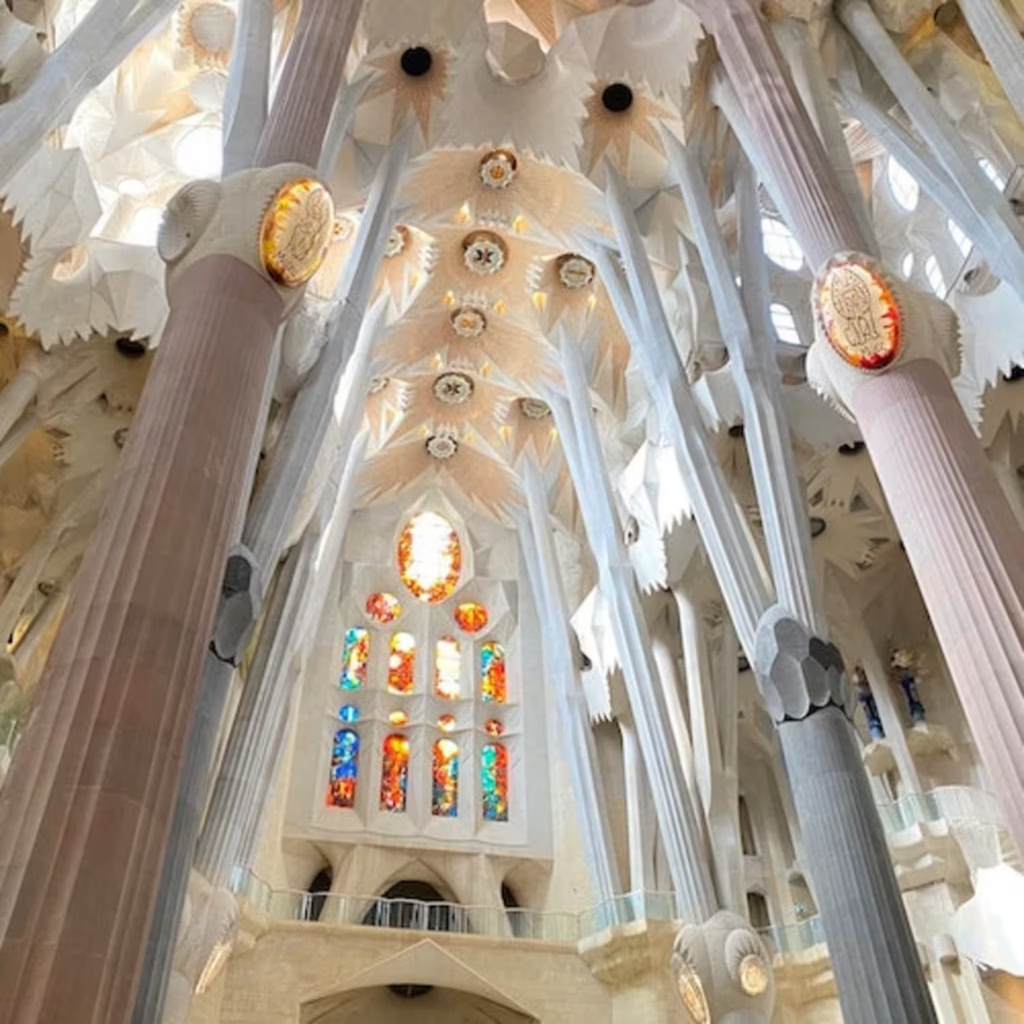
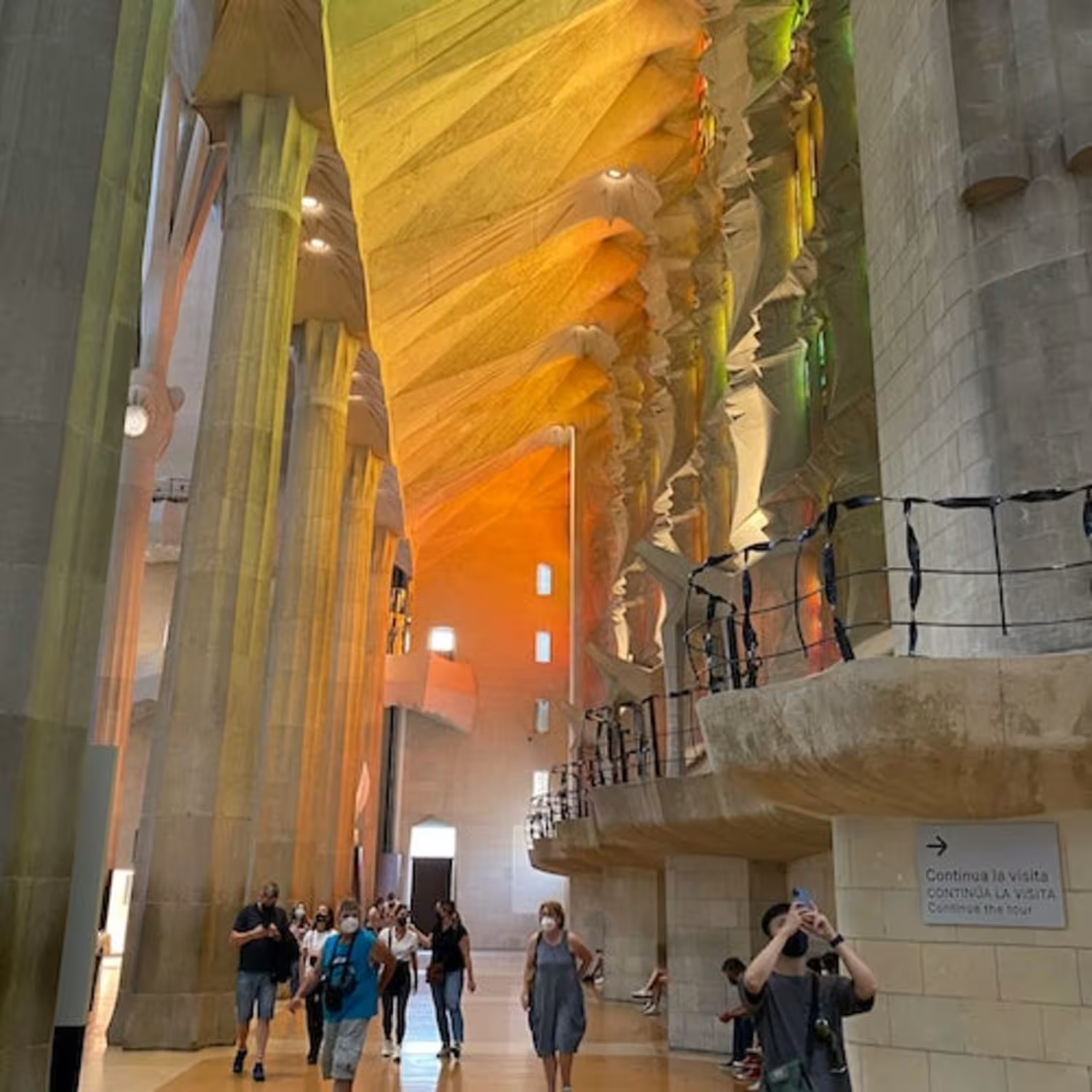
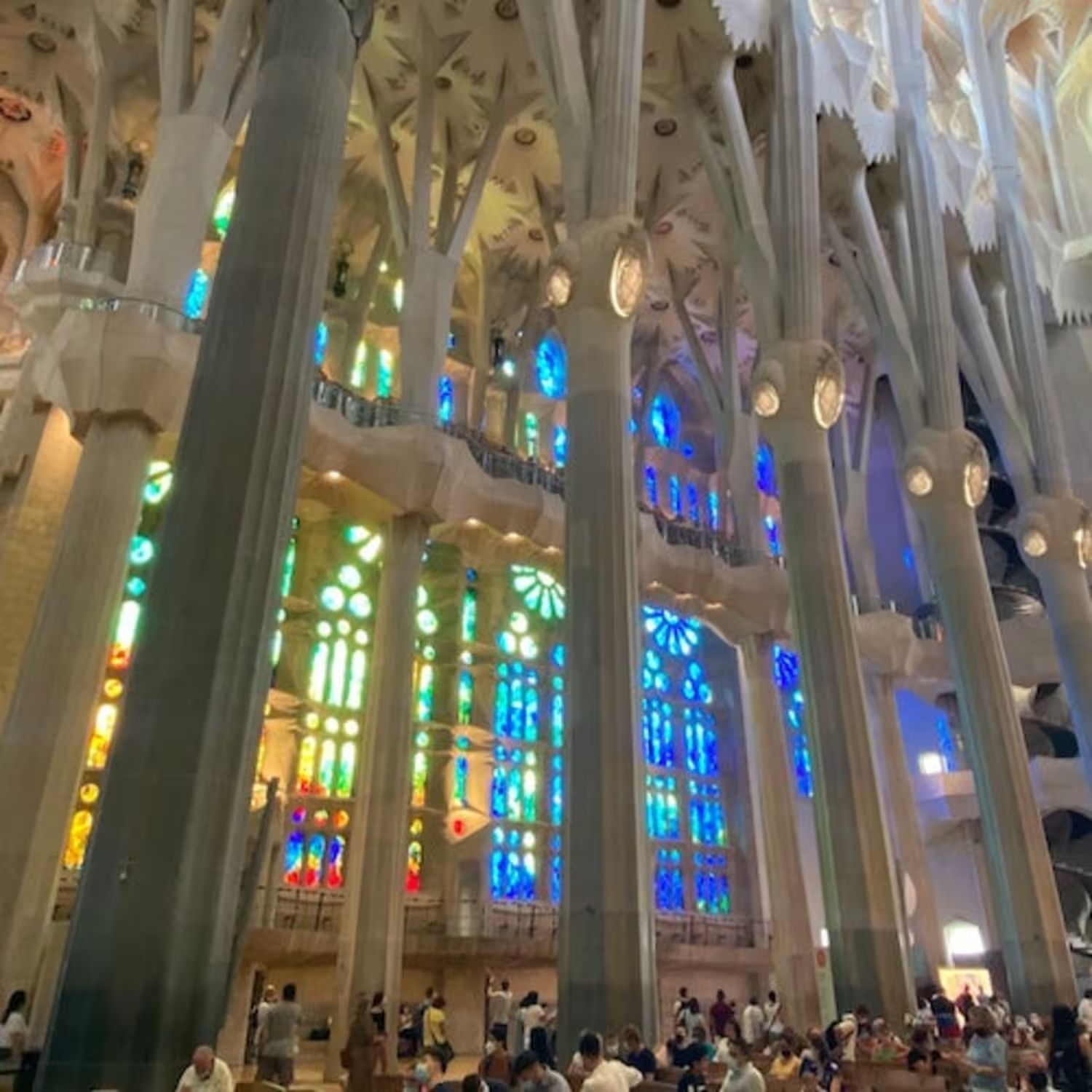
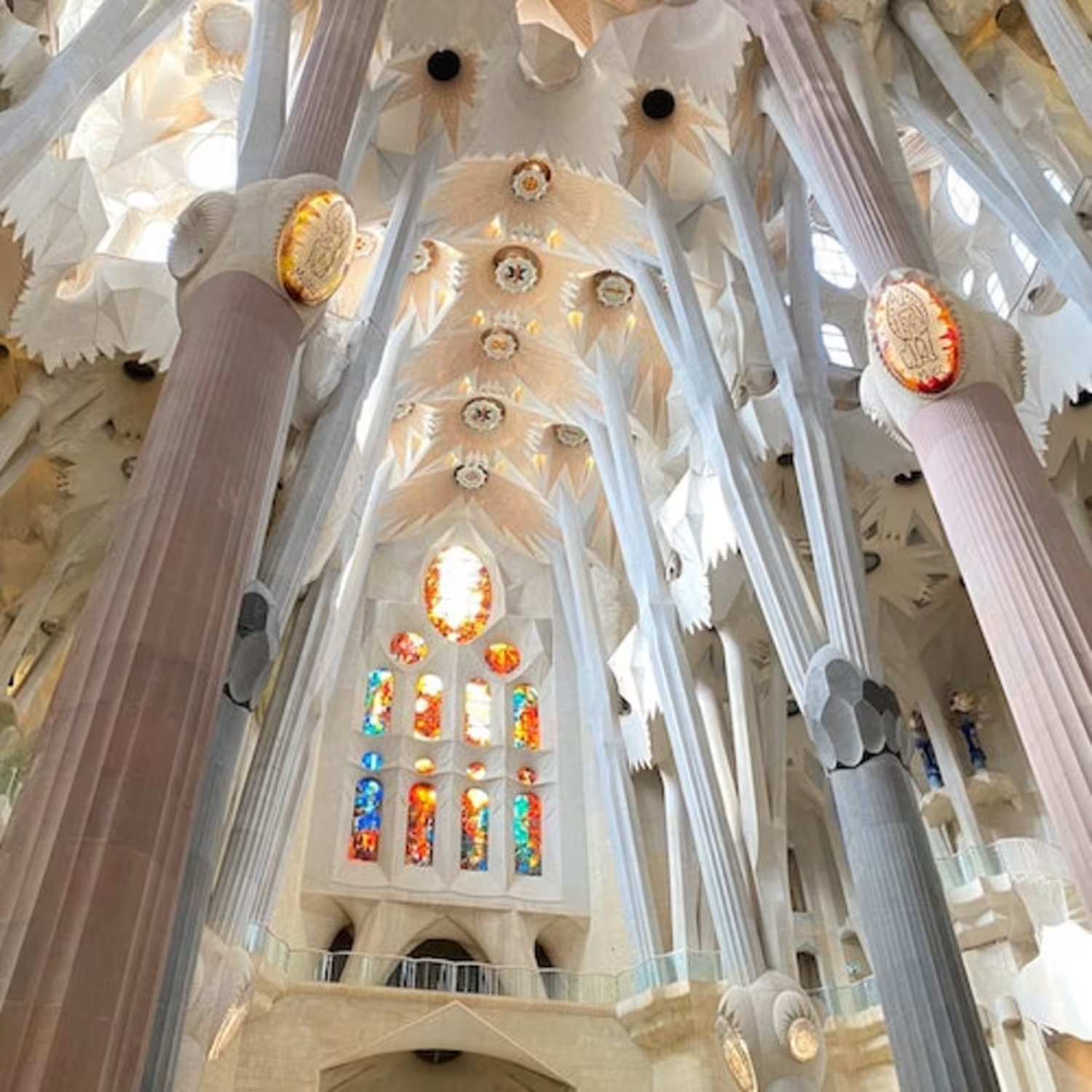
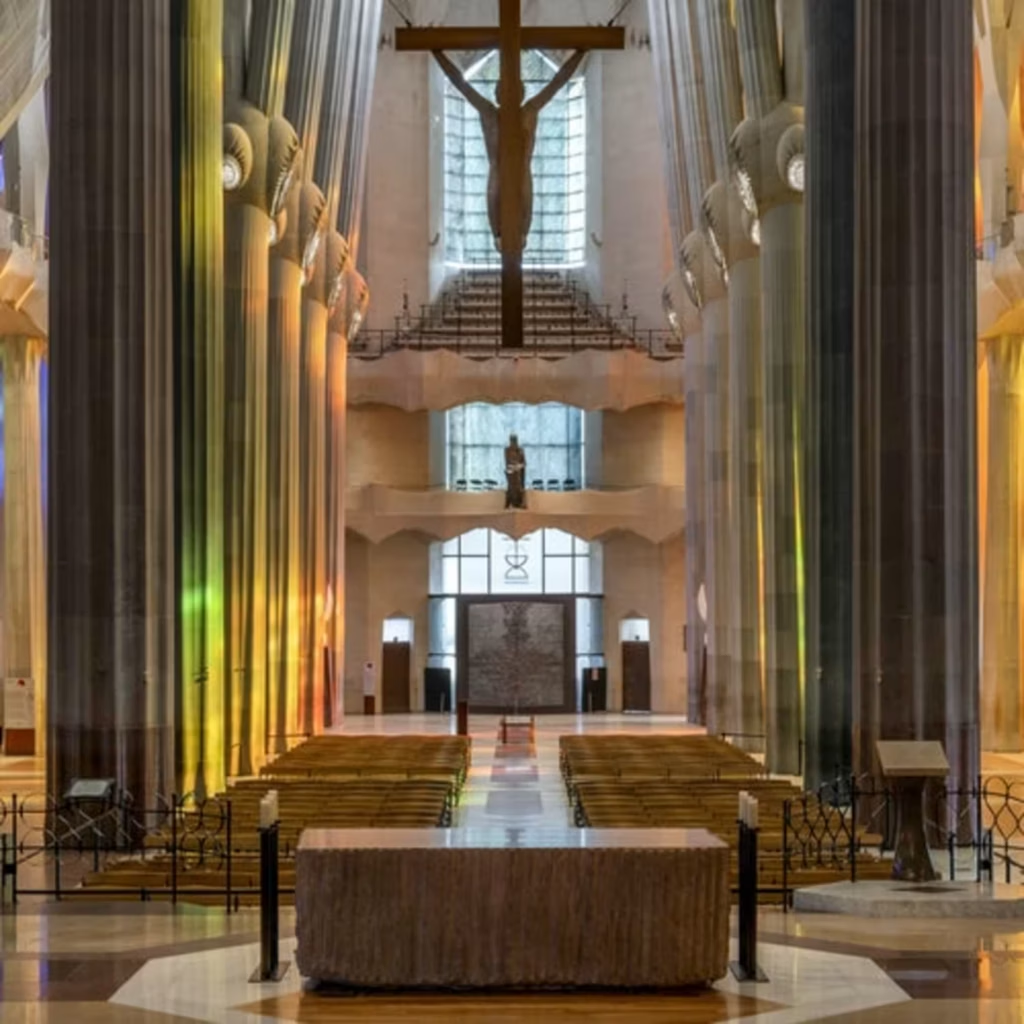
Most people arrive at the Sagrada Familia with the towers in mind, then walk through the door and stop. The interior is a stone forest lit from above: columns that split into branches, vaults that climb in steps of 7.5 metres and stained glass that throws blue light across one side of the nave and orange light across the other.

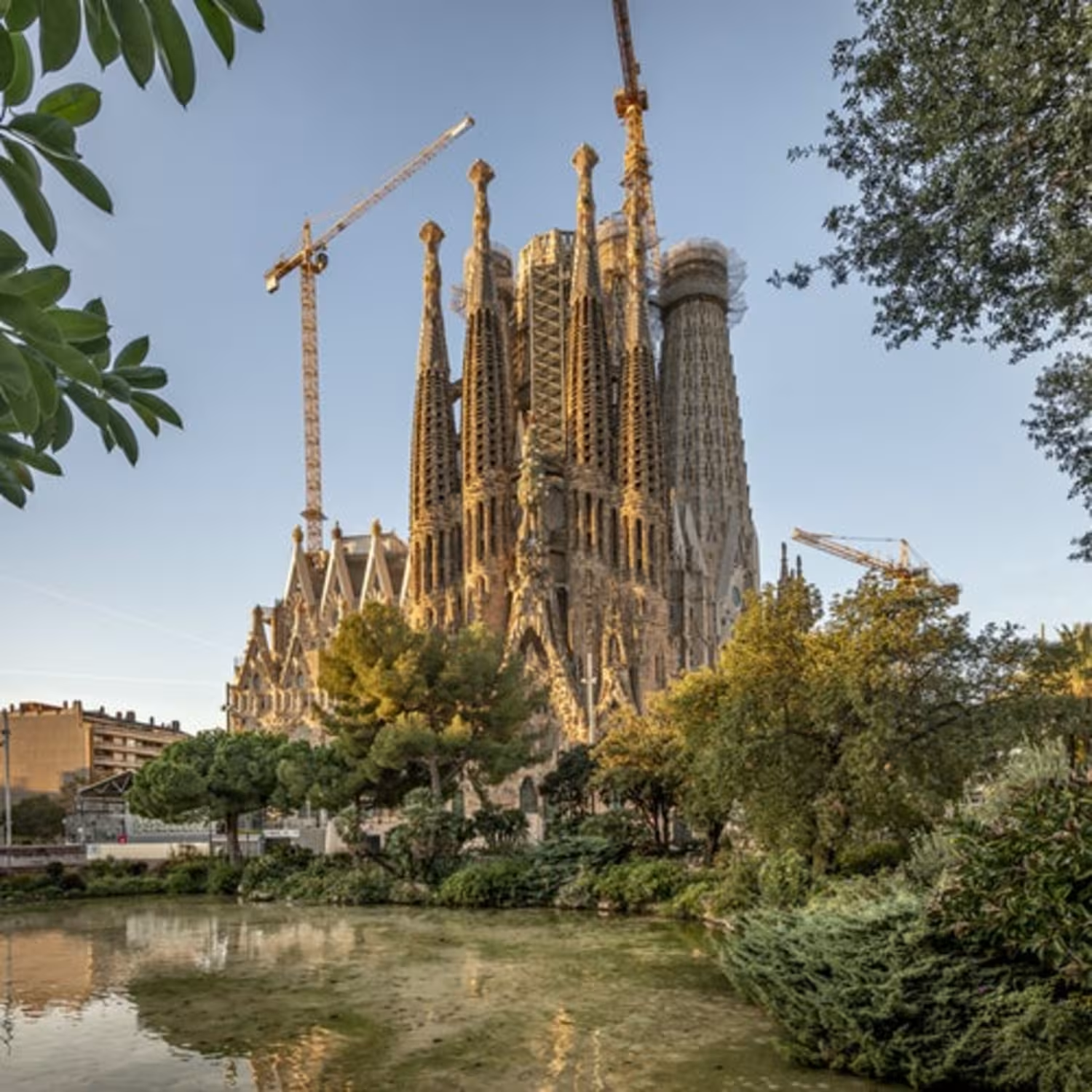
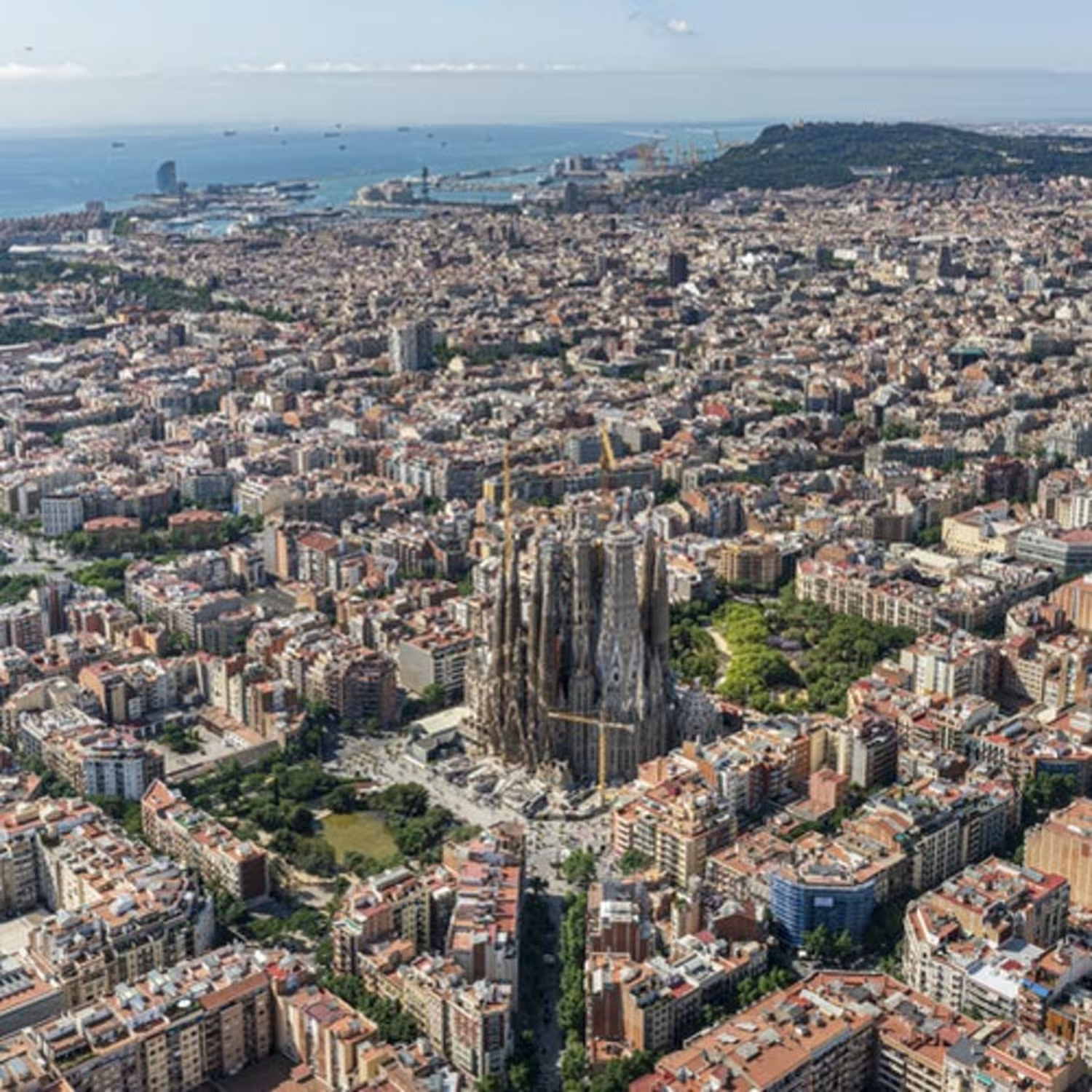
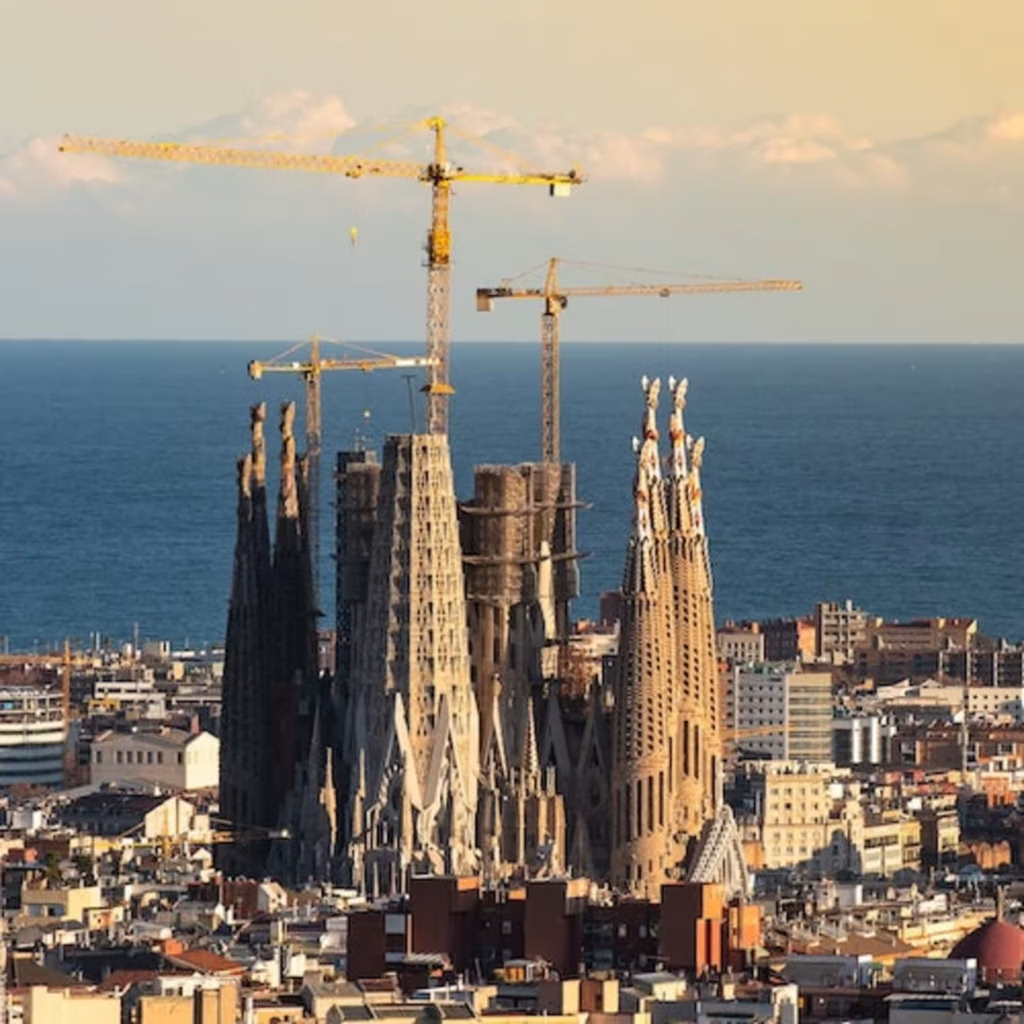
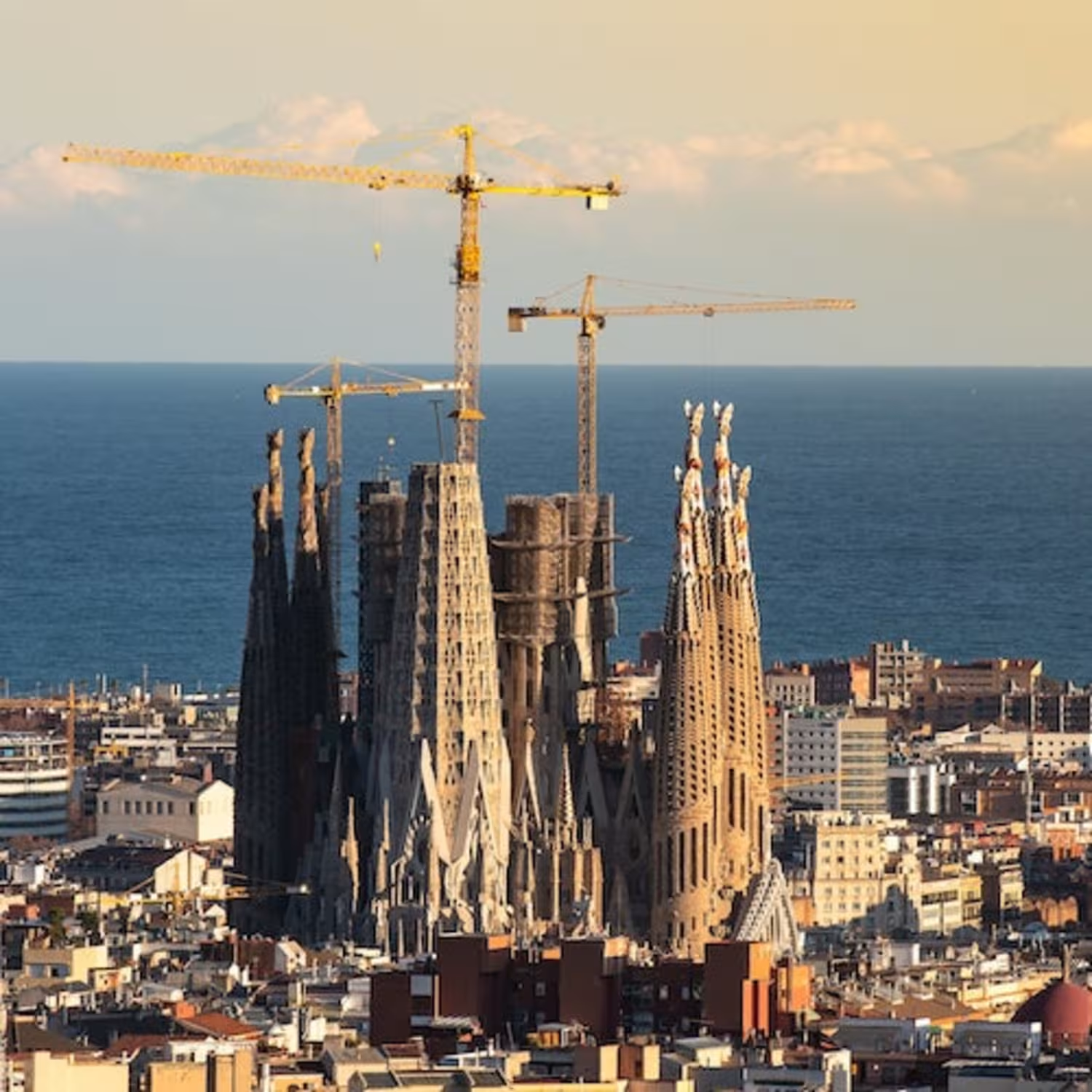
This guide walks you through what you are looking at, section by section: the columns and the stones they are made of, the naves and vaults, the windows, the crossing and apse, the choirs and the museum beneath the Passion façade. It also covers when the light is best, the quiet hour and the rules that apply inside a working church. For the exterior, read our guide to the Sagrada Familia towers and completion.

4.7
(21)

Tickets for the Sagrada Familia: access without queuing up

Highlights

Avoid the usual queues with fast-track entry.

Access the spectacular architecture of Gaudí’s landmark.

Enjoy an audio guide available in English plus 19 other languages.

Appreciate the naturalistic and religious ornamental details inside.

Support the ongoing construction of this historic monument.
4.7
(6)

Sagrada Familia: Gaudí Guided Tour for Small Groups

Highlights

Discover hidden spots while walking through Avinguda Gaudí.

Gain swift entry to Sagrada Familia bypassing regular queues.

Receive an informative live tour available in English, Japanese, Korean, and Chinese.

Explore the fascinating architectural history from Gaudí’s era to today.

Small group size ensures an engaging and personalized experience.
Inside the Sagrada Familia: key facts

Construction began in 1882 and Antoni Gaudí took over the project in 1883; he is buried in the crypt beneath the apse.

Pope Benedict XVI dedicated the church on 7 November 2010, and a papal decree read at the end of that Mass declared it a minor basilica.

The interior is 90 metres long; the central nave is 45 metres high, the crossing 60 metres and the apse vault 75 metres.

The lower sections of the columns use four stones: Montjuïc sandstone, granite, basalt and red porphyry.

289 skylights based on the hyperboloid bring daylight in from the vaults.

The stained glass is the work of Joan Vila-Grau, who has been designing the windows since 1999.

A forest of columns

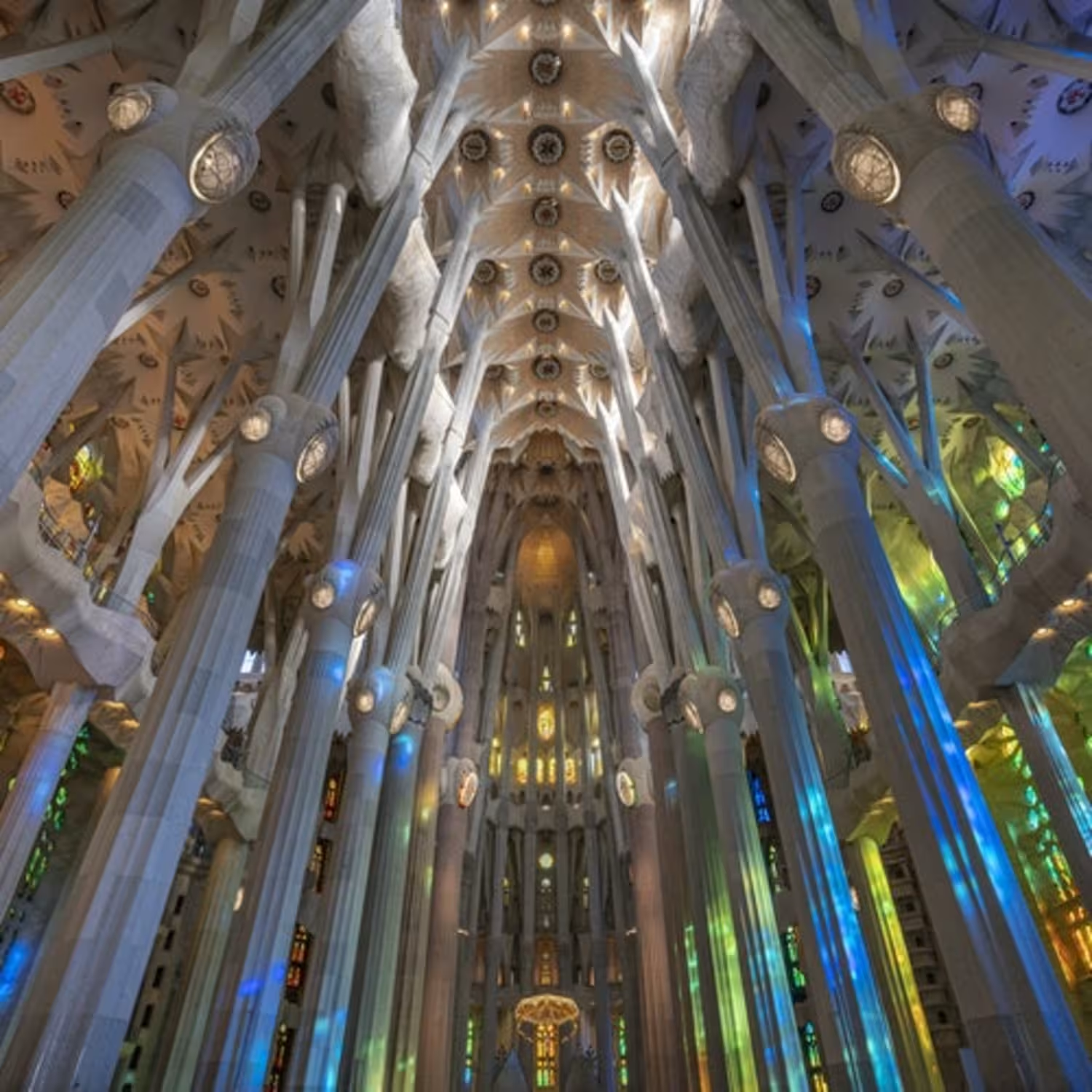
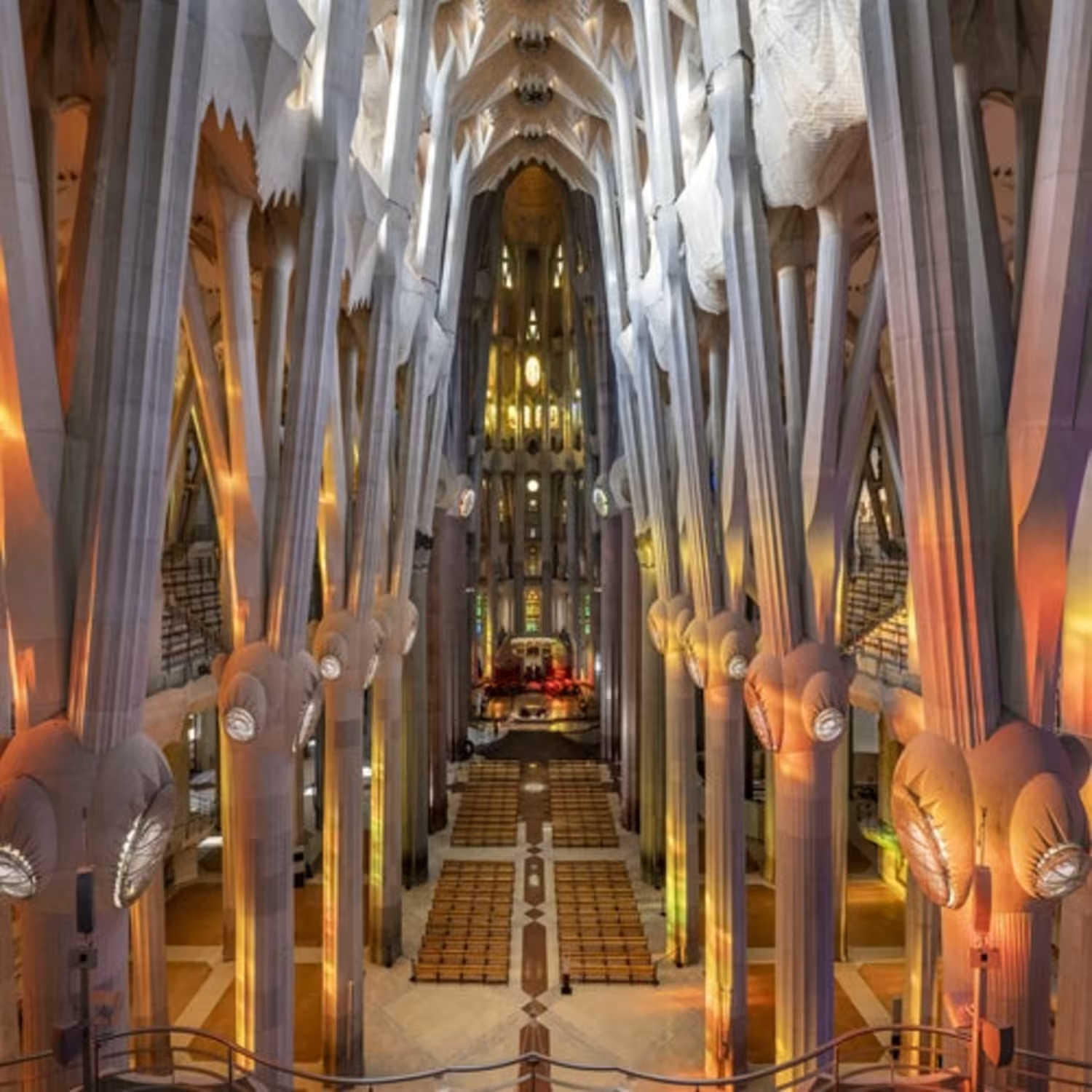
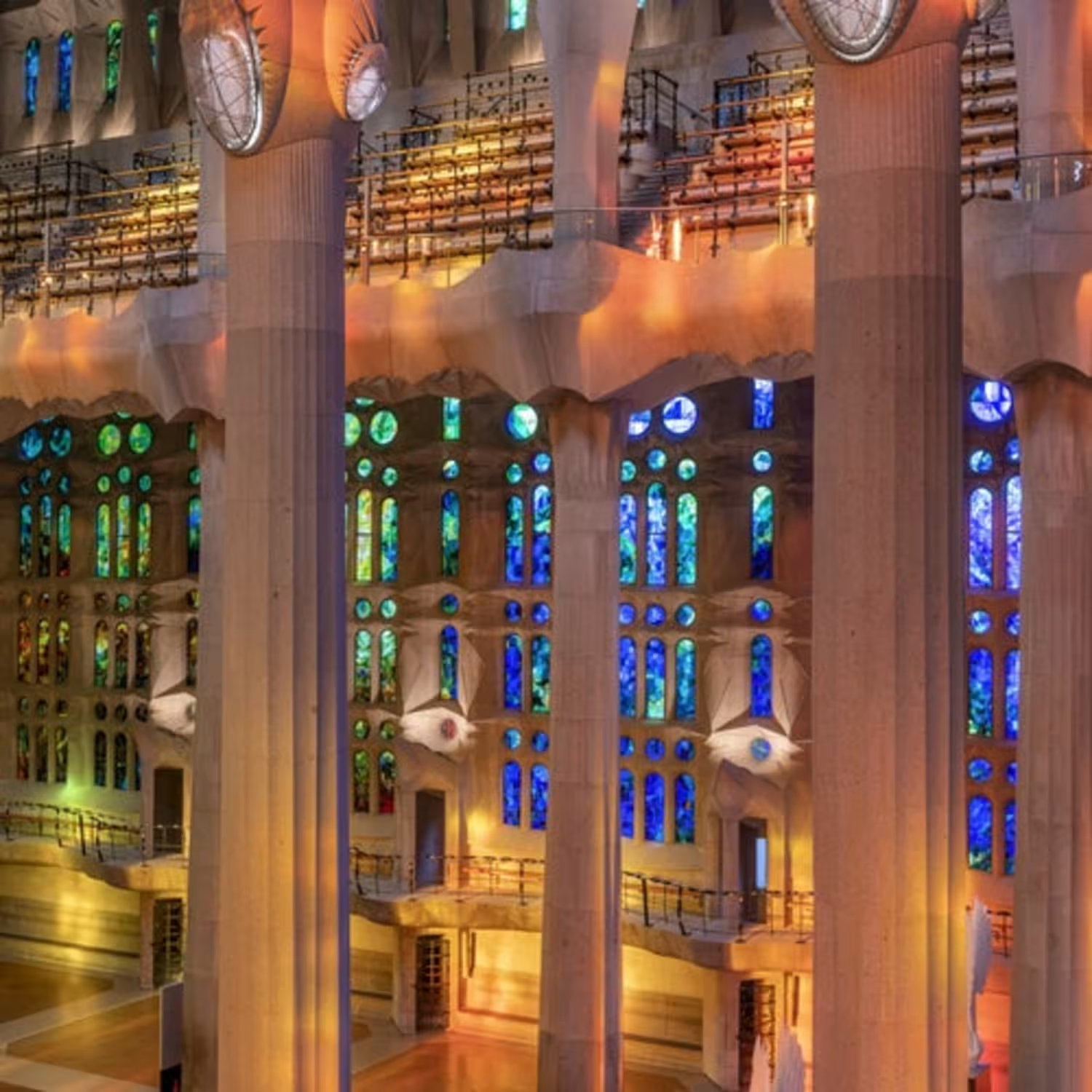
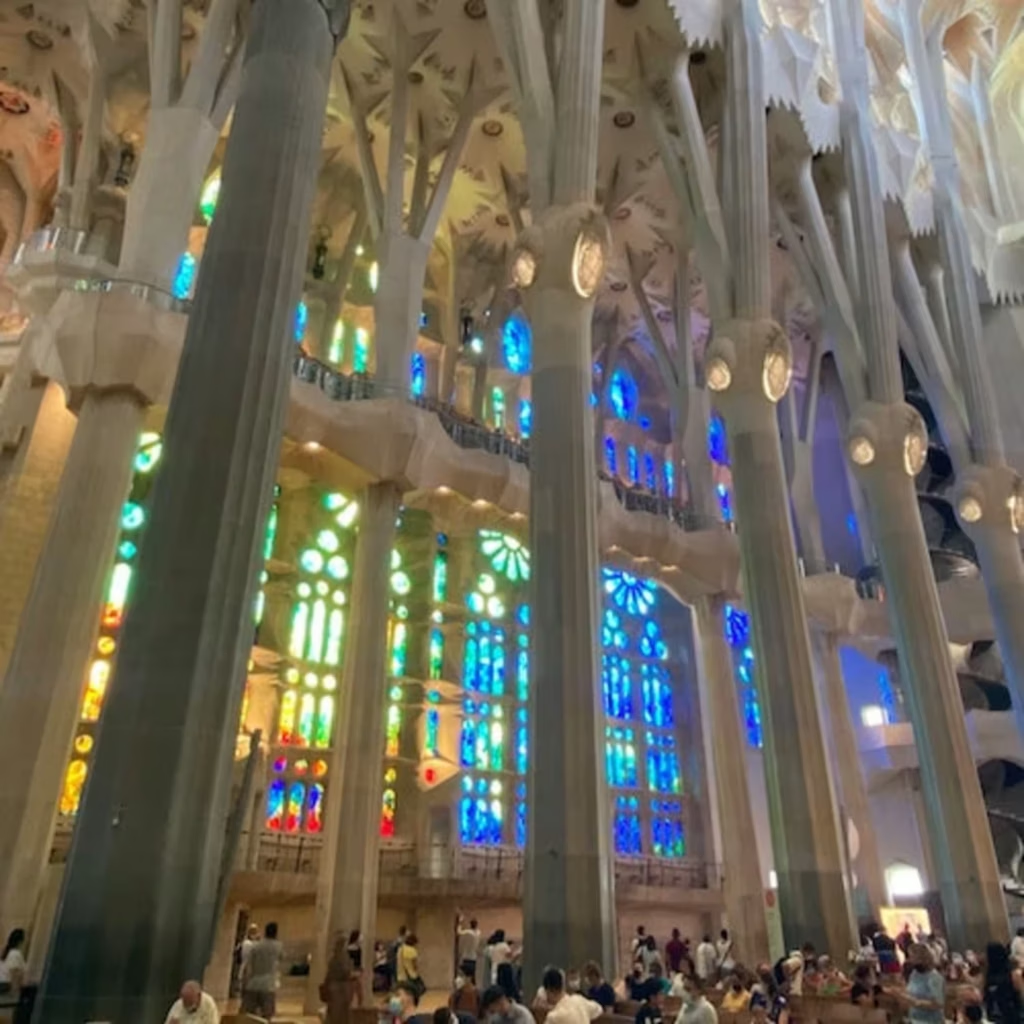
The interior reads like a forest, and the columns are the trees. Each one rises from the floor and branches at different heights, in some cases several times, until the branches meet the vaults. Their form is based on Gaudí's "double twist" design, so no two levels of a column look quite the same as you follow it upwards.

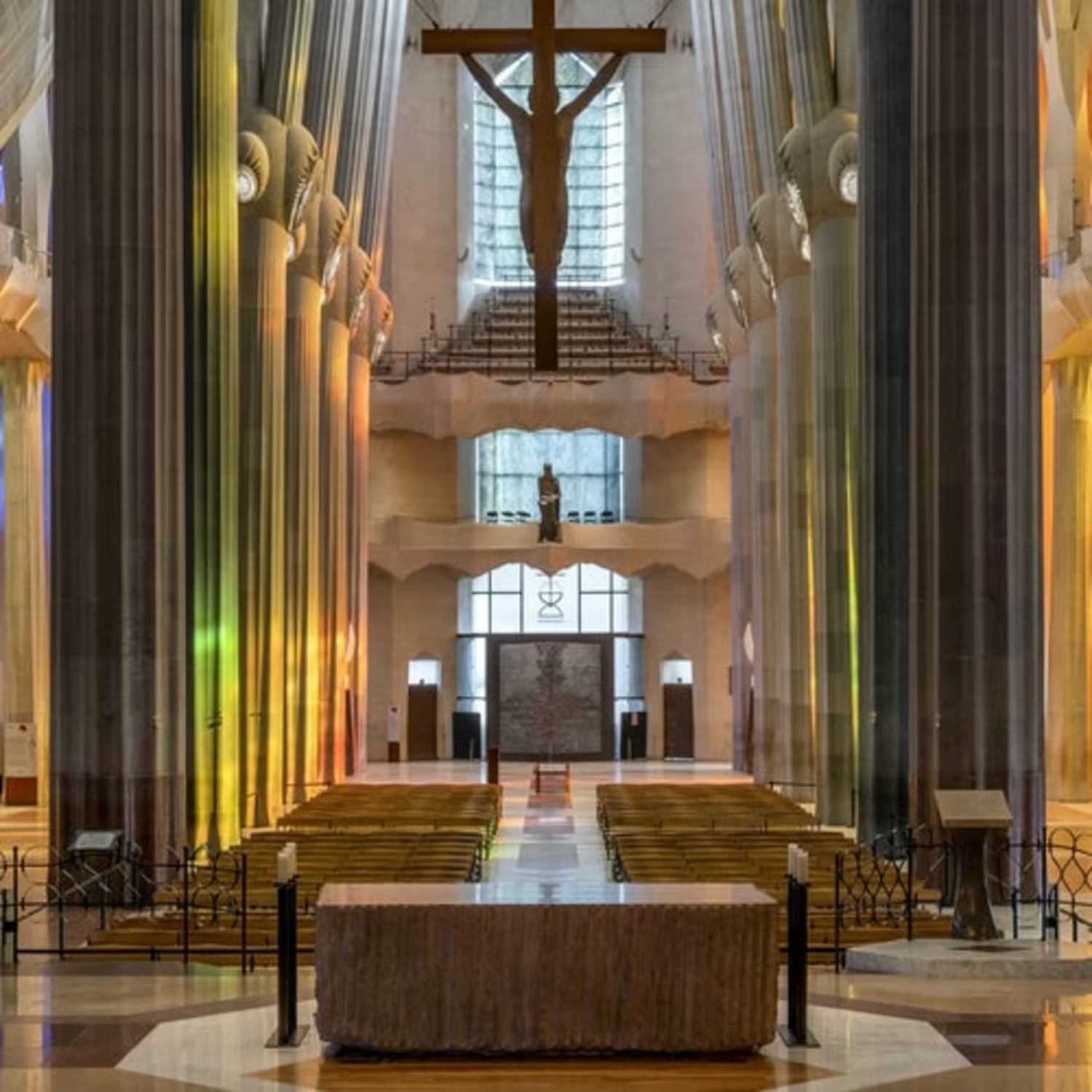
The stone tells you where you are standing. The columns along the side naves use sandstone from Montjuïc, the central nave uses granite, the perimeter of the crossing uses basalt and the four central columns are red porphyry. Each of those four central columns carries the tetramorph symbol of one of the Evangelists, by the sculptor Domènec Fita. Ten columns mark out the presbytery around the altar.

Naves and vaults: a church in steps of 7.5 metres
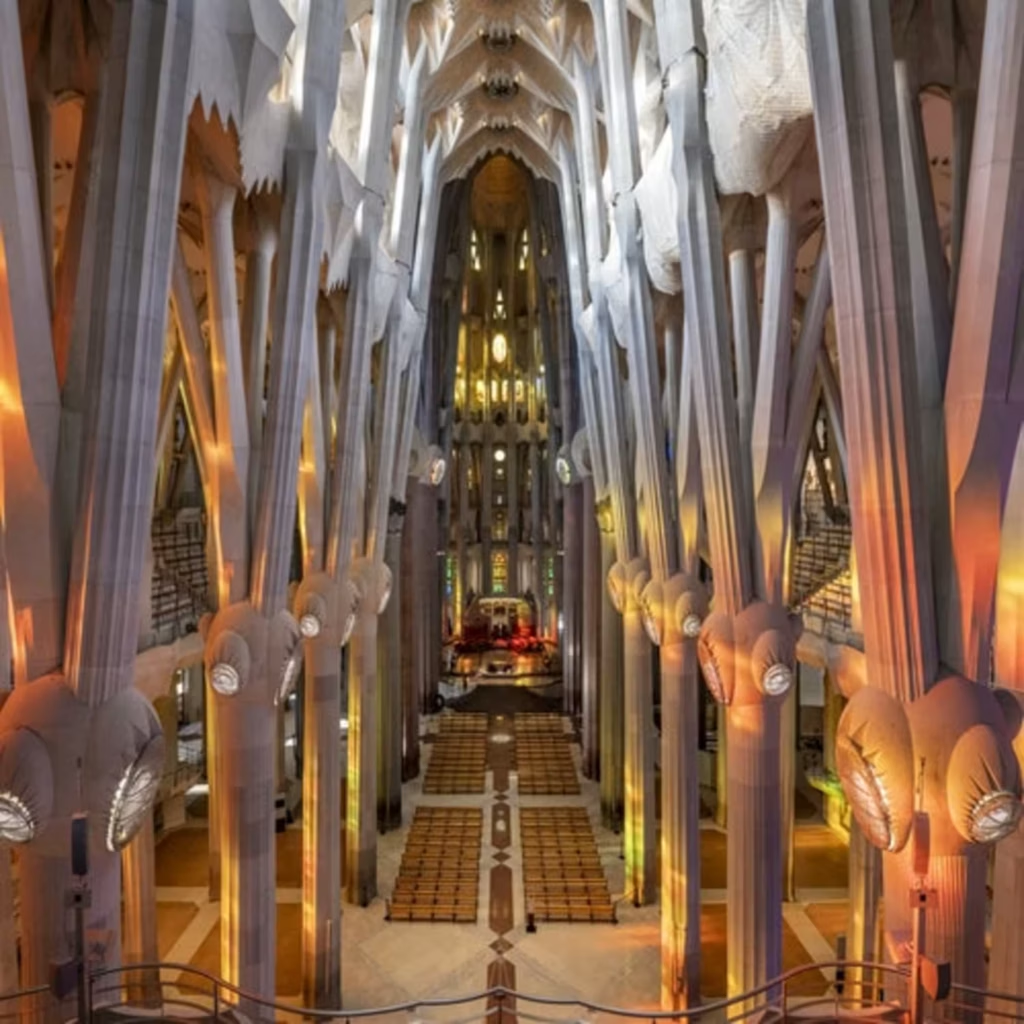
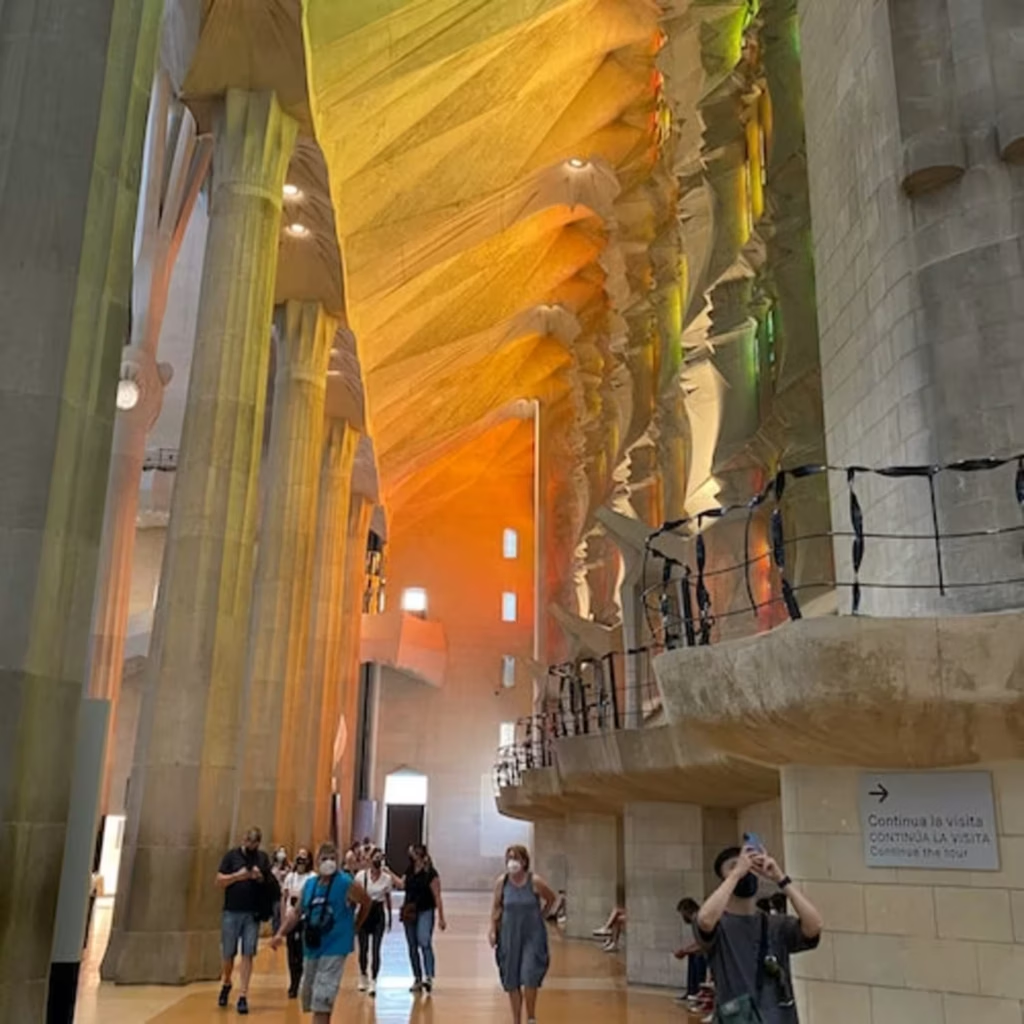
The floor plan is a Latin cross with five naves. The central nave is 45 metres high and 15 metres wide; the side naves are 30 metres high and 30 metres wide; the crossing rises to 60 metres and the apse to 75 metres. Every vault height is a multiple of 7.5 metres, which is why the ceiling seems to climb in terraces as you walk towards the altar.

The vaults were built in stages. The hyperbolic vaults over the side naves, in exposed white concrete, were completed in 1996. The central nave was enclosed in 2000 and the large hyperboloid over the apse was finished in 2010. The central nave, crossing and apse use flat brick "Catalan vaults" finished with green and gold Venetian glass trencadís, and the crossing vaults at 60 metres are concentric, with golden rays.

Look up between the branches and you will see the skylights: 289 of them in total. Metal lamps hang from the openings to scatter light across the vault surfaces.

Stained glass: blue mornings, orange evenings
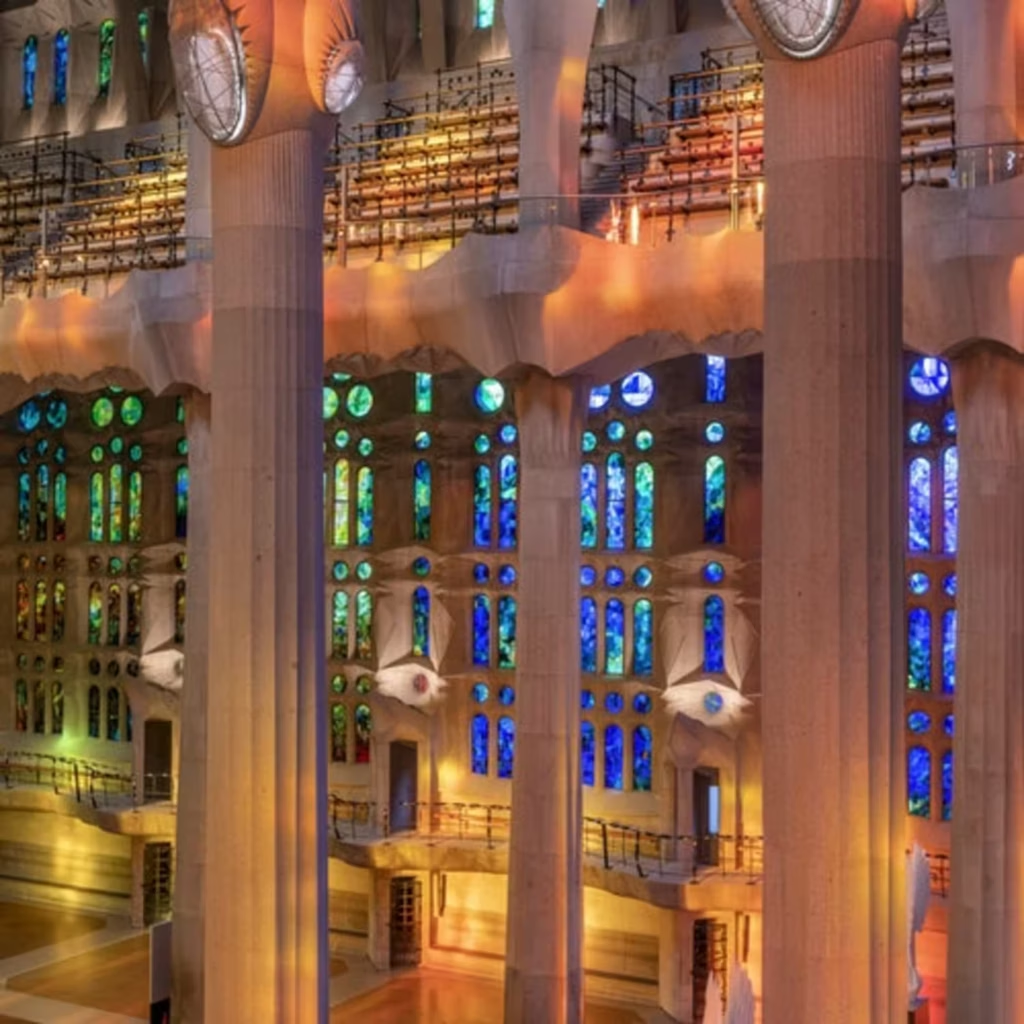
The windows are by Joan Vila-Grau, who has worked on them since 1999. They follow one simple rule: the glass is darkest at the bottom and grows more transparent higher up, so the lower nave stays in coloured shade while clear light pours in near the vaults. At the top of the central nave the glass is transparent.

The colour changes with the façade. Windows on the Nativity side, which faces east, use bluer tones that stand for morning light. Windows on the west side use orange tones that stand for evening light. The themes change too: water, resurrection and light in the apse and Passion transept; poverty, the Nativity and life on the Nativity side; saints and shrines of Catalonia and Spain in the lower naves; and allusions to the parables of Jesus in the upper naves.

The windows are at their most striking in the late afternoon and early evening, when low sun drives the warm colours deep into the nave.

The crossing, the apse and the altar

The crossing is the heart of the building. Its columns branch out to form the base of the Tower of Jesus Christ, and light falls into the basilica through 25 skylights in the Crossing Room above. The main altar is a single block of porphyry 2.72 metres long and weighing 7,500 kilograms.

Behind the altar, the apse holds seven chapels with the Chapel of the Holy Sacrament at the centre. Its vault is covered in a gold Venetian glass mosaic depicting the Trinity, and the oculi show symbols of the seven O Antiphons. The apse vault rises in levels: the ambulatory at 30 metres, the triforium at 45 metres and the great skylight at 60 metres, with the vault itself at 75 metres. A large circular staircase on each side leads down to the crypt, which lies directly beneath the apse. Bare shoulders are not allowed in the Chapel of the Holy Sacrament.

Choirs built for sound

The galleries running along the side naves are choirs, set 15 to 20 metres above the floor so that the hyperbolic vaults act as sound reflectors. The adult choirs follow a horseshoe shape along the side-nave façades and the Glory façade, and a children's choir sits in the apse, 15 metres above the chapels. The presbytery has seating for 140 concelebrants.

During Mass or special events, visitors stay seated in silence and photography stops, so the building briefly works as the church it was designed to be.

The museum beneath the Passion façade

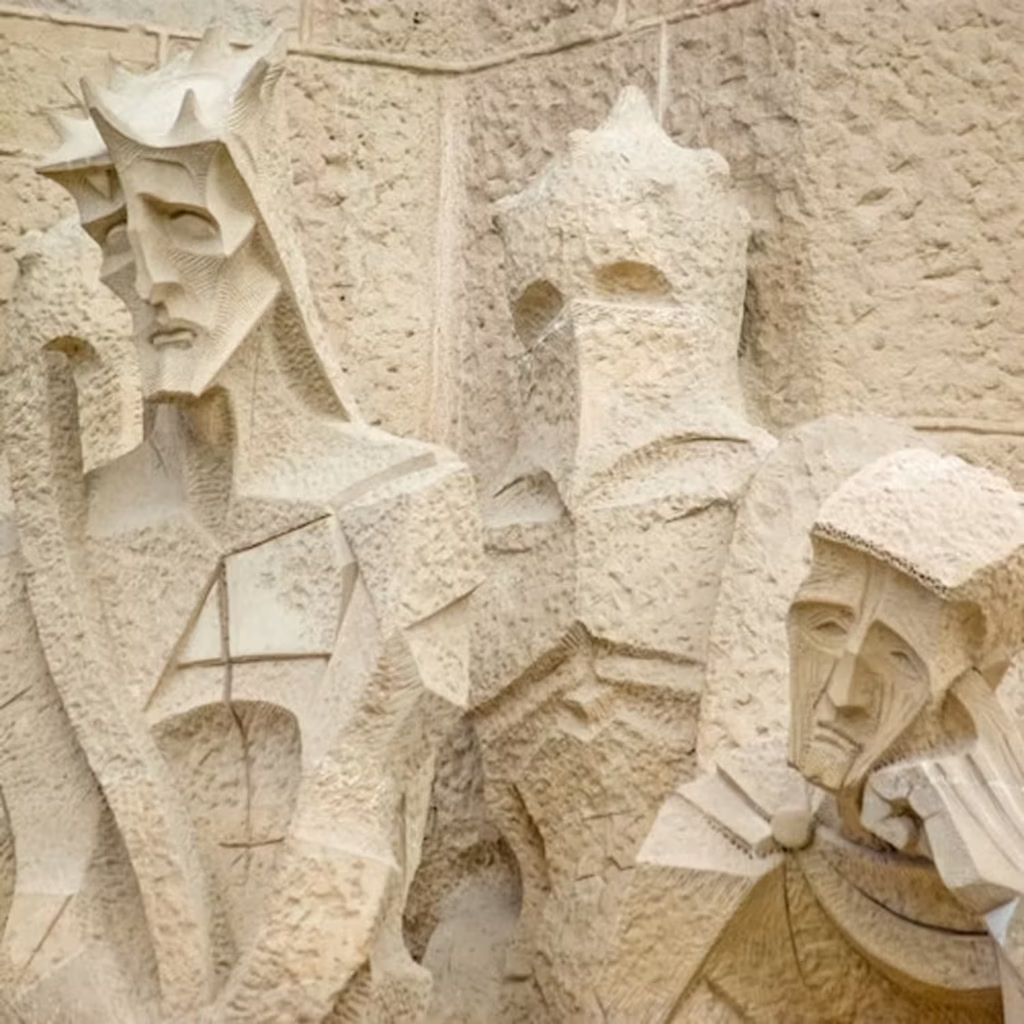
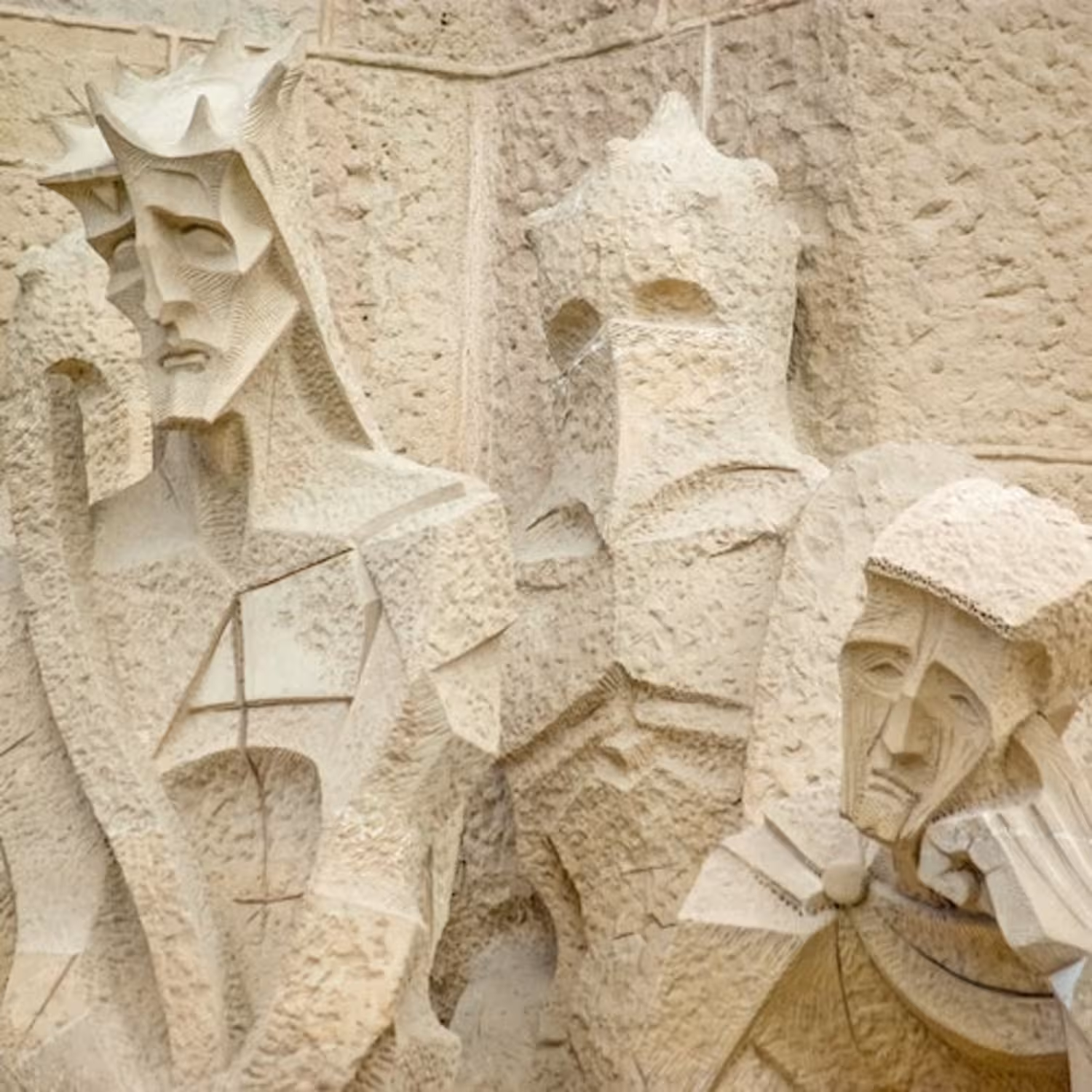
Before you leave, head below ground level next to the Passion façade. The museum there displays Gaudí's plans, reconstructed models and sketches, which show how the columns, vaults and towers you have just seen were worked out. It is the best place to understand why the interior looks the way it does. For more of Gaudí's work in the city, see our pages on Park Güell and Palau Güell.

Tips for seeing the interior

Go first thing on a weekday morning for the emptiest nave, or in the late afternoon for the strongest colour in the stained glass.

From 2 February 2026, 9:00 to 10:00 am is a quiet hour: keep your voice down and use earphones for any audio.

The basilica's app offers a downloadable audio guide in a 45-minute standard version and a 25-minute express version; bring earphones and a charged phone.

Hats are not allowed in the nave or museum, except for religious, health or belief-related reasons. Read our Sagrada Familia dress code guide before you go.

The whole basilica is accessible except the towers; visitors with reduced mobility use entrance B on Carrer de la Marina.

Stand in the crossing and look straight up: it is the one spot where the 60-metre vaults, the golden rays and the base of the central tower line up overhead.

Inside the Sagrada Familia: FAQs

What is inside the Sagrada Familia?

A five-nave basilica with tree-like branching columns, vaults up to 75 metres high, 289 skylights, stained glass by Joan Vila-Grau, the main altar, the apse chapels, the choirs and, below ground, a museum and the crypt.

How tall is the Sagrada Familia inside?

The central nave is 45 metres high, the crossing 60 metres and the apse vault 75 metres, the highest point inside. The side naves are 30 metres high.

What are the columns made of?

Montjuïc sandstone in the side naves, granite in the central nave, basalt around the crossing and red porphyry for the four central columns.

Who made the stained glass windows?

Joan Vila-Grau, who has been designing them since 1999. The Nativity side uses bluer tones and the west side warmer orange tones.

When is the best time to see the stained glass?

Late afternoon and early evening, when the low sun lights up the warm colours. For a quieter nave, go first thing on a weekday morning.

Is Gaudí buried in the Sagrada Familia?

Yes. Antoni Gaudí is buried in the crypt, which lies directly beneath the apse.

When was the Sagrada Familia consecrated?

Pope Benedict XVI dedicated the church on 7 November 2010, and it was declared a minor basilica the same day.

Are there photo restrictions inside?

During Mass and special events, visitors stay seated in silence and may not take photos. Using a tripod on the grounds needs prior consent from the basilica's press department.

Is the interior accessible?

Yes. The whole basilica is accessible except the towers. Visitors with reduced mobility use entrance B on Carrer de la Marina, where wheelchairs are available on request.

Do children pay to go inside?

Under the basilica's own rules, children under 11 enter free. Check the age bands and ticket options shown when you book.

Is there a quiet time inside the basilica?

Yes. From 9:00 to 10:00 am visitors are asked to stay quiet and use earphones for audio guides and phones.

About this guide

Sources: Sagrada Família, The interior of the Basilica (Booklet 9); Sagrada Família, The towers (Booklet 10); Sagrada Família, FAQs; Lonely Planet, Guide to La Sagrada Família; EWTN News, Pope Benedict XVI dedicates Barcelona's Sagrada Familia.