We are processing your request.
Please, don’t close or refresh the page.
Barcelona Tickets Park Guell Monumental Zone
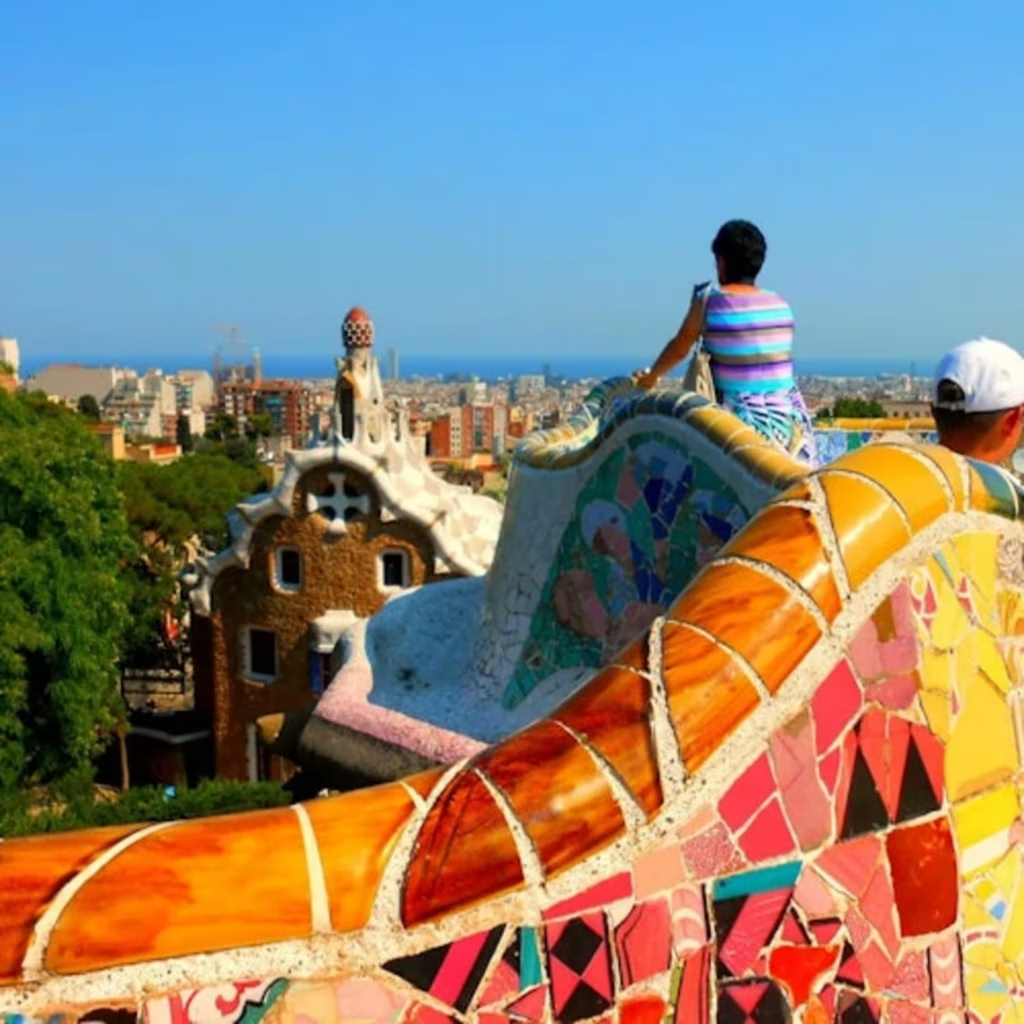
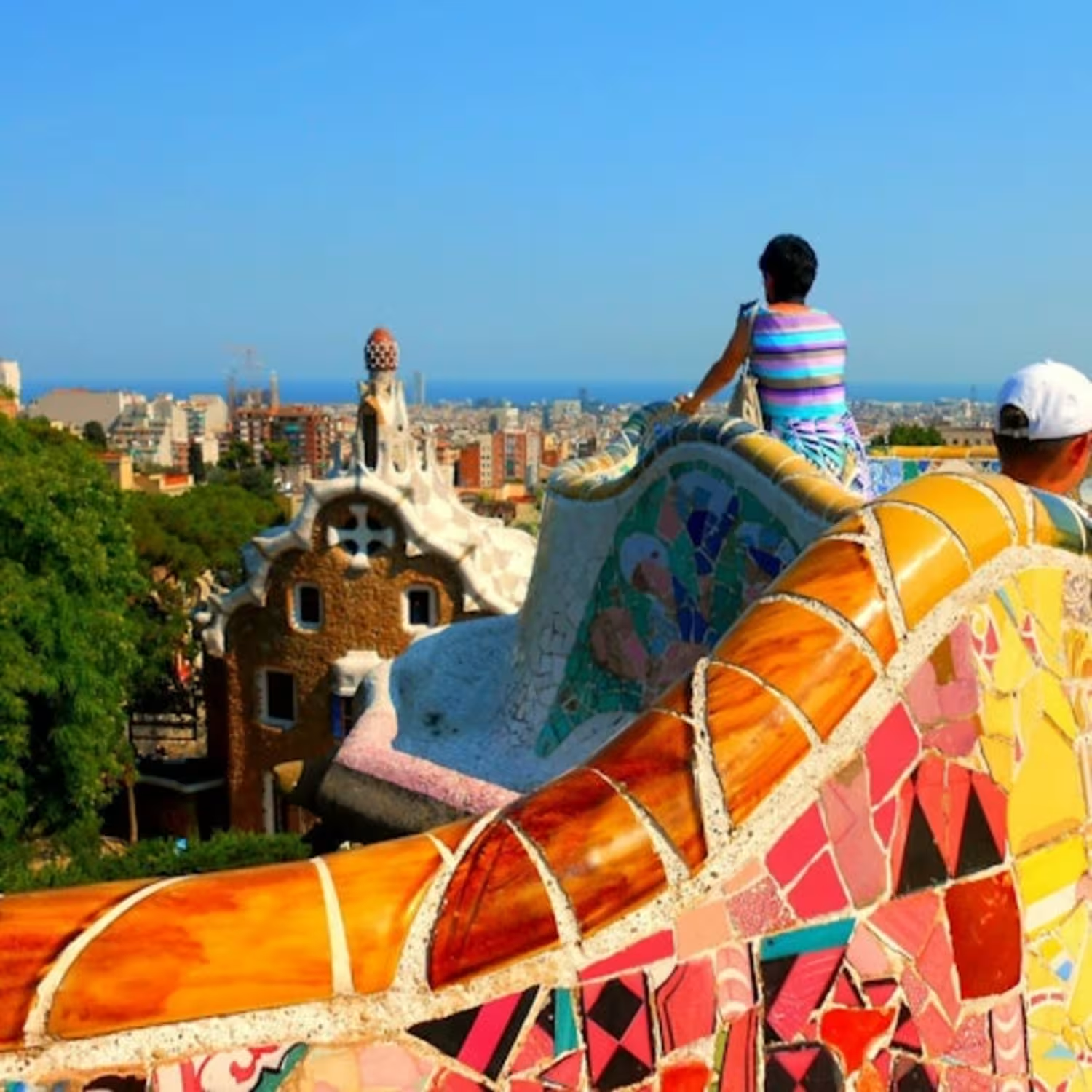
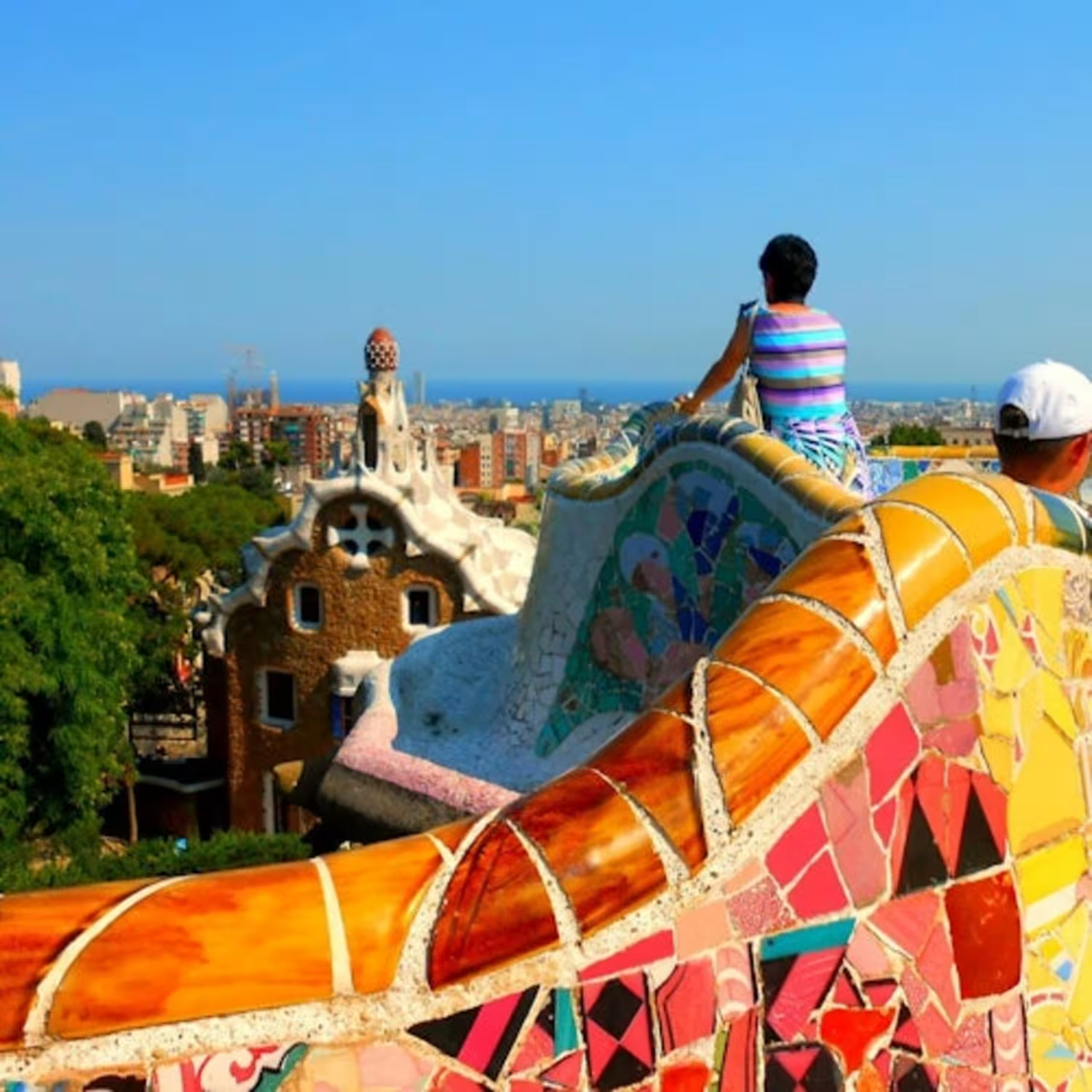
View from a tiled roof over Park Güell in Barcelona

Park Güell Monumental Zone: What to See

The Dragon Stairway, 86 columns of the Hypostyle Room, a 150-metre mosaic bench and stone viaducts: a stop-by-stop guide to the ticketed heart of Gaudí's park.

Park Güell is a large hillside park, but the part most visitors picture is a compact area near the main gate: the gingerbread-like pavilions, the mosaic dragon, the forest of columns and the long serpentine bench with the city spread out below. That area is the Monumental Zone, and it is the part you need a timed ticket for.

This guide walks you through it in the order most people experience it, from the entrance on Carrer d'Olot up the Dragon Stairway, into the Hypostyle Room, onto Nature Square and out along the stone viaducts. It explains what each piece was built for, who decorated it and what to look for, plus how entry slots work so you can plan the visit. For the story behind the park, watch our short video on why Park Güell was a failed housing project.

4.3
(28)

Tickets for Park Güell, Gaudí’s dream garden

Highlights

Skip-the-line access to the iconic Park Güell.

Explore Gaudí’s unique architectural creations.

Use an audio guide to enhance your visit.

Admire stunning panoramic views of Barcelona.

Discover vibrant mosaics and whimsical park designs.
4.6
(10)

Parque Güell: Guided tour

Highlights

Discover the story behind the Modernisme art movement of the 19th century.

Explore Gaudí’s iconic Park Güell including its colorful mosaics and natural inspirations.

Enjoy impressive panoramic views of Barcelona from the park.

Wander through lush gardens and admire unique sculptures.

Skip the lines with included priority entry to the park.
Park Güell Monumental Zone: key facts

In 1895 Eusebi Güell bought a rural estate on Carmel hill and commissioned Antoni Gaudí to design a garden city inspired by English examples.

The housing project was abandoned in 1914; Barcelona City Council bought the estate and opened it as a public park in 1922.

Park Güell was declared a historical and artistic monument of national interest in 1969 and became a UNESCO World Heritage Site in 1984.

The Hypostyle Room has 86 striated columns and was designed to house the estate's market.

The bench around Nature Square is about 150 metres long and covered in trencadís, designed by Josep Maria Jujol.

Three stone viaducts, each five metres wide, were planned to carry carriages from the main gate up the hill.

The entrance pavilions

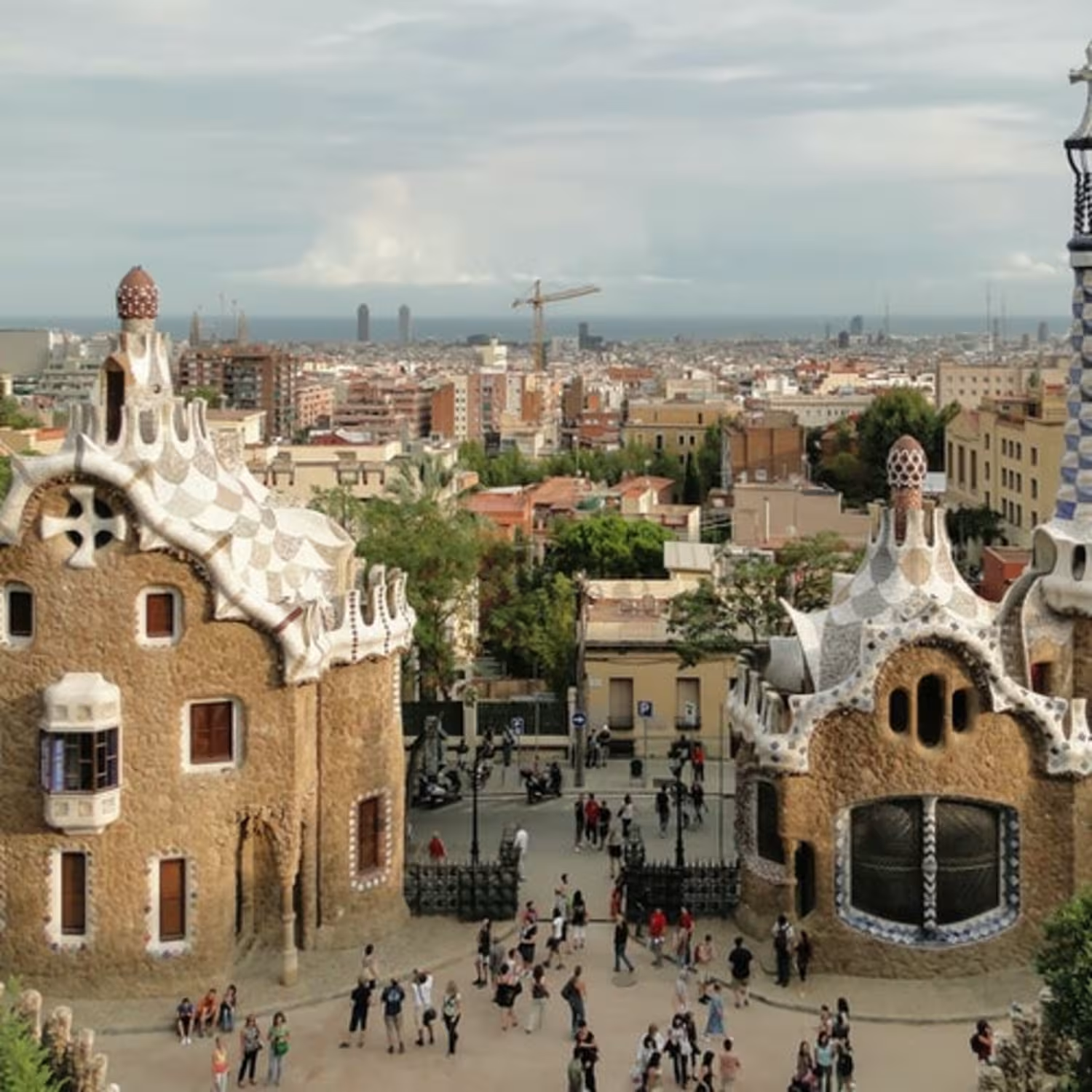
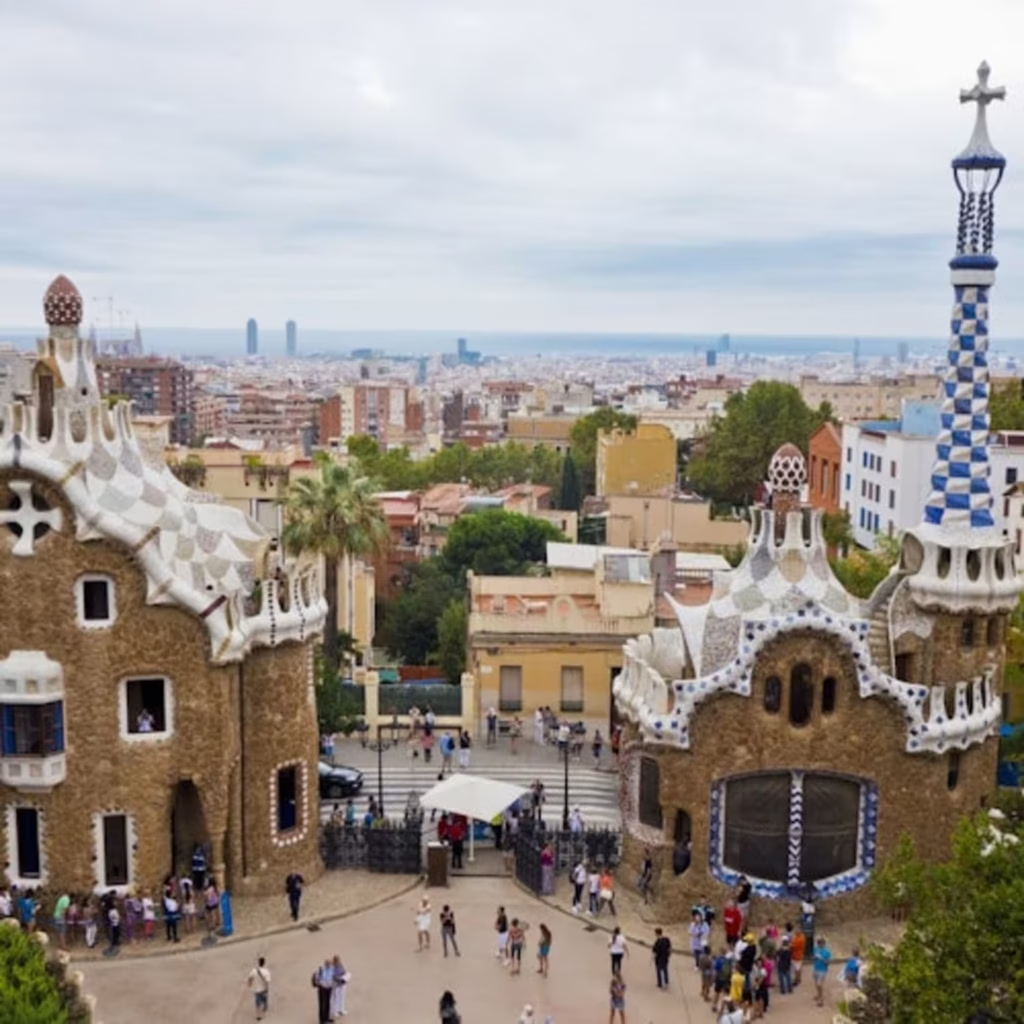
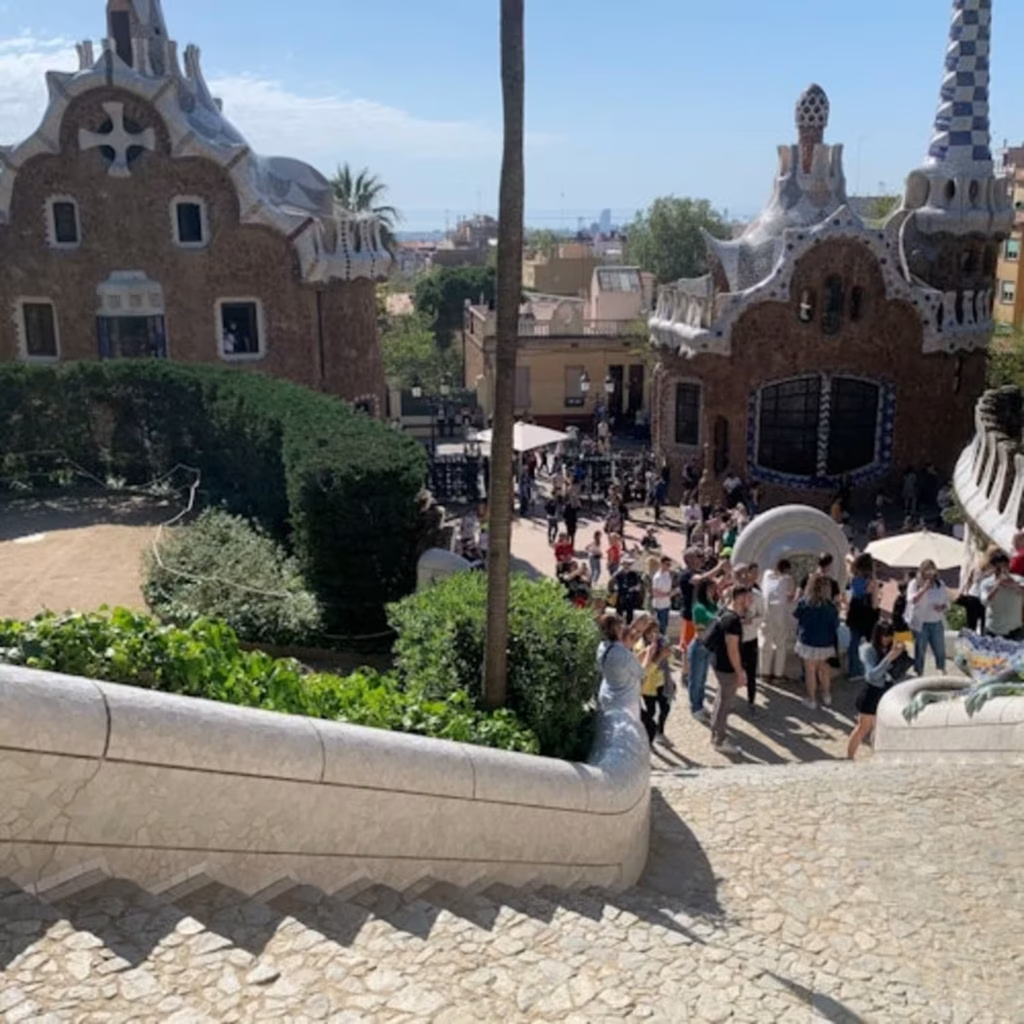
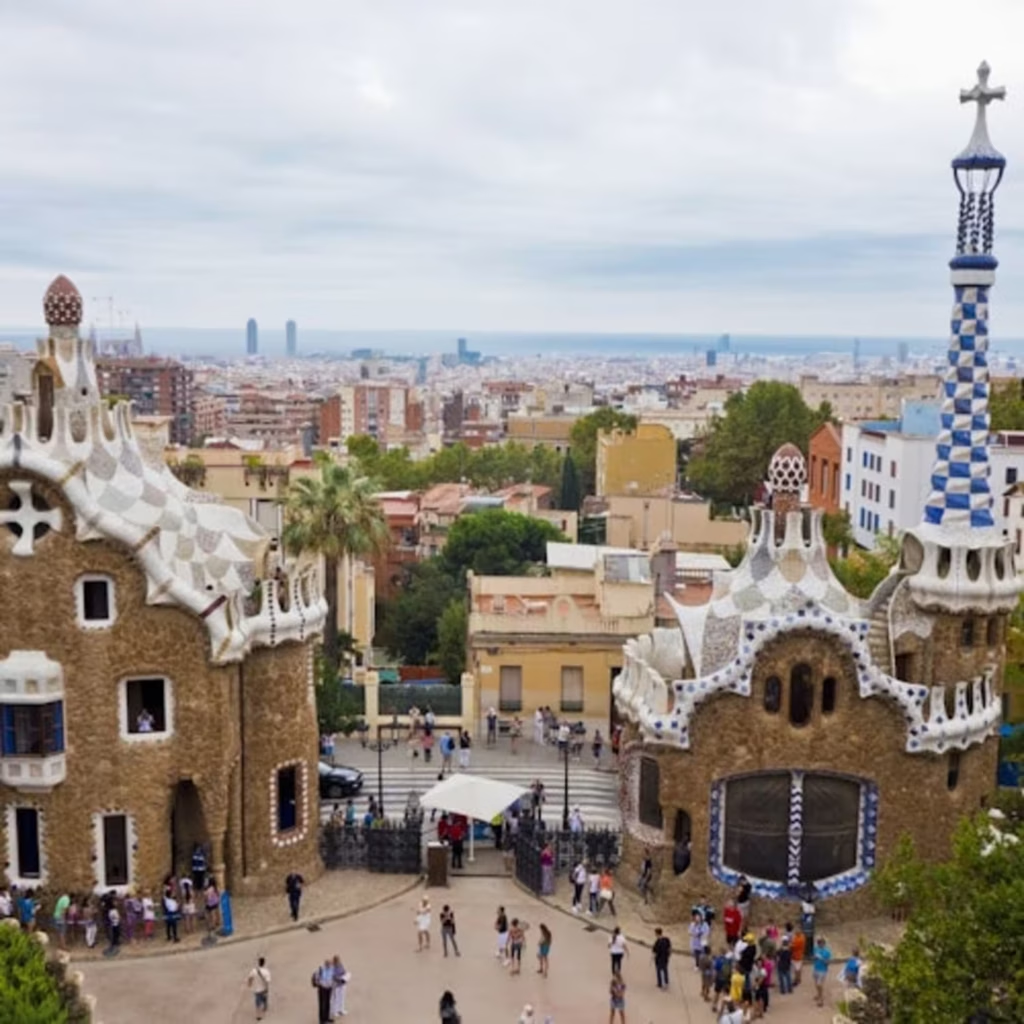
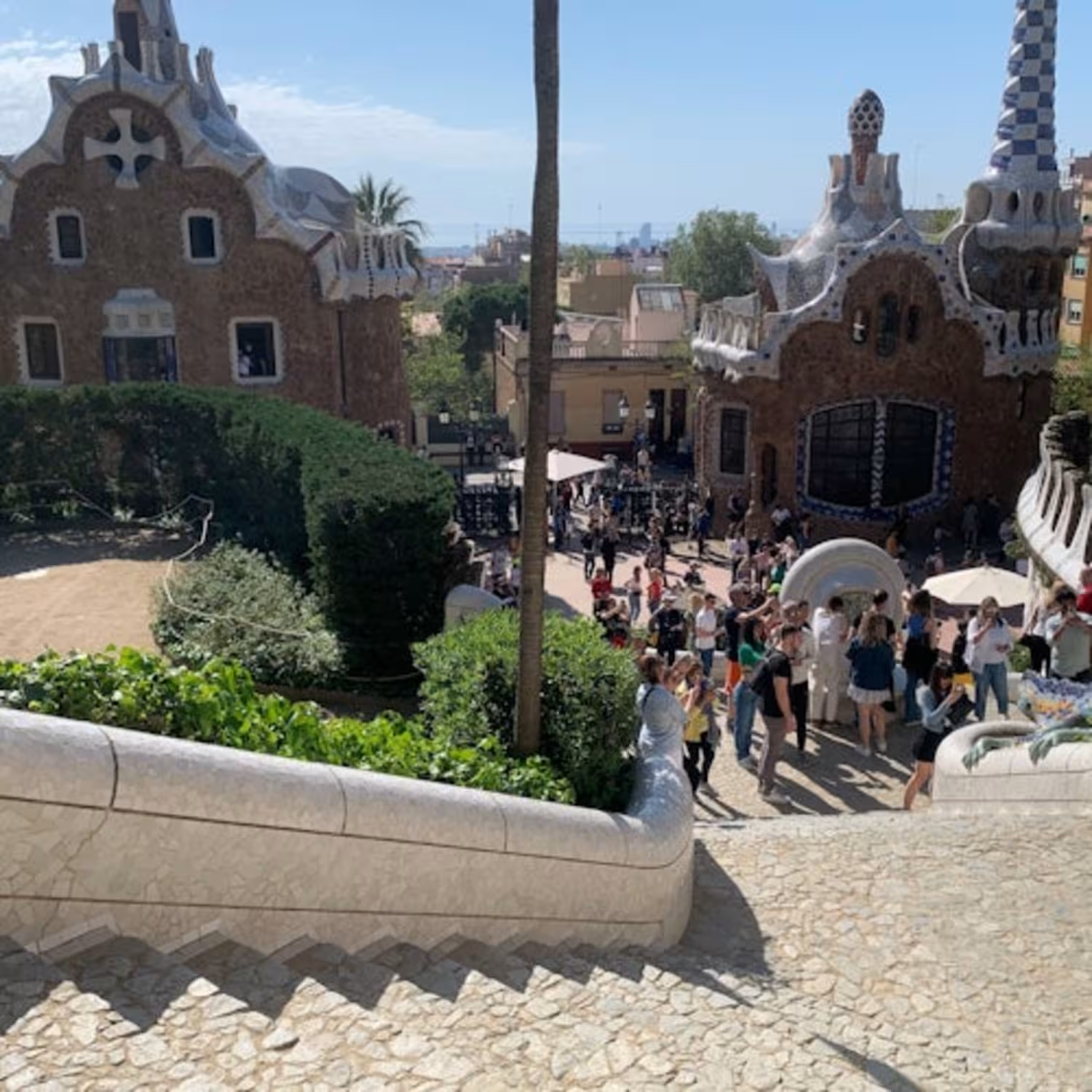
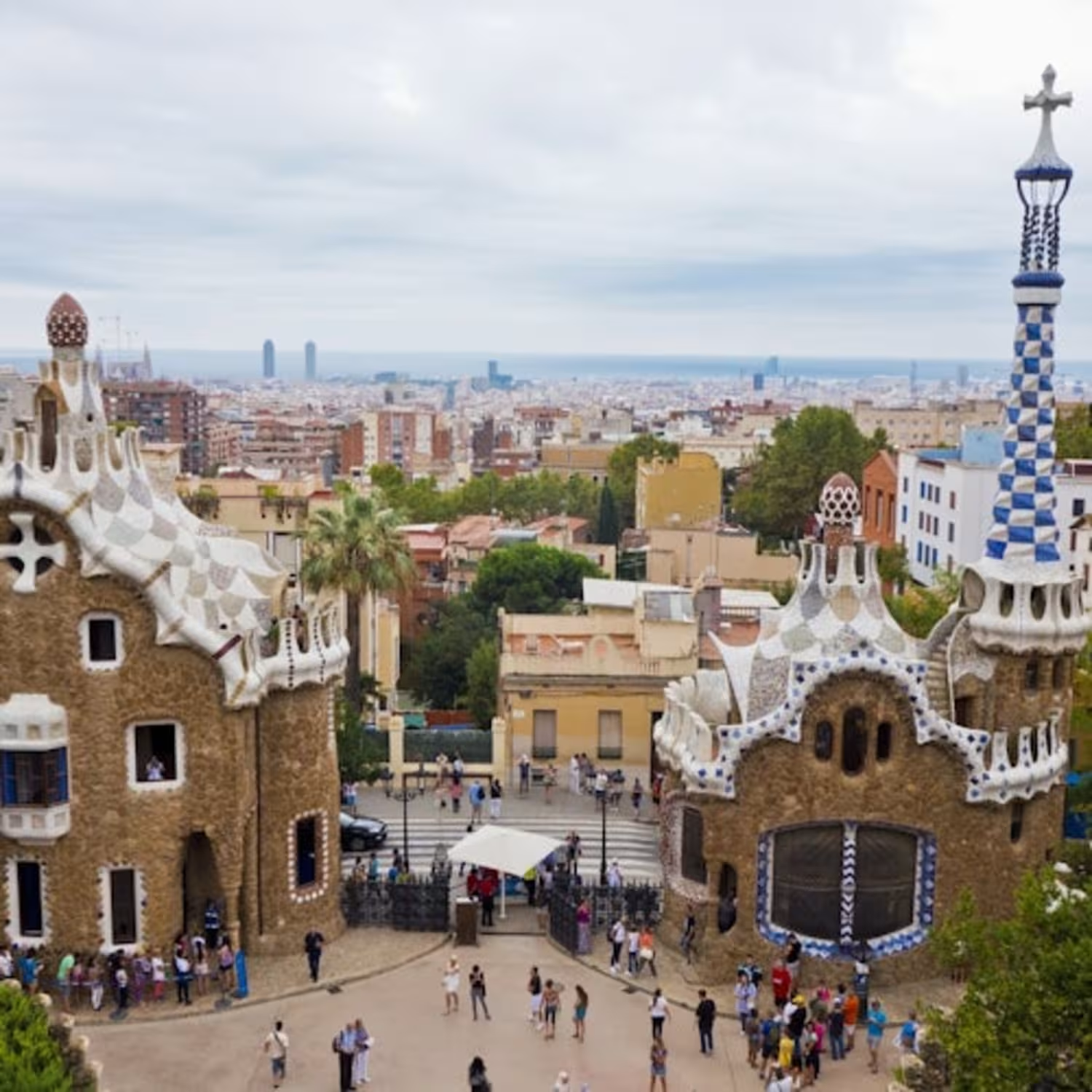
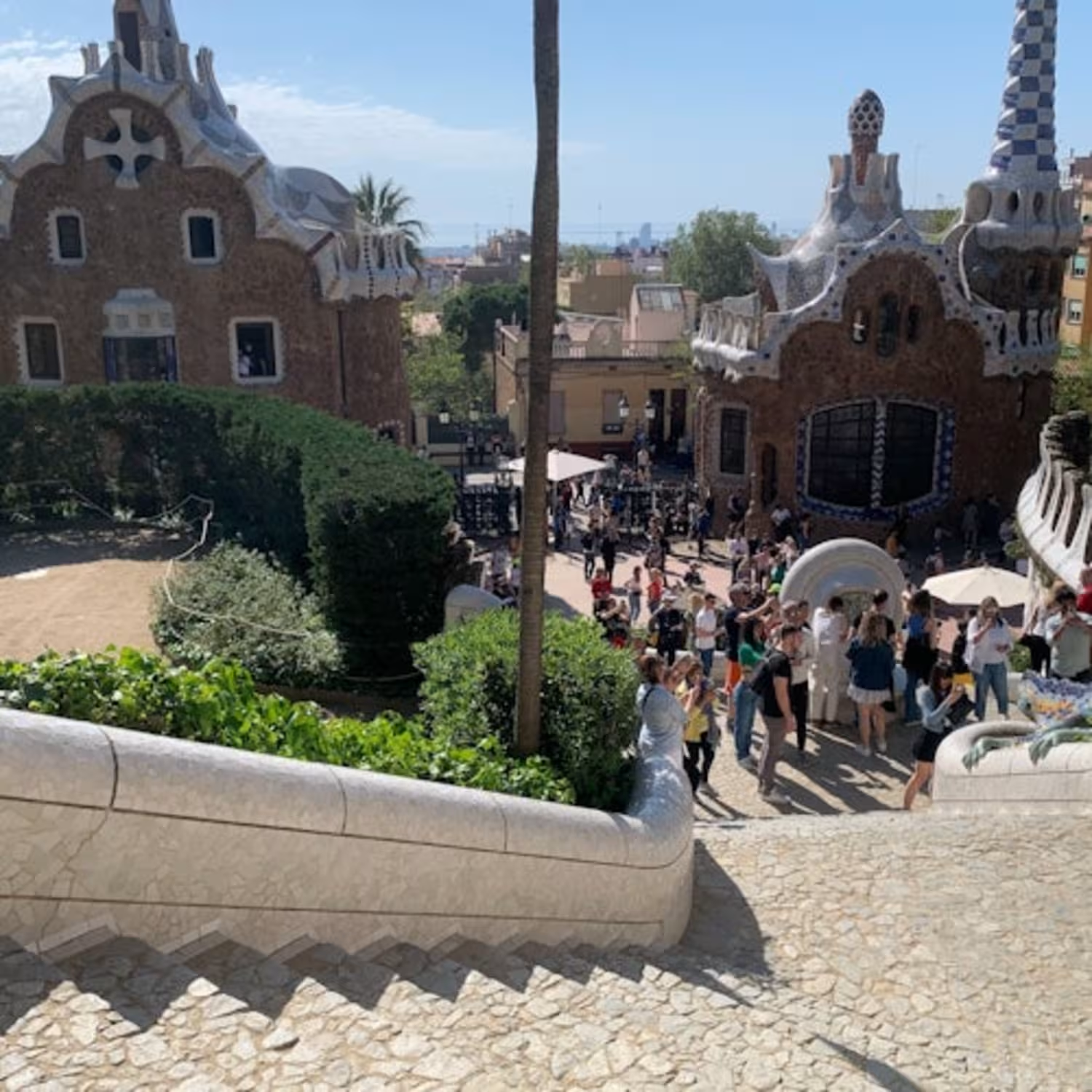
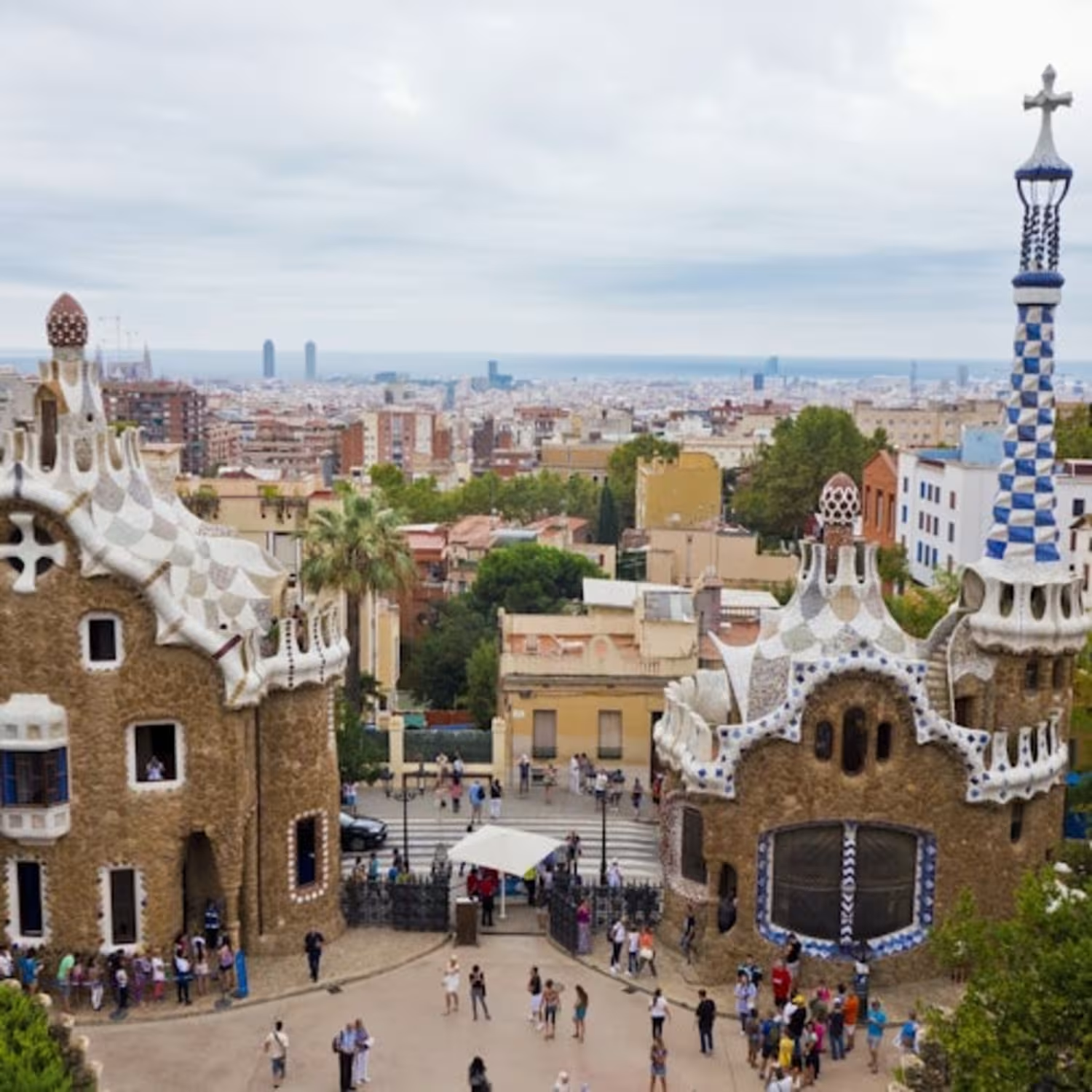
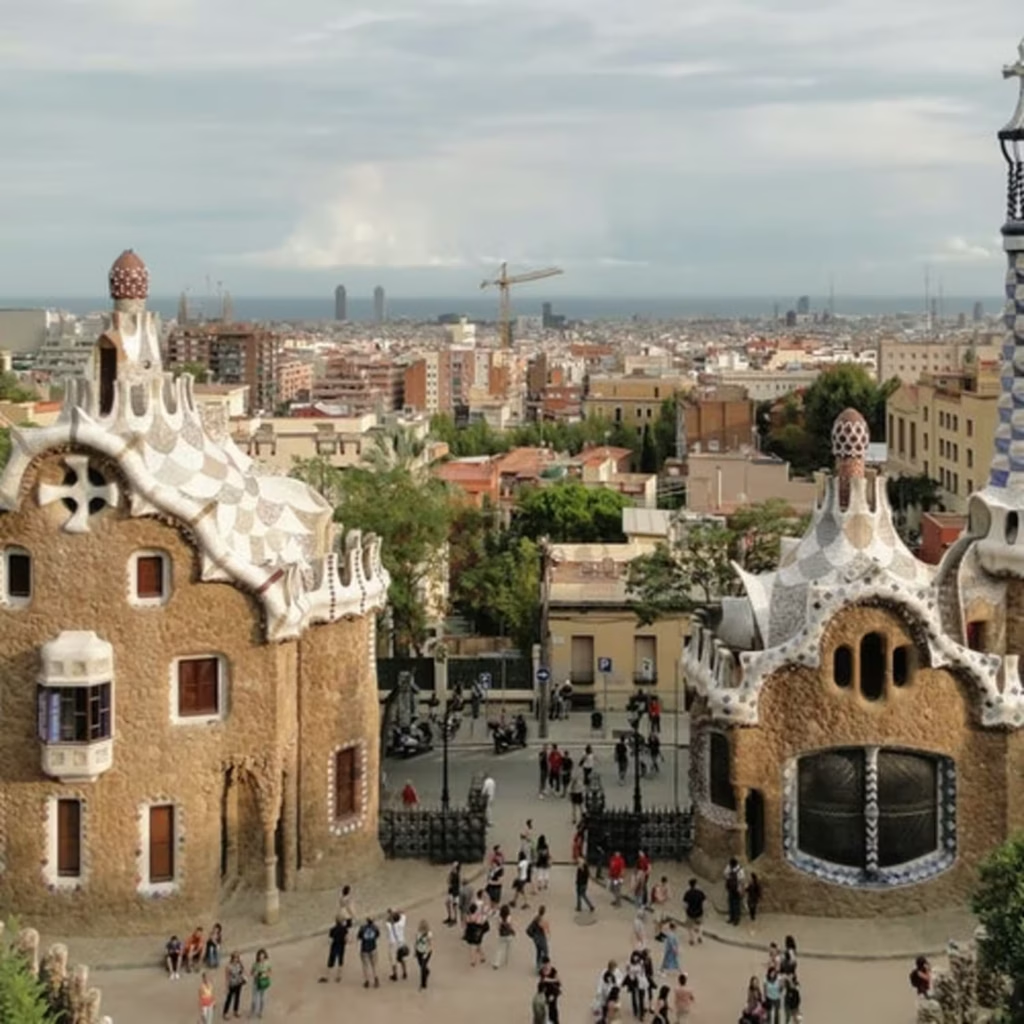
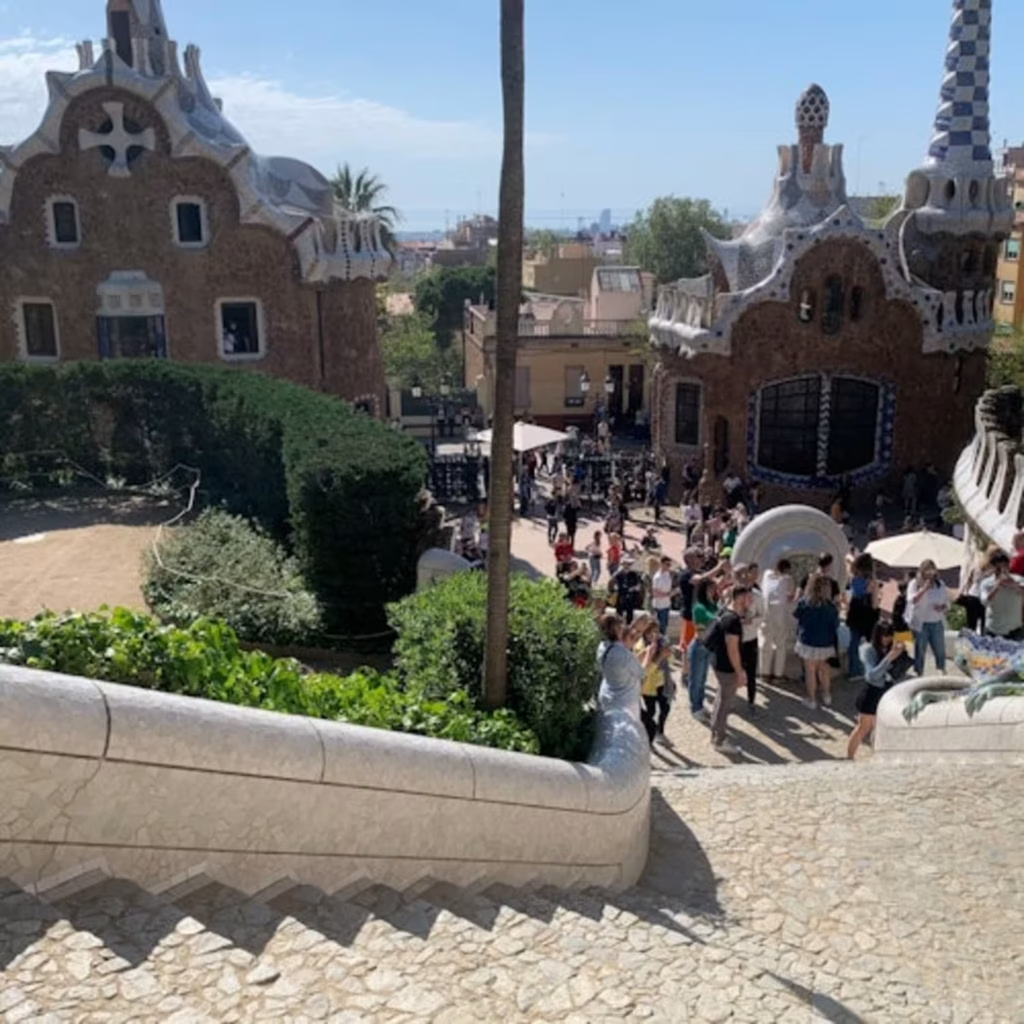
Two pavilions flank the iron gates on Carrer d'Olot, the park's main entrance on its south side. Their roofs use traditional Catalan clay tiles finished in trencadís, the mosaic of broken tile pieces that you will see all over the Monumental Zone.

The pavilion on the left was the working porter's lodge, with a waiting room and a telephone booth. The one on the right was the porter's home, which is why it is called Casa del Guarda; it is now part of the Barcelona History Museum. The rustic stone wall that runs along the street is topped with ceramic tiling and medallions bearing the name Park Güell. Look at the gates themselves: their palm-leaf ironwork was not part of the original plan and came from Casa Vicens, another Gaudí building.

The Dragon Stairway

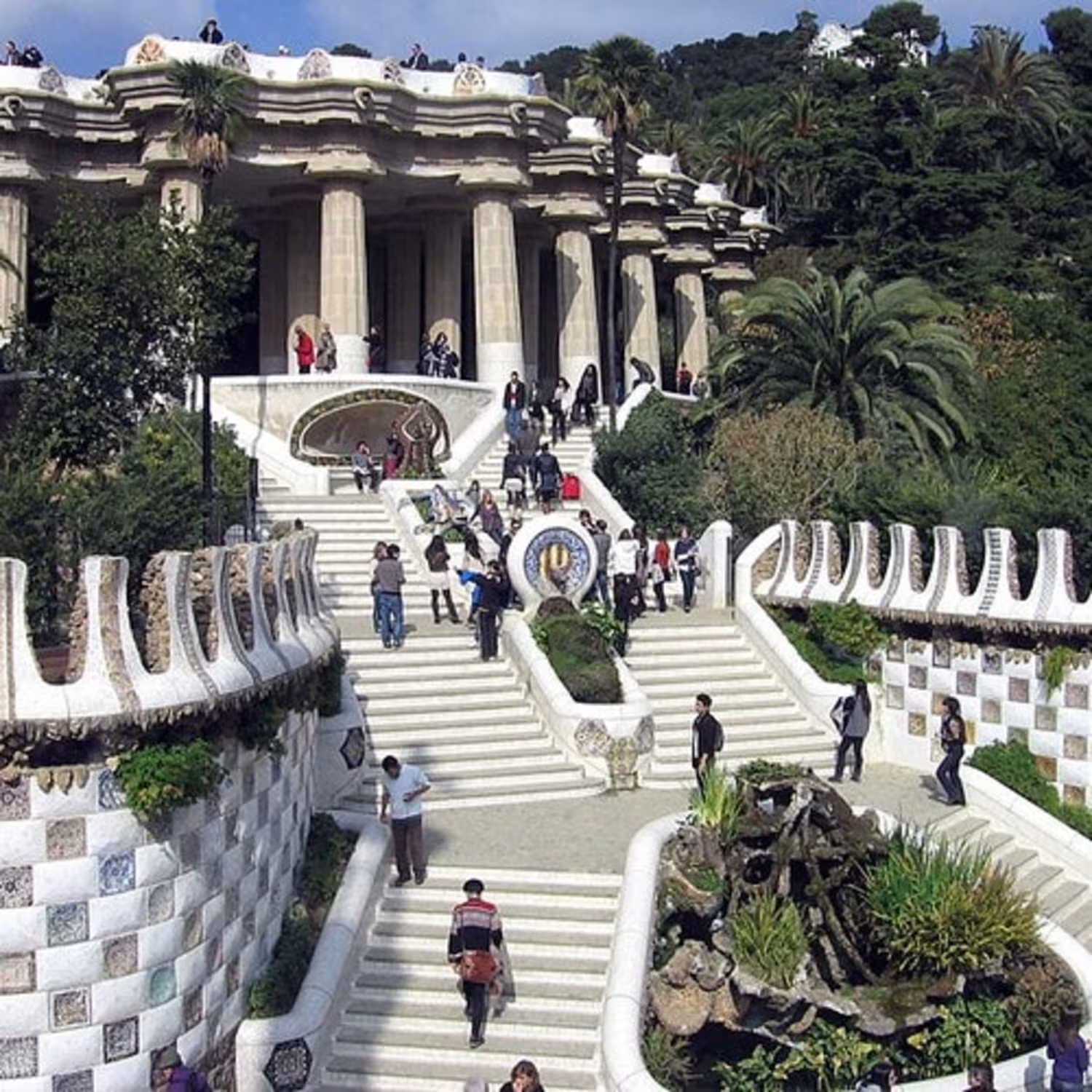
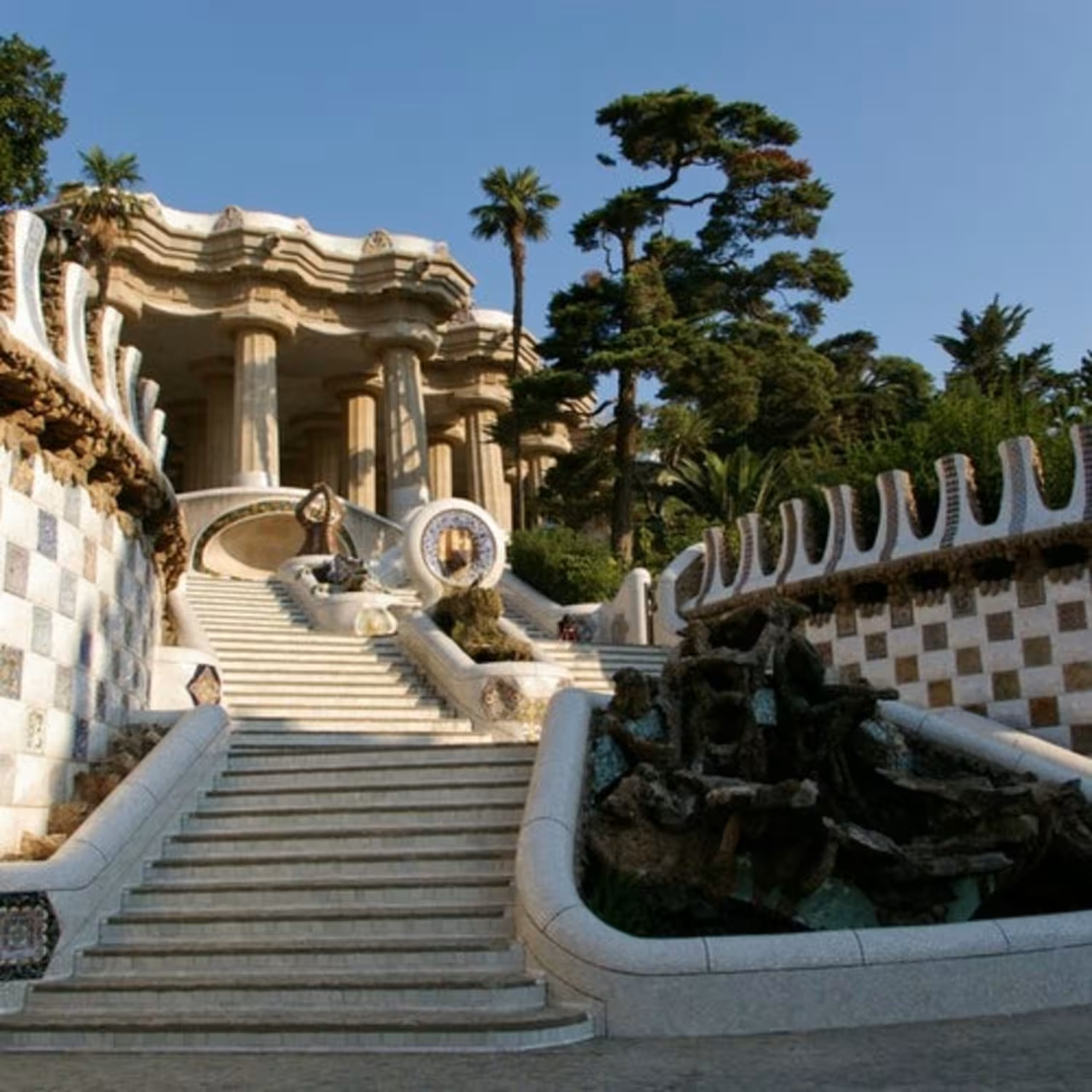
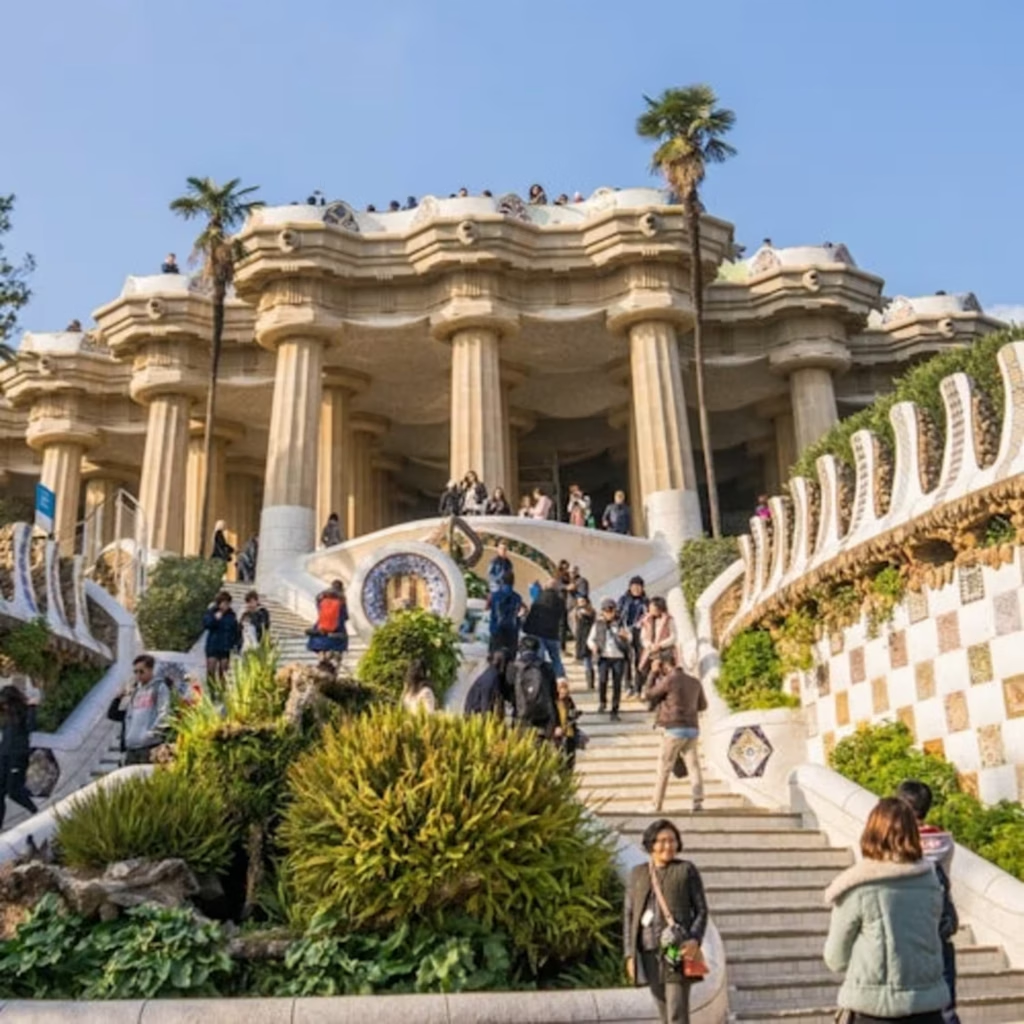
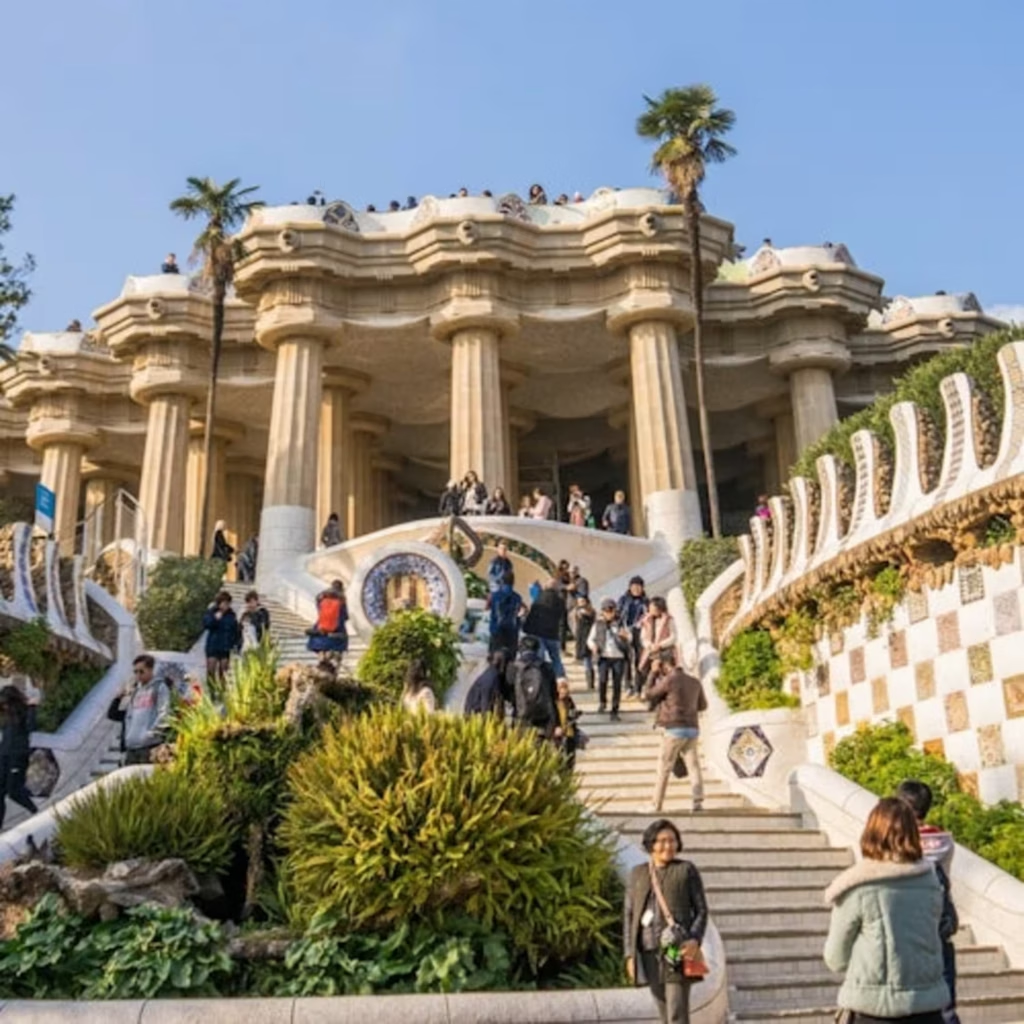
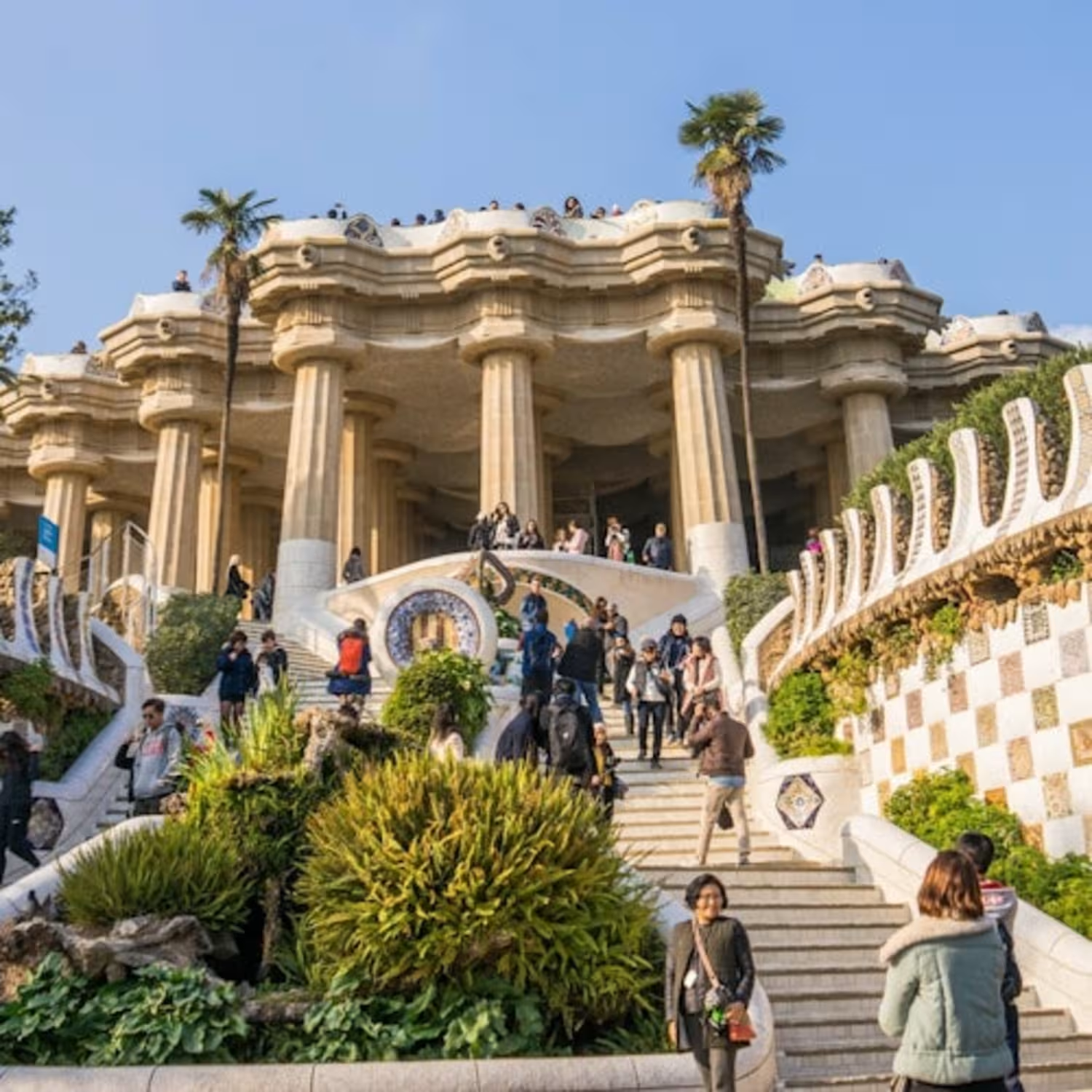
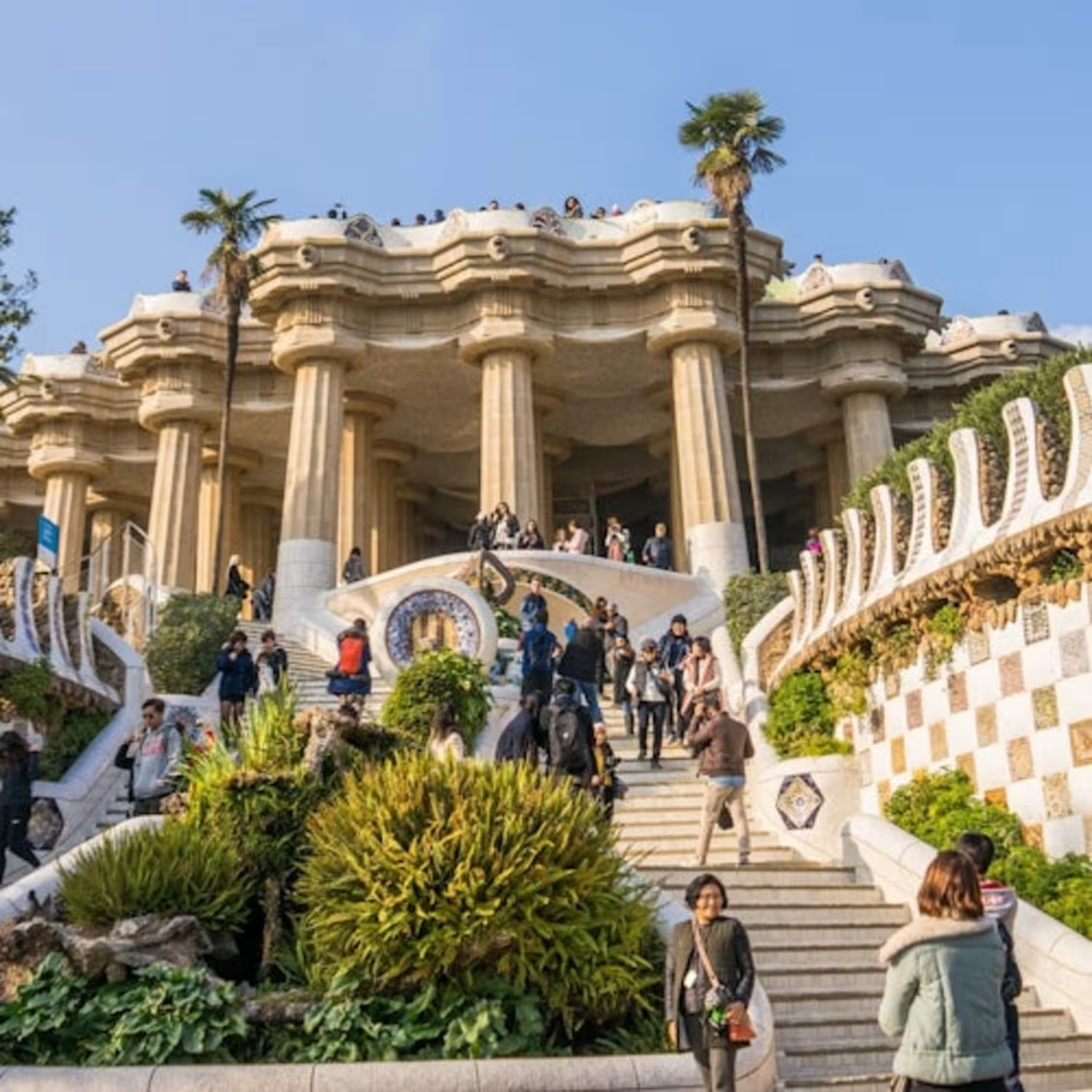
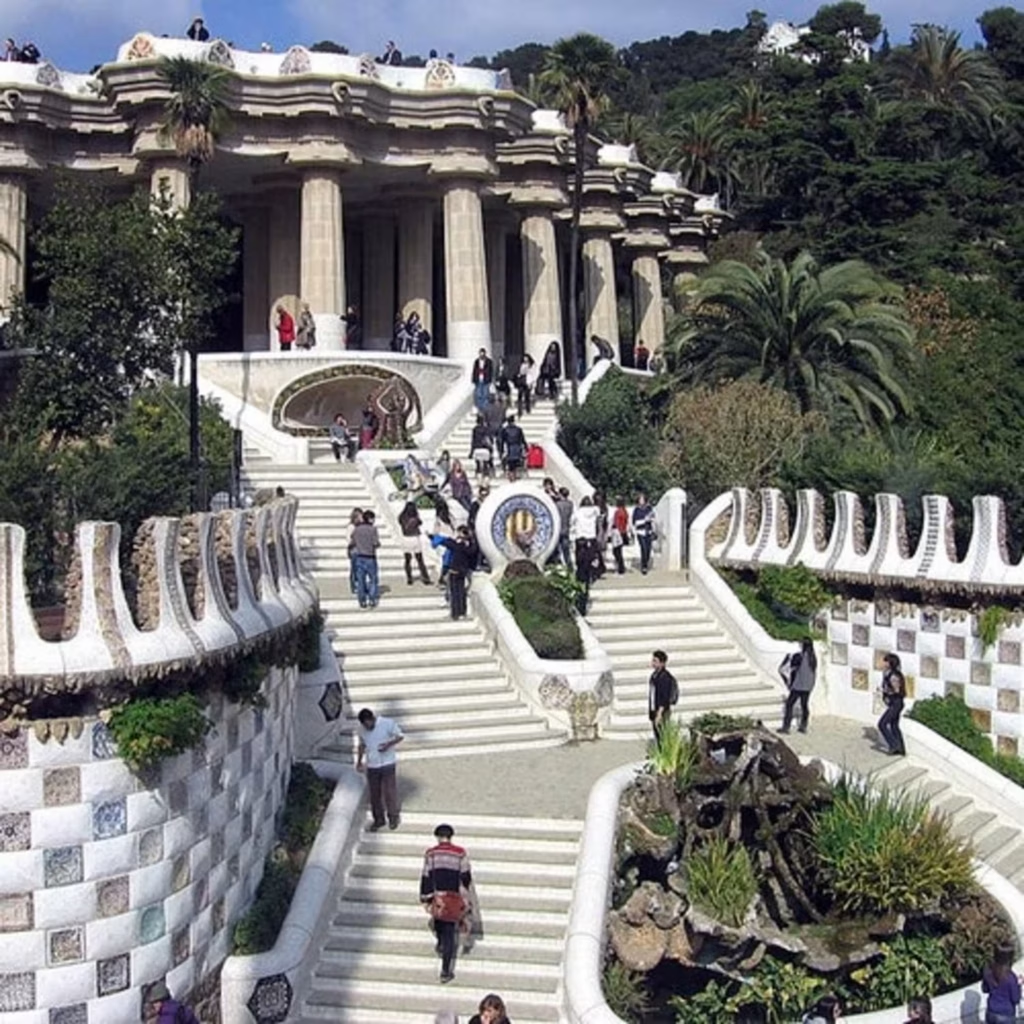
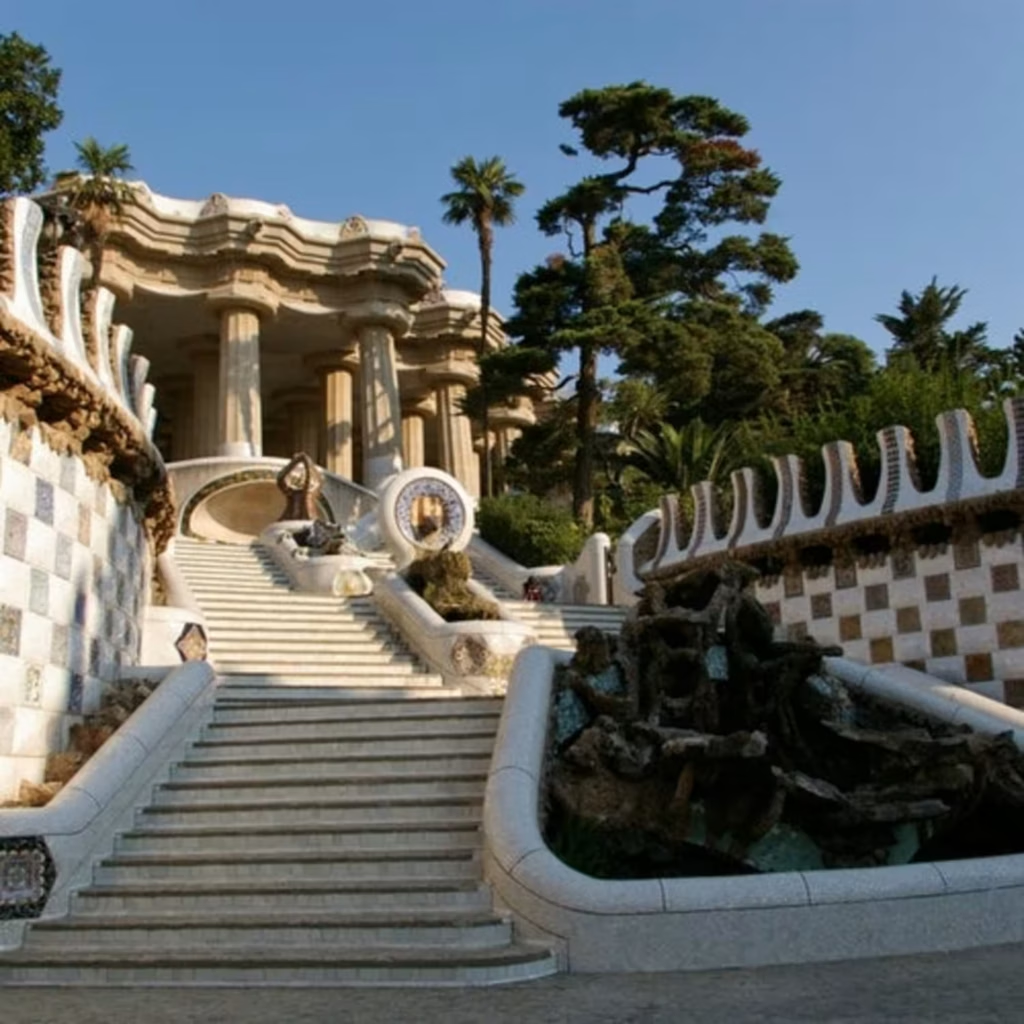
From the entrance esplanade a twin flight of steps climbs in three sections between walls topped with merlons. Two grottos sit beneath the terraces; the one on the right was built as a waiting shelter and rests on a conical central column.

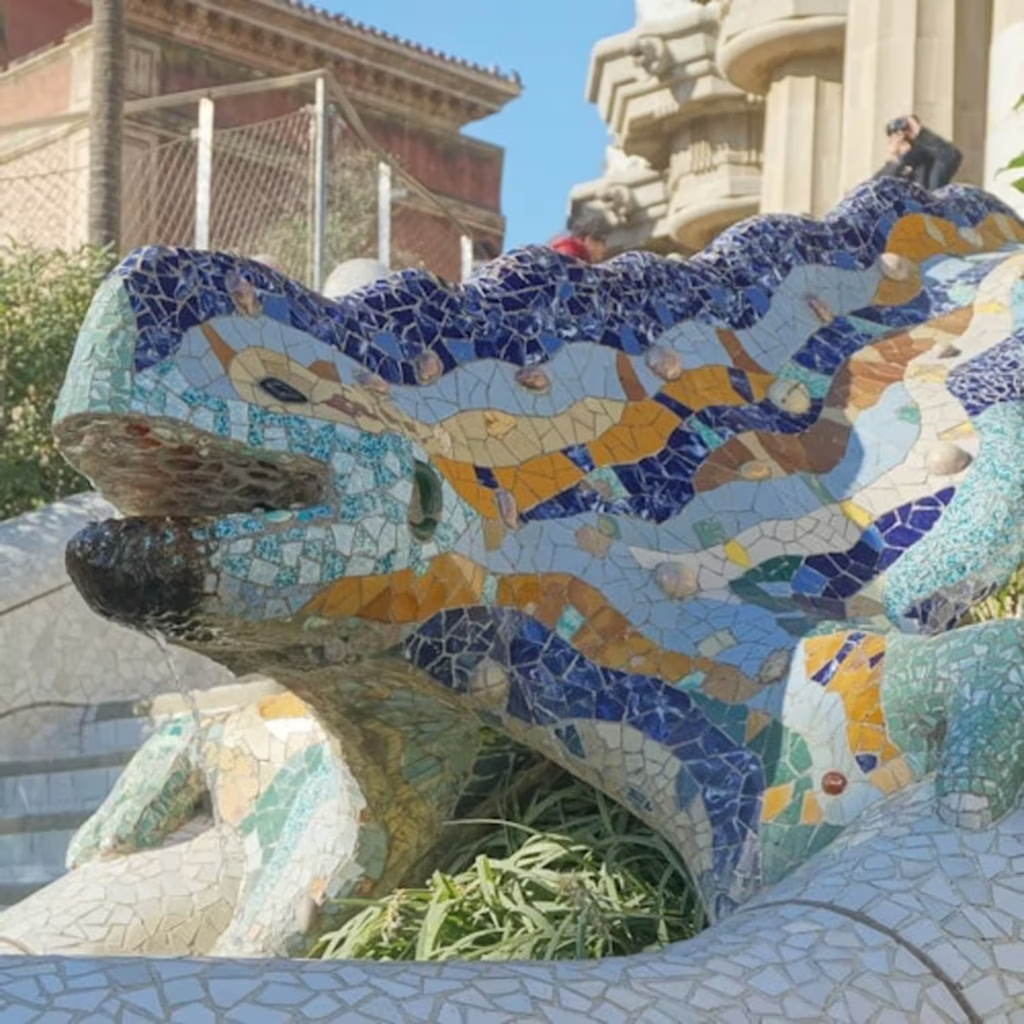
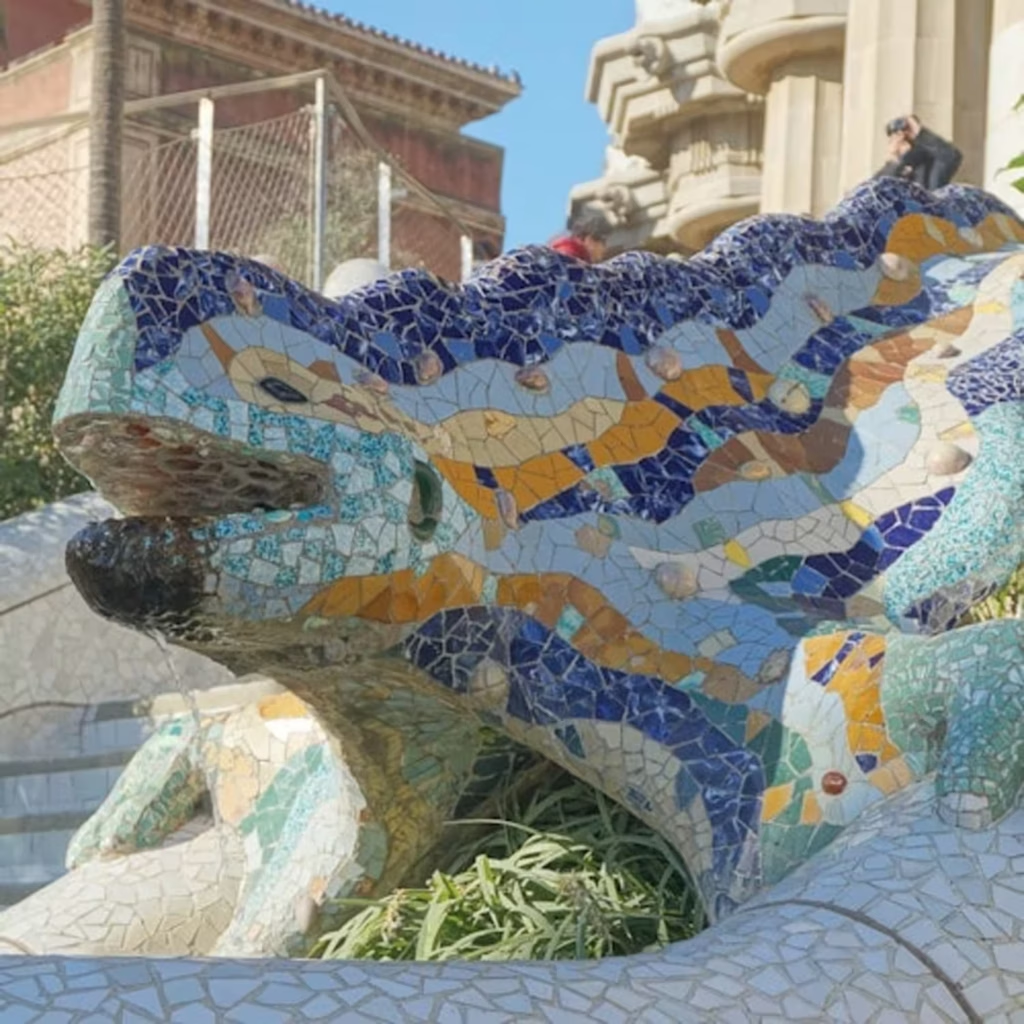
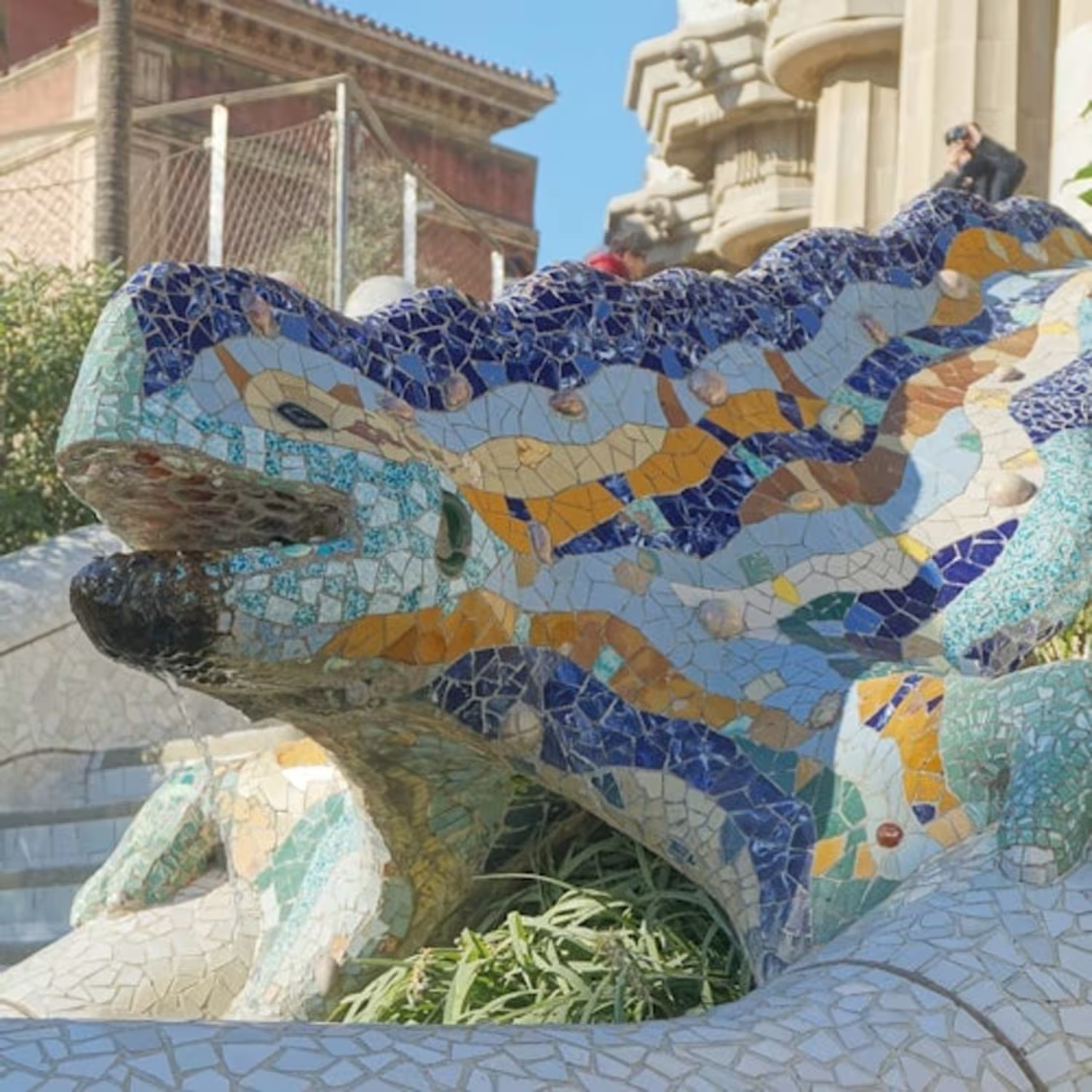
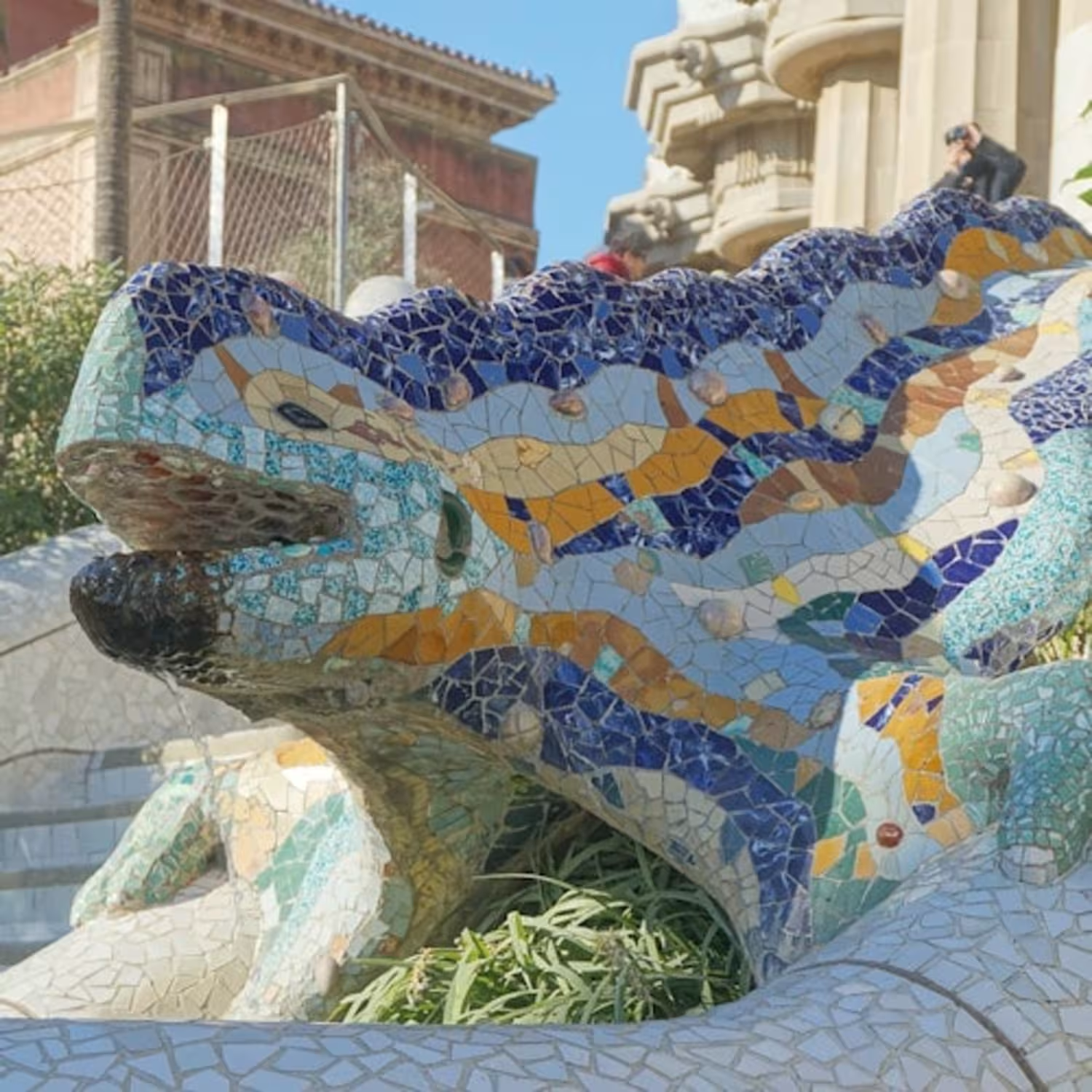
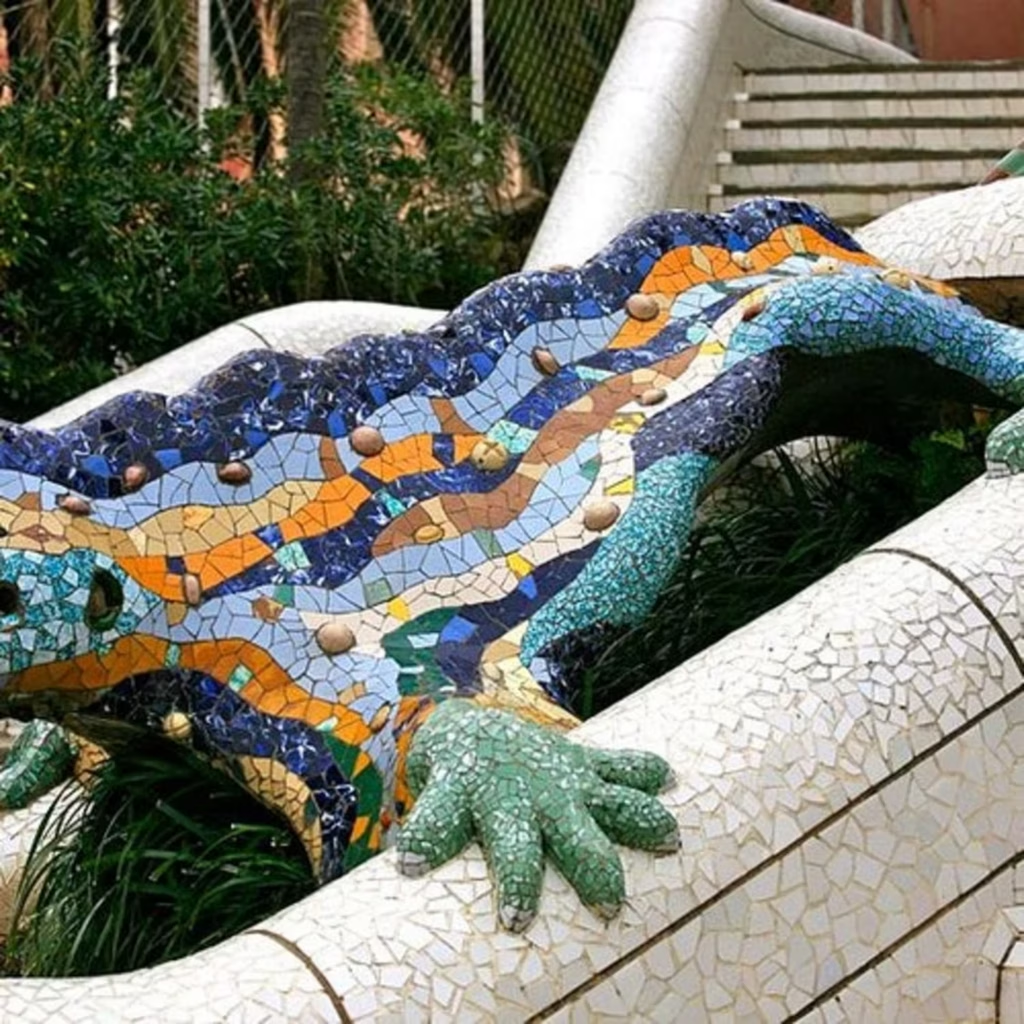
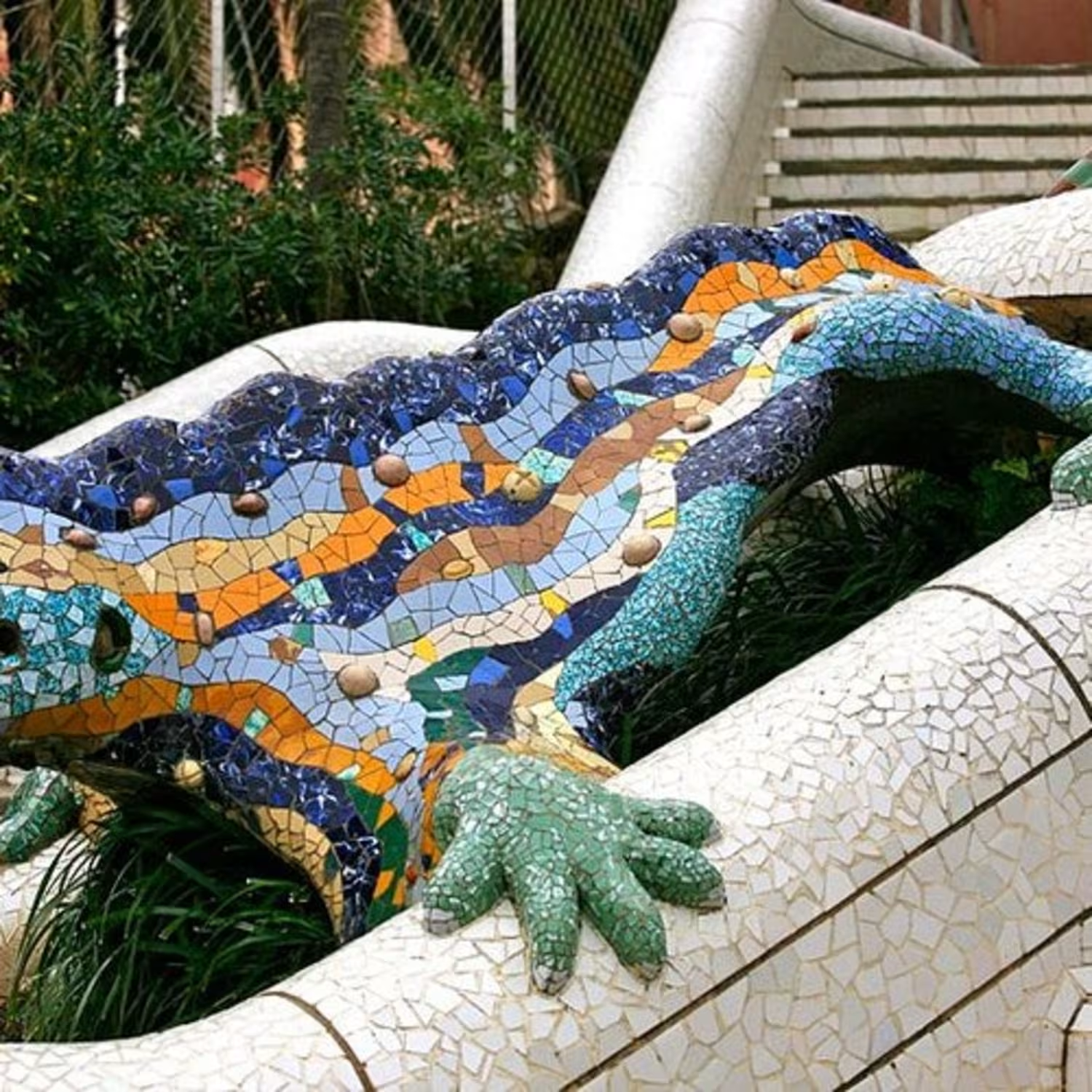
Water from a fountain runs down the middle of the steps, and the stairway tells a small story as you climb. On the first landing there are whimsical, goblin-like shapes. Halfway up is the emblem of Catalonia. Above it sits the dragon, or salamander, covered in mosaic: the most popular image of the park. At the top, sheltered under the Hypostyle Room, the last flight ends at a bench shaped like a small Greek theatre.

For a different angle, stand to one side of the steps and see the dragon in profile against the colonnade behind it.

The Hypostyle Room

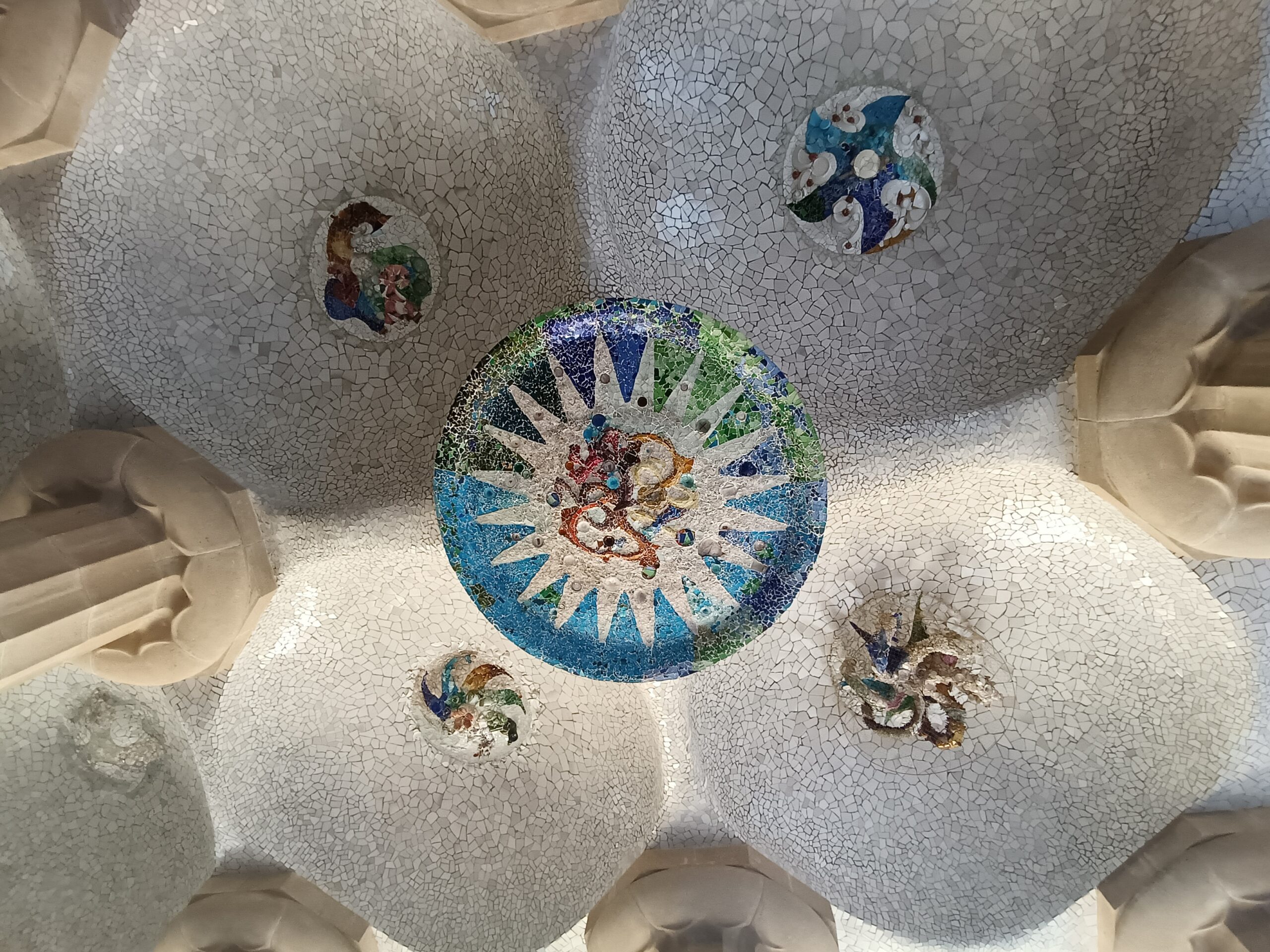
At the top of the stairway you walk into a forest of stone. The Hypostyle Room stands on 86 striated columns inspired by the Doric order, and it was planned as the covered market for the residents of the estate. Some columns are missing on purpose, so the space reads like a church with three naves. The outer columns lean, which breaks the rules of classical composition and makes their job of holding up the square above easy to see.

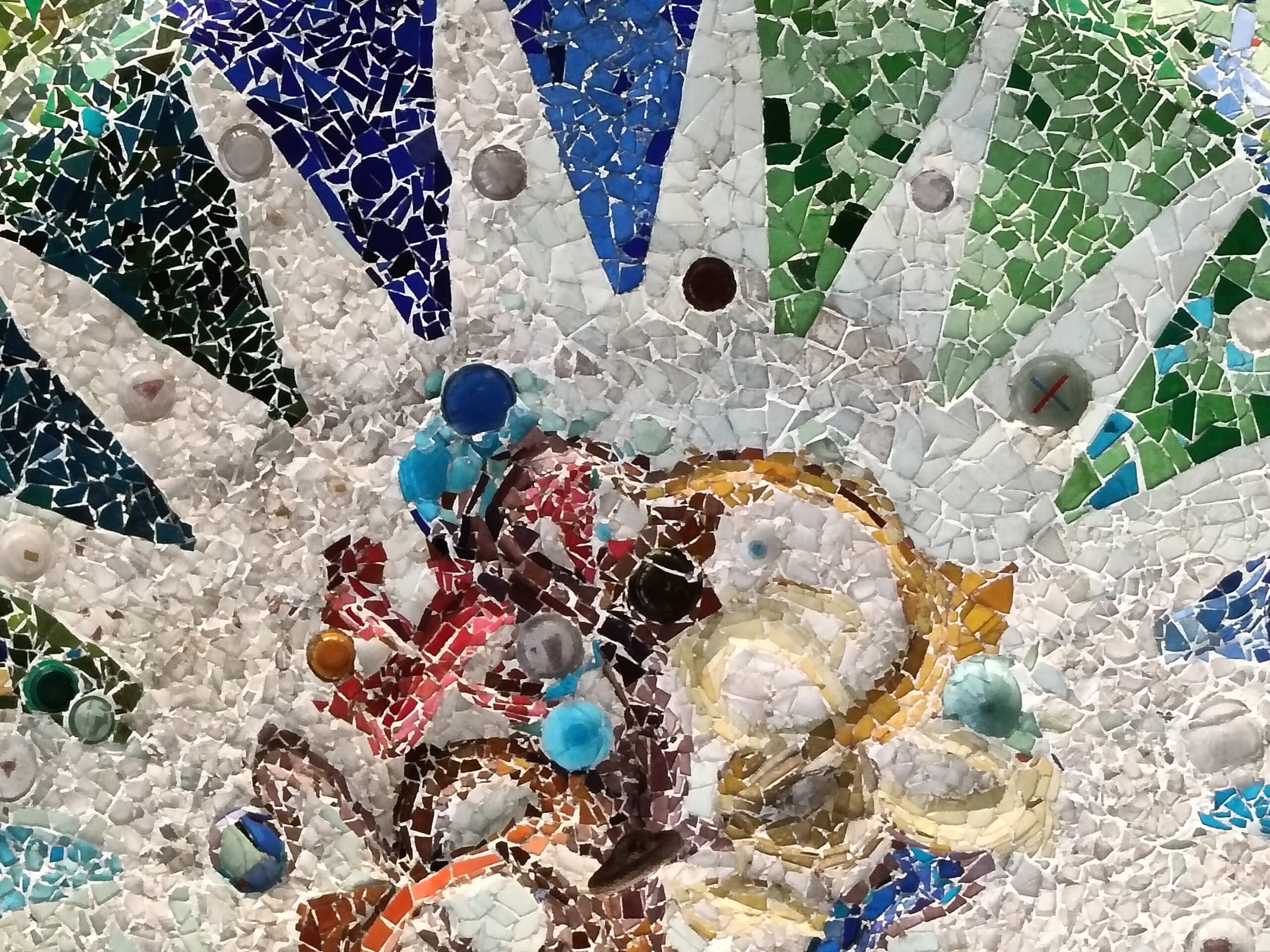
Look up. The ceiling is made of small domes in traditional clay brick, decorated with tile-shard mosaics by Josep Maria Jujol, one of Gaudí's assistants.

The room is also a piece of engineering. Rainwater from the square above filters into a conduit inside the bench, runs down to an underground tank beneath the columns and, when the tank overflows, comes out of the dragon's mouth on the stairway.

Nature Square and the serpentine bench
Climb the side ramps and you come out on top of the Hypostyle Room, on the large open esplanade known as Nature Square (Plaça de la Natura). It was conceived as the open-air gathering space of the garden city.

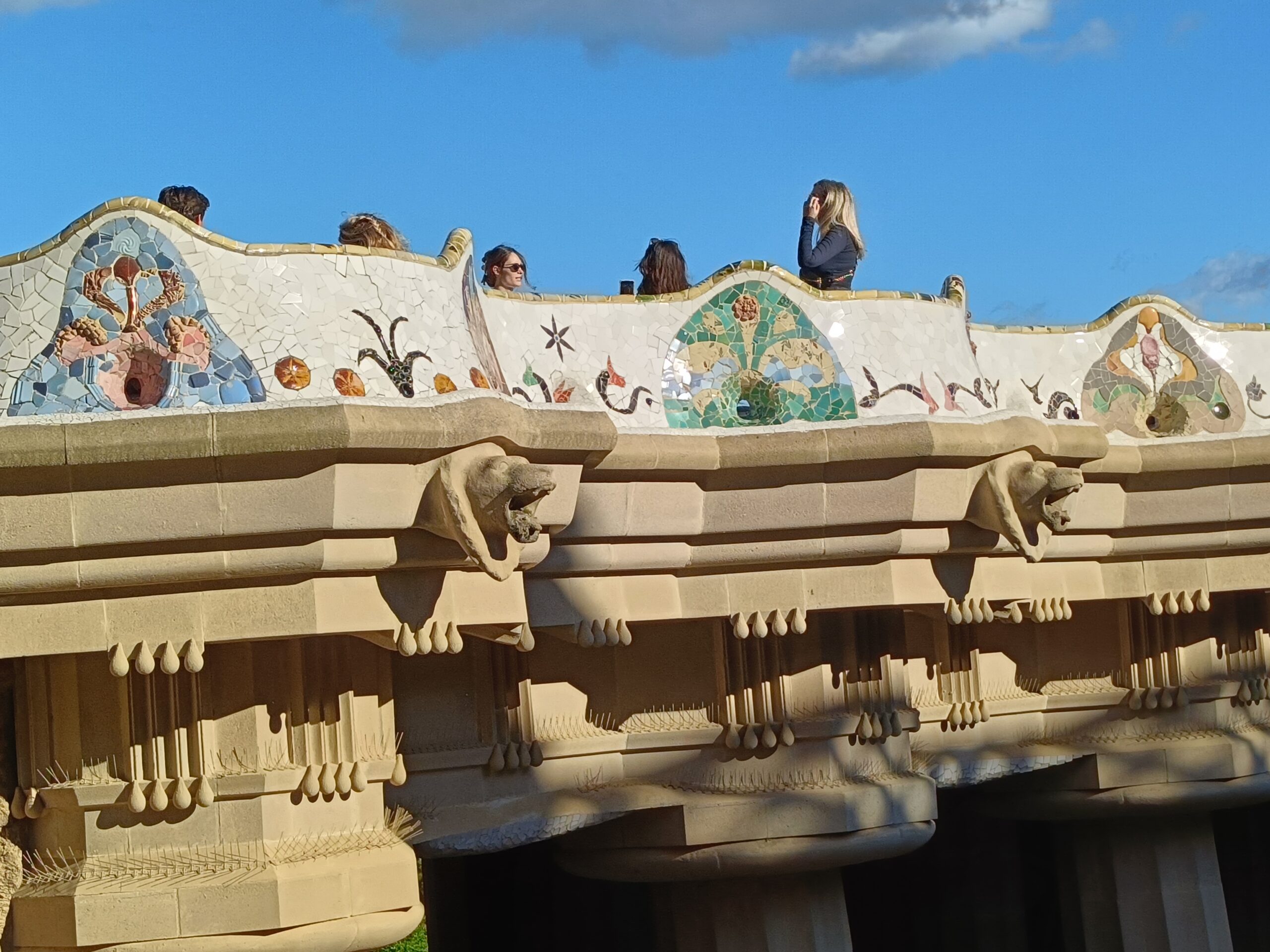
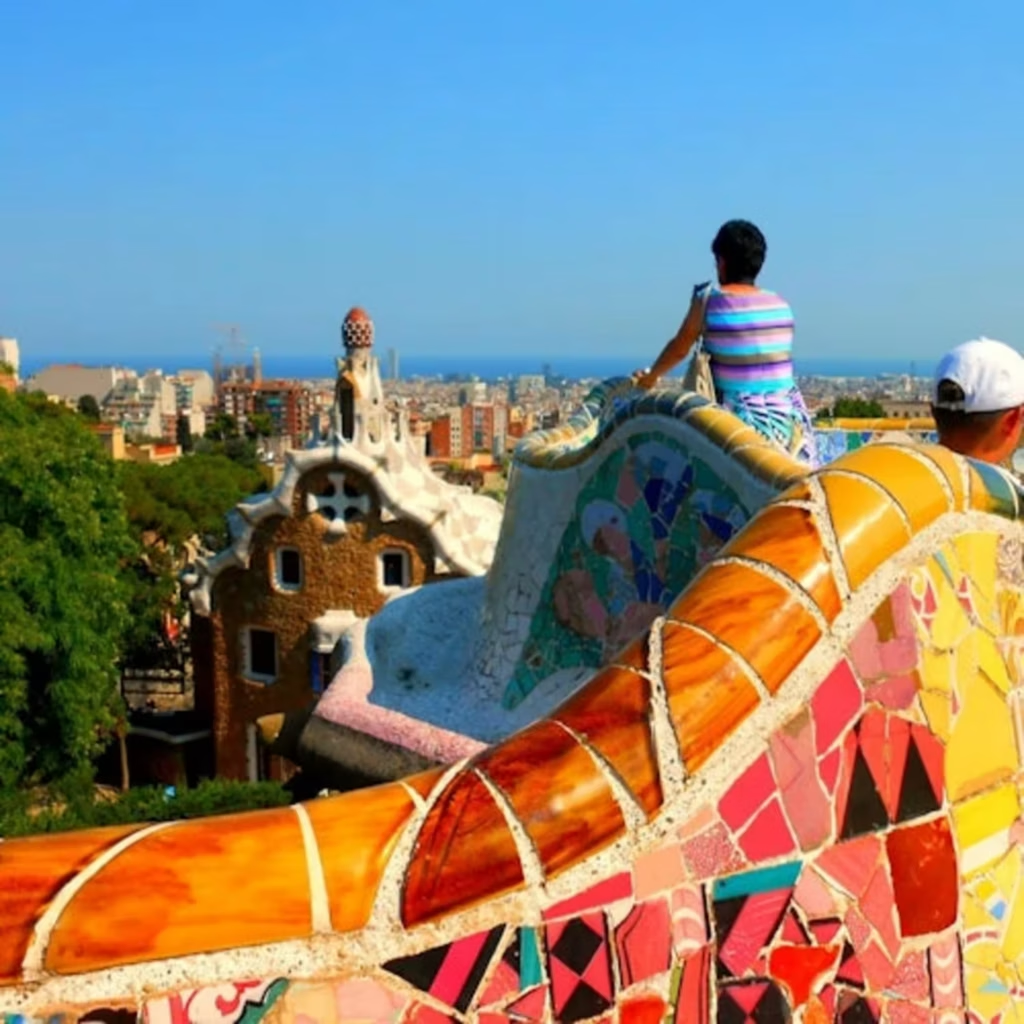
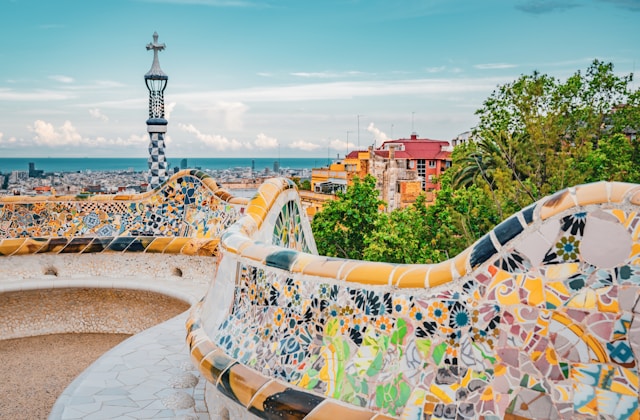
Its edge is the famous undulating bench, about 150 metres long and covered in trencadís designed by Josep Maria Jujol. Walk its full length rather than stopping at the first gap: the colours, patterns and fragments change constantly, and every curve frames a different view over the city towards the sea.

Viaducts and the Laundry Room Portico
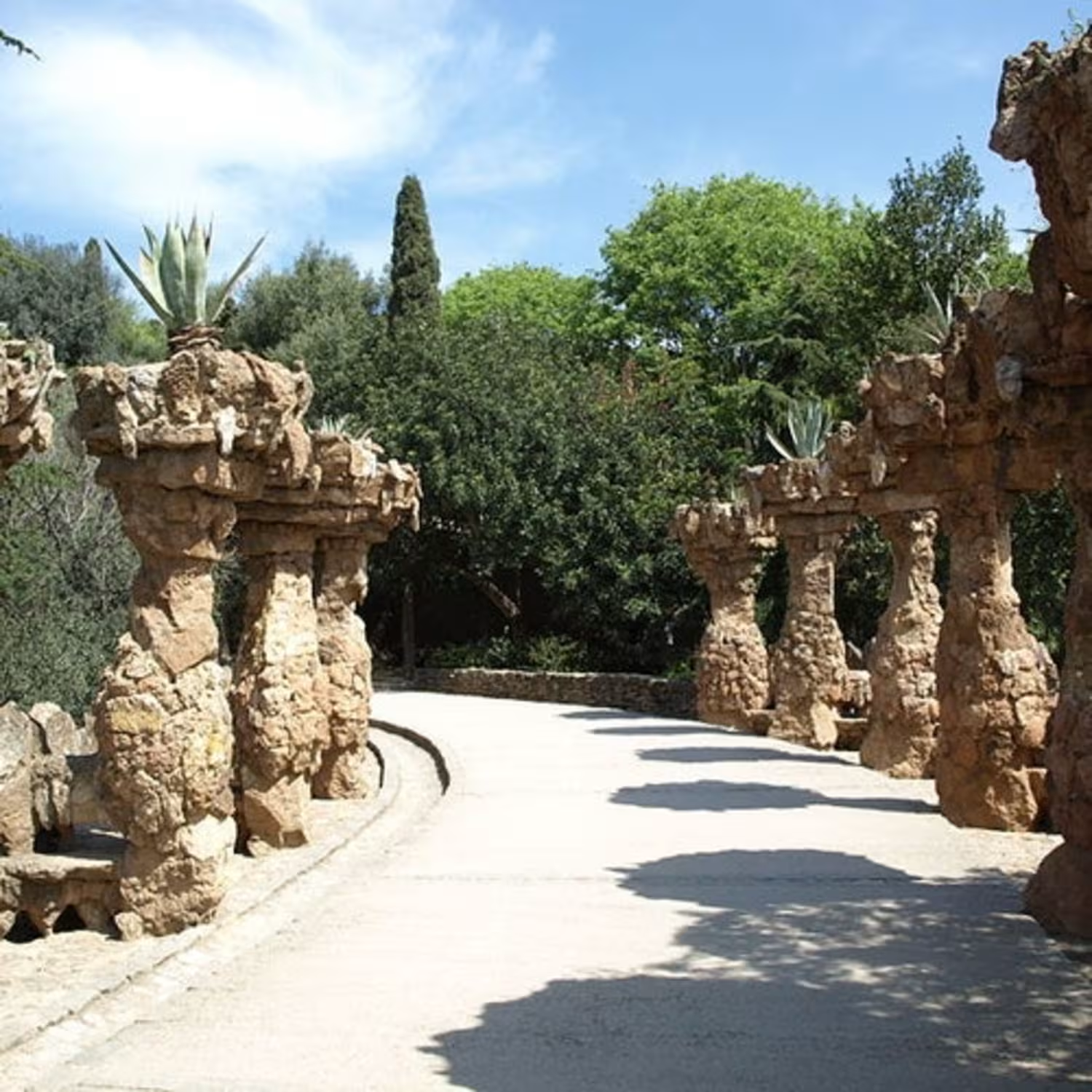
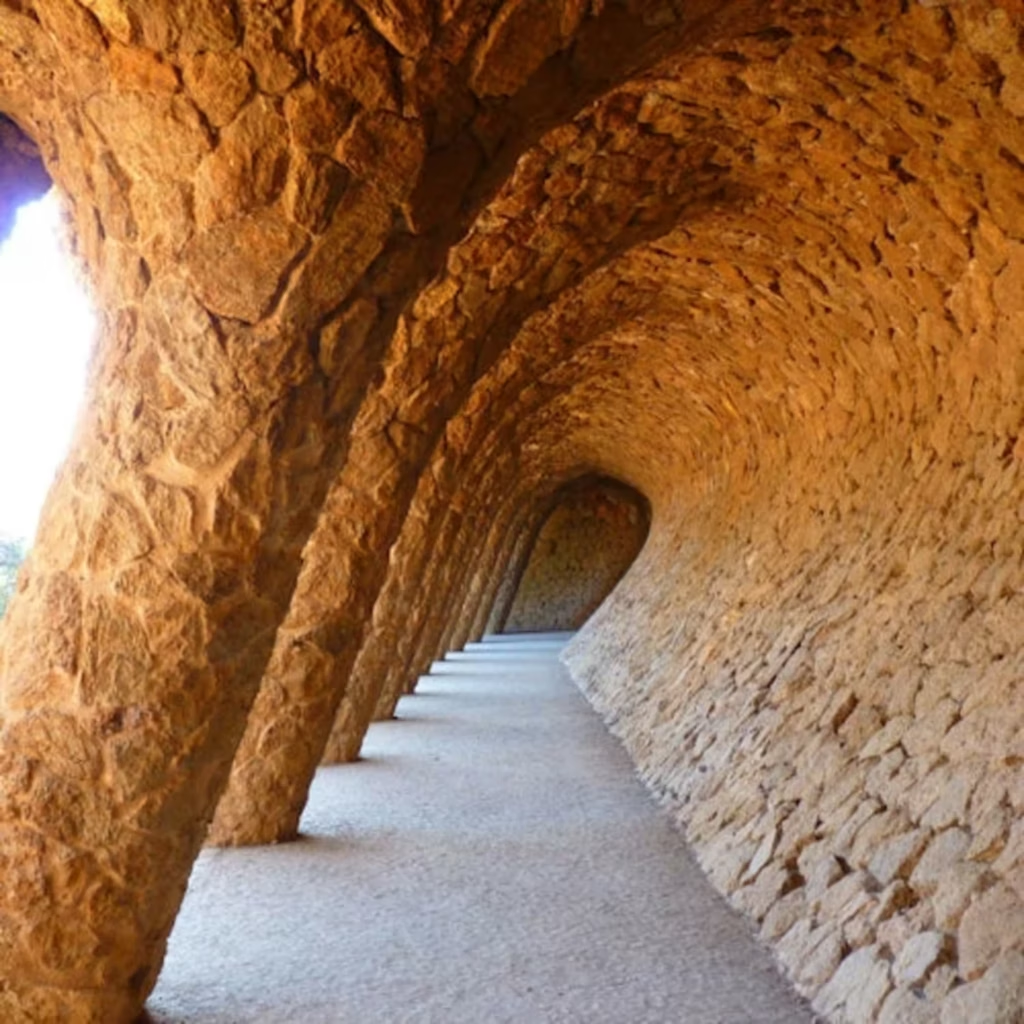
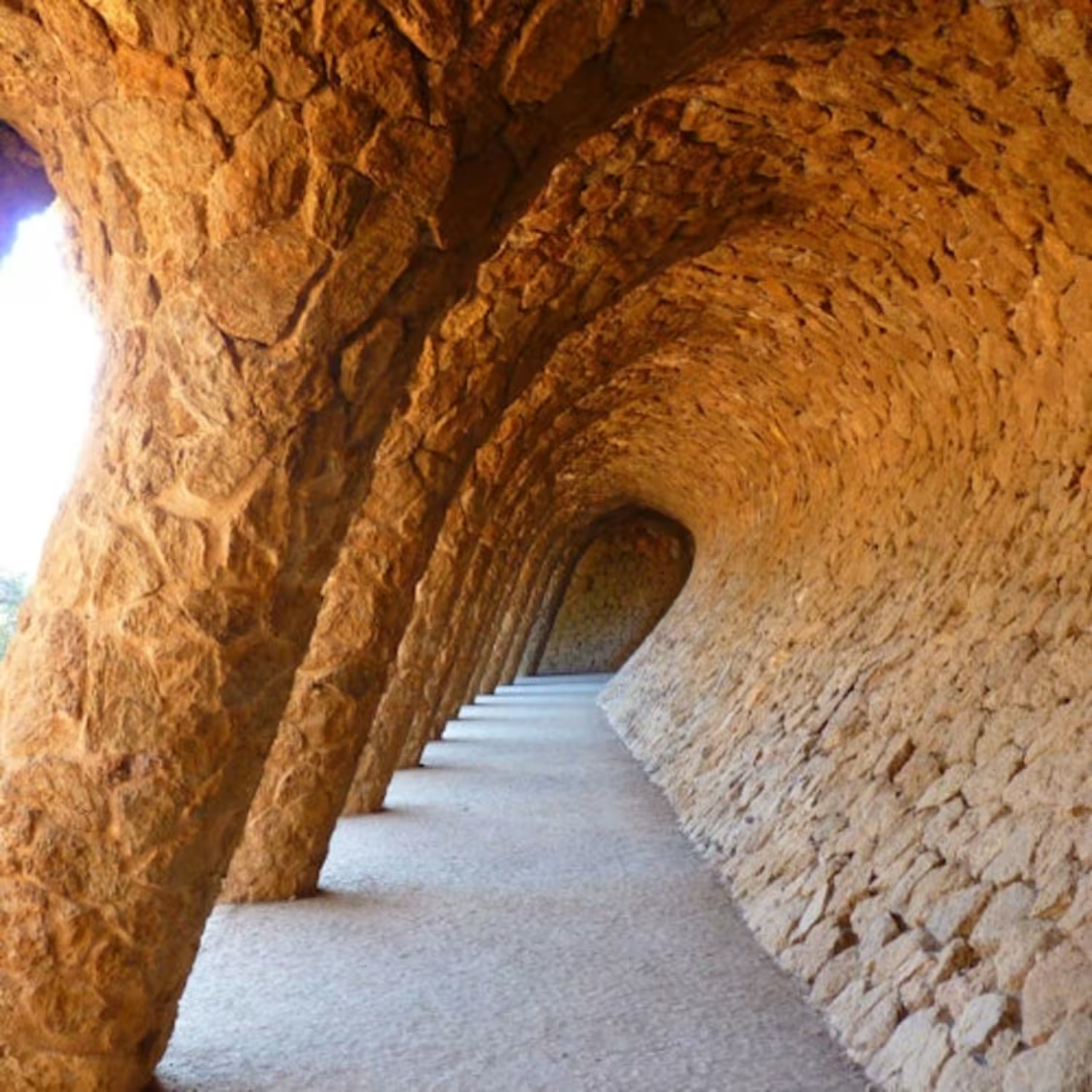
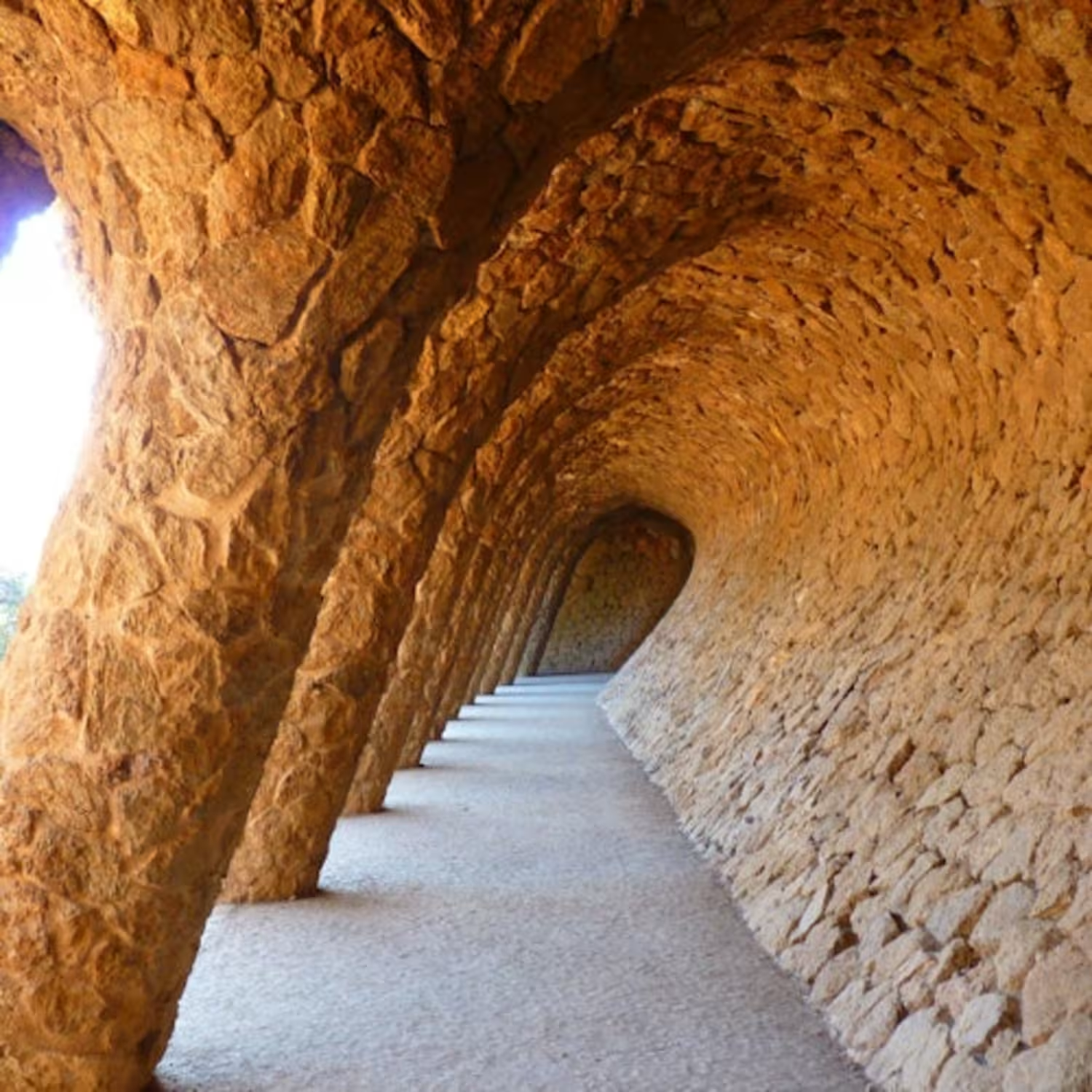
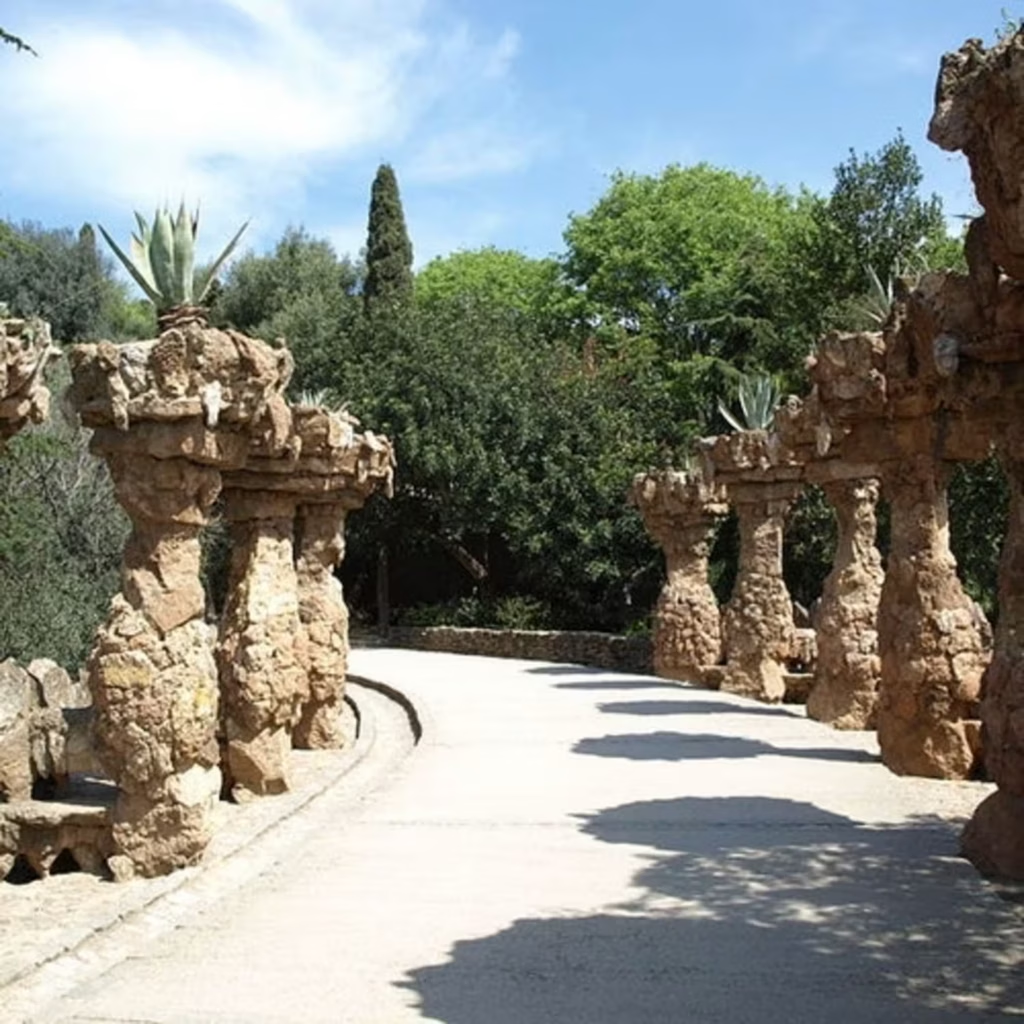
Gaudí planned three viaducts, the Pont de Baix, Pont del Mig and Pont de Dalt (lower, middle and upper), each five metres wide, to carry carriages from the main gate up the hill. They rest on sloping columns and vaults built with unhewn stone taken from the site itself, and their balustrades are topped with planted vegetation, so they look as if they have grown out of the hillside.

The lower viaduct follows a curve supported by two rows of inclined columns. Nearby is the Laundry Room Portico, also called the Portico of the Washerwoman, named after a sculpted figure on one of its columns. Pedestrian paths three metres wide and shortcuts with steps and slopes link these structures.

How entry to the Monumental Zone works

Tickets are sold for a time slot, and you can enter up to 30 minutes after the start of your slot. Slots start at 9:30 am, or 9:00 am in July and August. The last slot is 7:30 pm from late March to late October, 6:00 pm from early February to late March and 5:30 pm from late October to early February.

Once you are inside, there is no time limit, so you can stay as long as you like. Once you exit, you cannot re-enter. Early-morning and evening hours are reserved for local residents. Children aged 0 to 6 enter free under the park's own rules but still need a ticket: check the age bands and ticket options shown when you book. The Casa Gaudí Museum inside the park needs a separate ticket. See our Park Güell visitor guide for more practical details.

Tips for the Monumental Zone

Book the first slot of the day for the quietest Dragon Stairway and Hypostyle Room.

Follow the route in this guide: pavilions, stairway, Hypostyle Room, Nature Square, viaducts. It is the natural uphill order and saves backtracking.

Allow time for Nature Square: the bench is about 150 metres long and the views change along it.

Wear shoes with grip. The zone is on a hillside, with ramps, slopes and steps throughout.

Download the audio guide app included with our ticket before you arrive, and bring earphones.

Combine the visit with Gaudí's other works in the city, such as the Sagrada Familia and Palau Güell.

Park Güell Monumental Zone: FAQs

What is the Monumental Zone at Park Güell?

It is the ticketed area near the main entrance that holds the park's best-known works: the entrance pavilions, the Dragon Stairway, the Hypostyle Room, Nature Square with its mosaic bench and the stone viaducts.

Is Park Güell worth visiting?

Yes. It is a UNESCO World Heritage Site and the Monumental Zone packs Gaudí's mosaic dragon, a hall of 86 columns and a 150-metre trencadís bench with city views into one compact walk.

How long do you need in the Monumental Zone?

There is no time limit once you are inside. Allow enough time to walk the full stairway, the Hypostyle Room, the bench on Nature Square and the viaducts at an easy pace.

Where is the Park Güell dragon?

On the Dragon Stairway, just inside the main entrance on Carrer d'Olot, halfway between the emblem of Catalonia and the Hypostyle Room.

Is the dragon a dragon or a salamander?

Both names are used. It is a mosaic-covered creature on the main stairway and has become the most popular image of the park.

How many columns are in the Hypostyle Room?

86 striated columns inspired by the Doric order. The room was designed as the market for the estate.

Who designed the mosaic bench?

The bench around Nature Square, about 150 metres long, was designed by Josep Maria Jujol, one of Gaudí's assistants.

Can I leave and come back in?

No. Once you exit the Monumental Zone you cannot re-enter with the same ticket.

What time can I enter?

Within 30 minutes of the start of your time slot. Slots start at 9:30 am, or 9:00 am in July and August.

Do children need a ticket?

Children aged 0 to 6 enter free under the park's own rules but still need a ticket. Check the age bands and ticket options shown when you book.

Is the Casa Gaudí Museum included?

No. The Casa Gaudí Museum inside the park needs a separate ticket.

About this guide

Sources: Park Güell, The Dragon Stairway; Park Güell, The Hypostyle Room; Park Güell, Entrance and porter's lodge pavilions; Park Güell, Roadways, paths and viaducts; Park Güell, Prices and times; Barcelona City Council, Park Güell.