We are processing your request.
Please, don’t close or refresh the page.
Barcelona Tickets Cathedral Of Barcelona Rooftop And Cloister
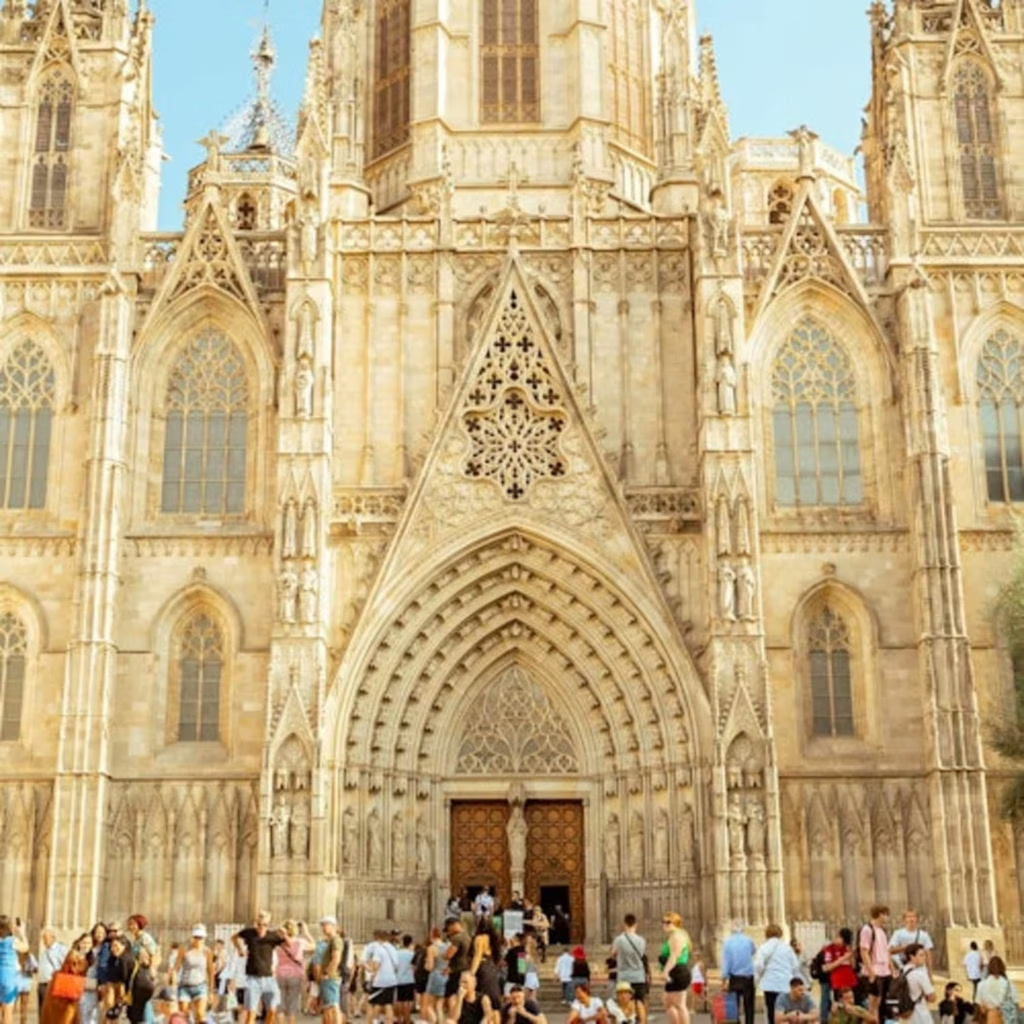
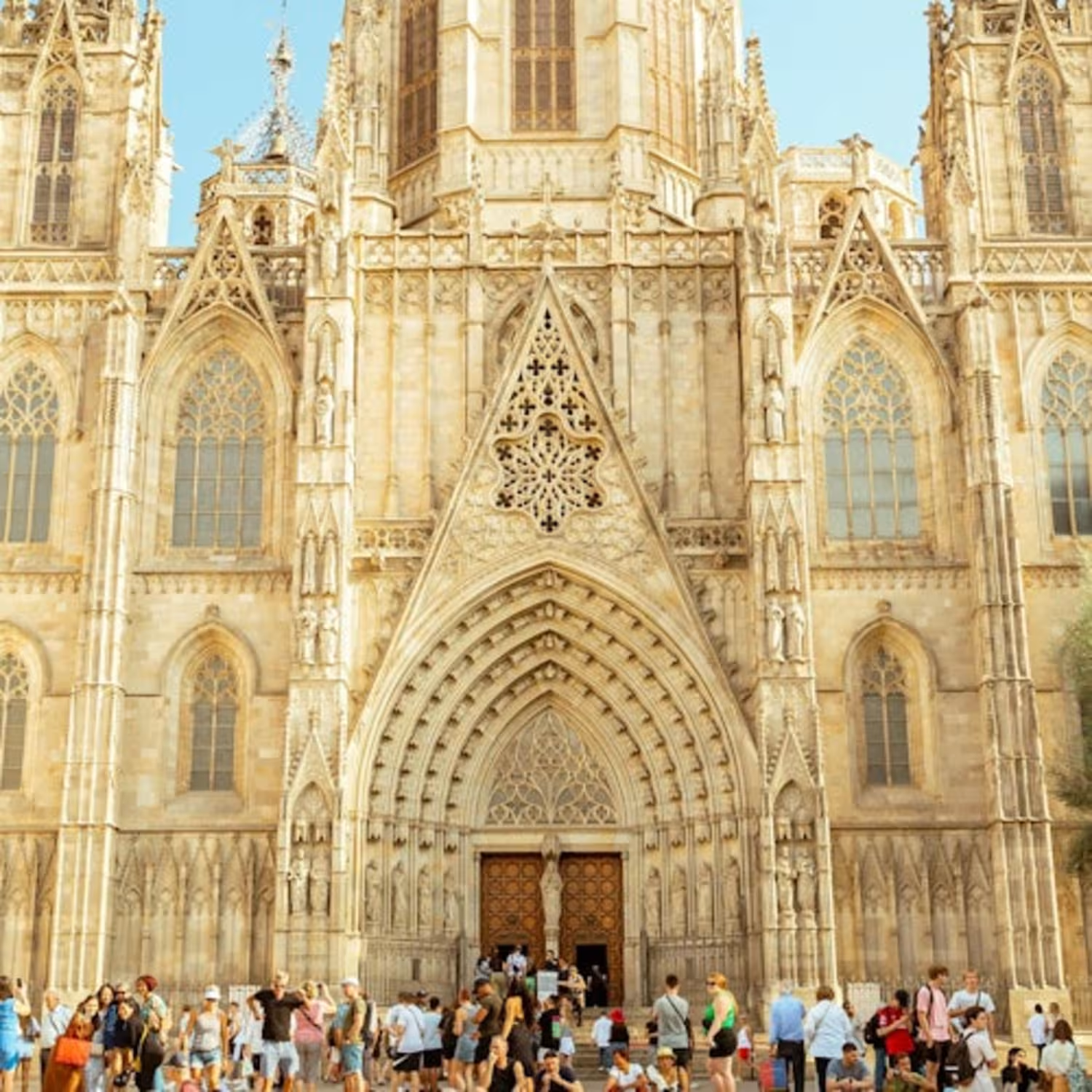
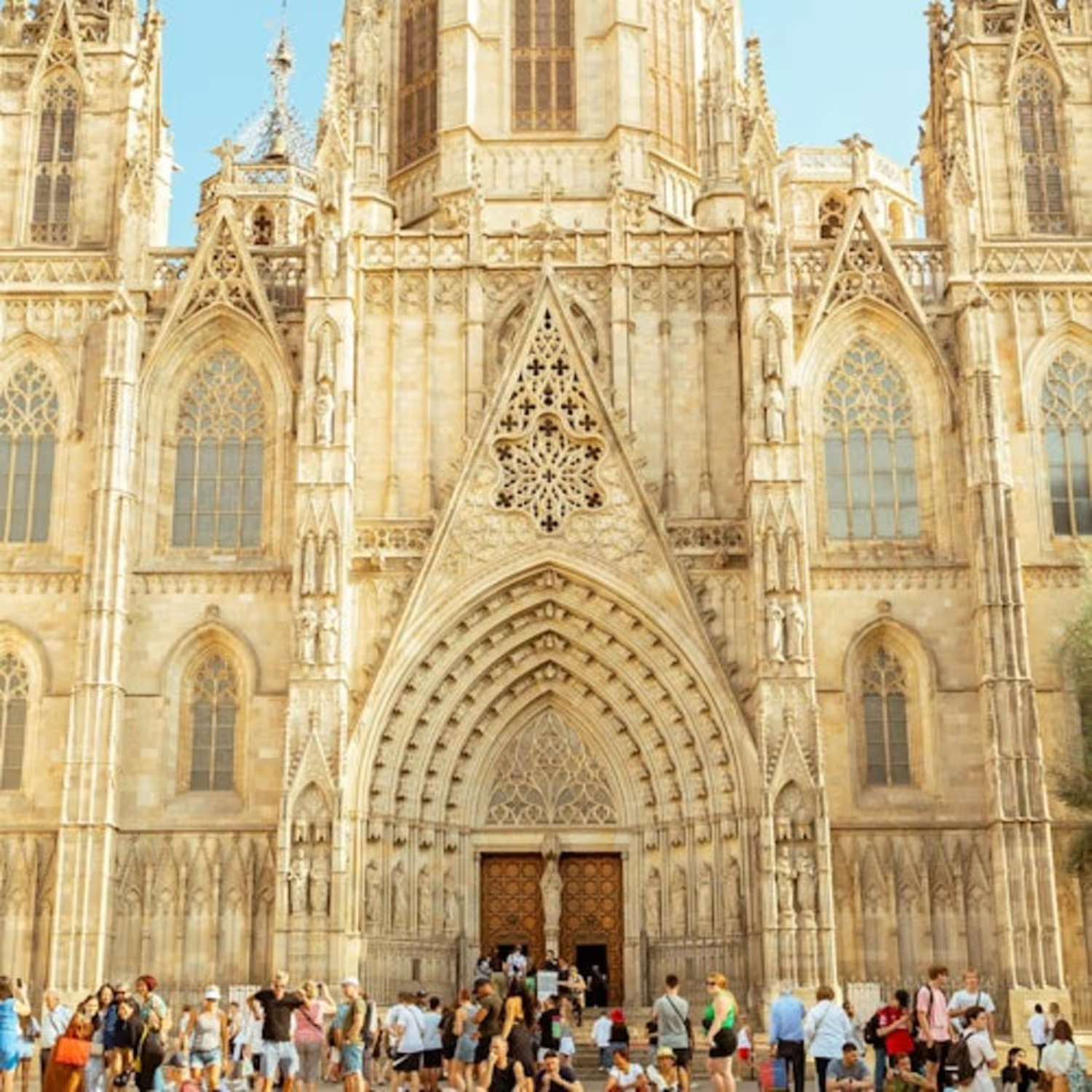
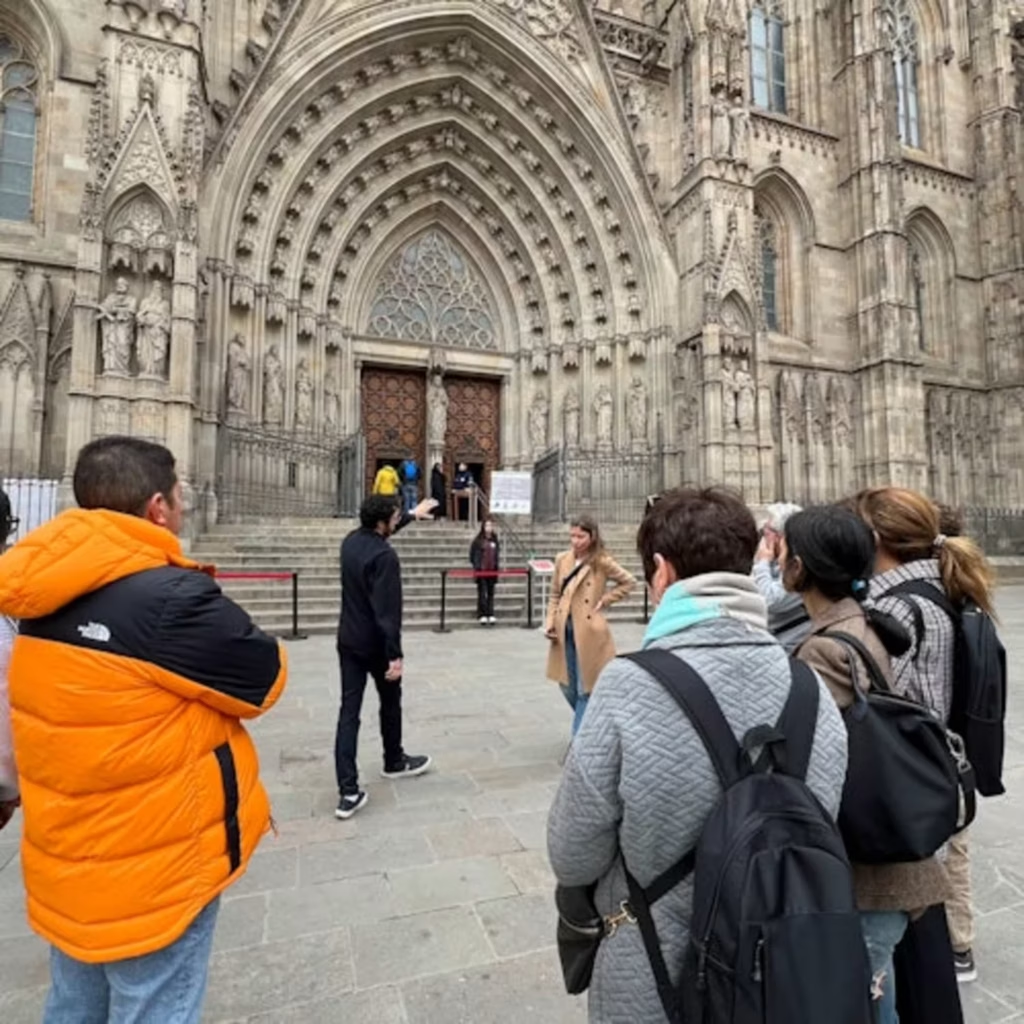
Barcelona Cathedral in the Gothic Quarter

Barcelona Cathedral Rooftop, Cloister and Geese

A panoramic roof reached by lift, a Gothic cloister with 13 white geese, a 14th-century choir and a Chapter Hall with a 1490 Pietà: what to see beyond the nave.

The nave of the Cathedral of the Holy Cross and Saint Eulalia is only the start of a visit. A few steps away are a lift that takes you up to the rooftop among the pinnacles and bell towers, a Gothic cloister where 13 white geese have lived since at least the 16th century, a carved choir and a Chapter Hall that started life as a soup kitchen for the poor.

This guide covers each of those spaces, what to look for in them, the traditions attached to them and how the tourist visit is organised, so you can make the most of your time in the Gothic Quarter. For practical information before you go, read our Barcelona Cathedral visitor guide.

4.6
(29)

Cathedral of Barcelona: Entrance + Audioguide

Highlights

Explore an iconic Gothic cathedral with a rich historical background.

Enjoy fast-track entry to save time.

Access exclusive areas such as the rooftop and Chapter Hall.

Experience a VR feature that enriches your visit.

Benefit from a fully narrated audio guide available in multiple languages.
4.7
(10)

Barcelona Cathedral: No-queue Entry + Guided Tour

Highlights

Skip the usual queues and enter directly with your priority ticket.

Benefit from an expert-led guided tour in English, French, or Spanish.

Gain full access to both the main interior and rooftop terraces offering panoramic city views.

Enjoy a rare virtual reality segment revealing hidden parts of the cathedral.

Small group tours limited to 20 participants ensure a personalized visit.
Barcelona Cathedral: key facts

The cathedral was built from the 13th century, under King Jaume II, over the remains of an earlier Romanesque church; the work took more than 150 years.

Its full name is the Cathedral of the Holy Cross and Saint Eulalia, and its crypt is dedicated to Saint Eulalia.

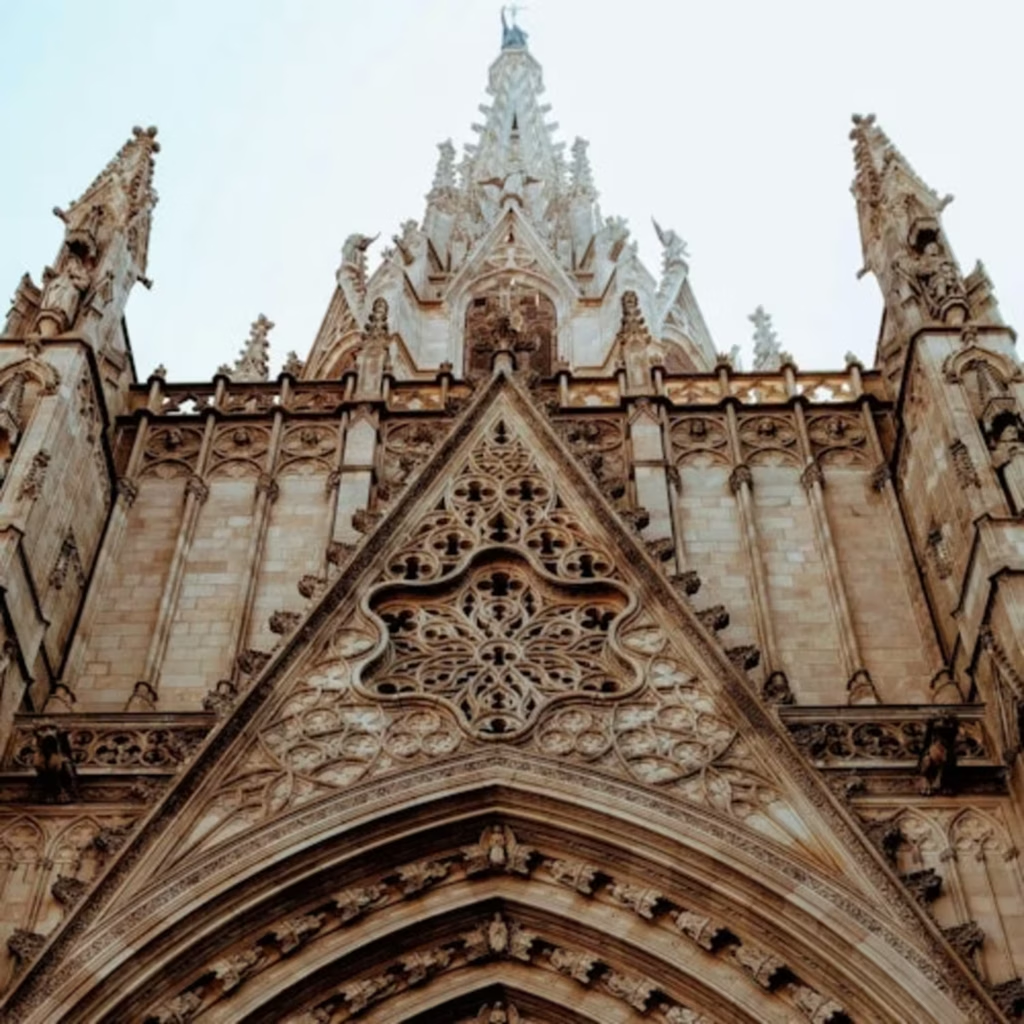
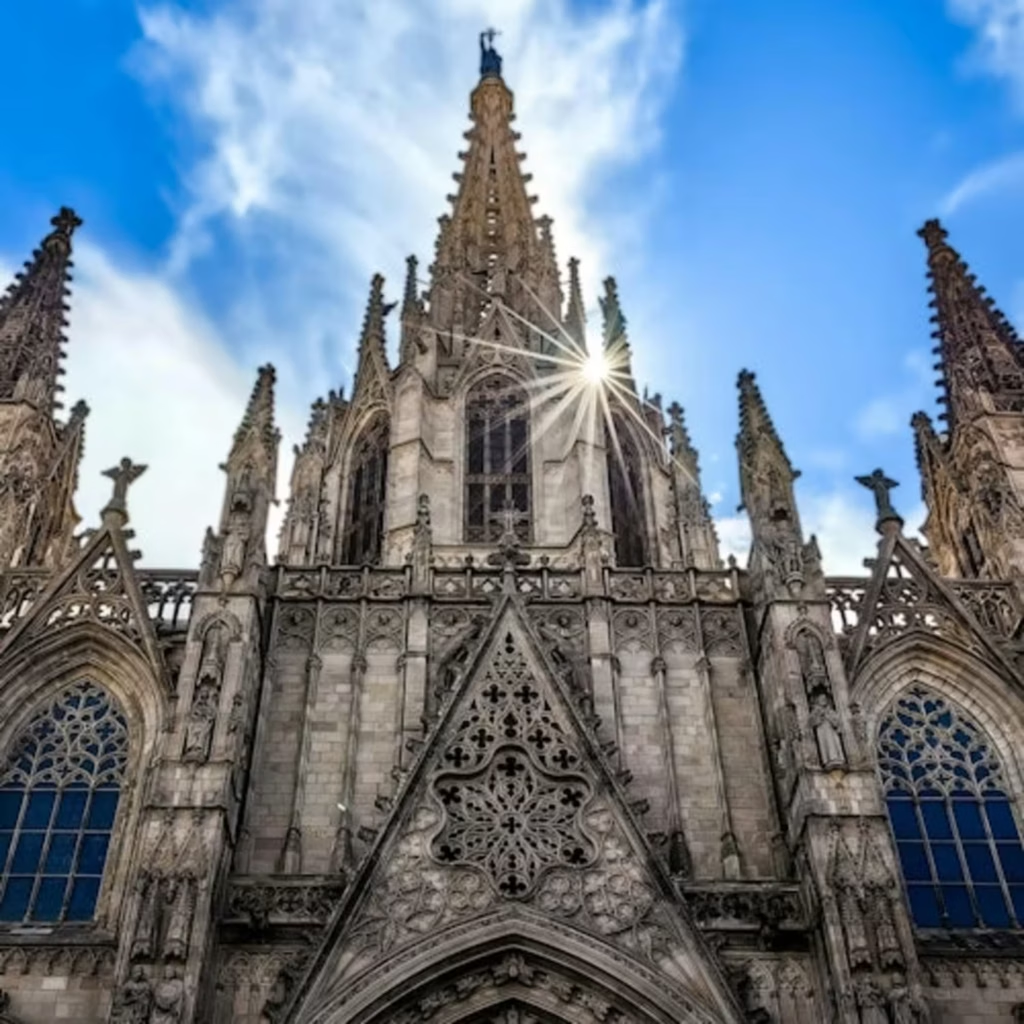
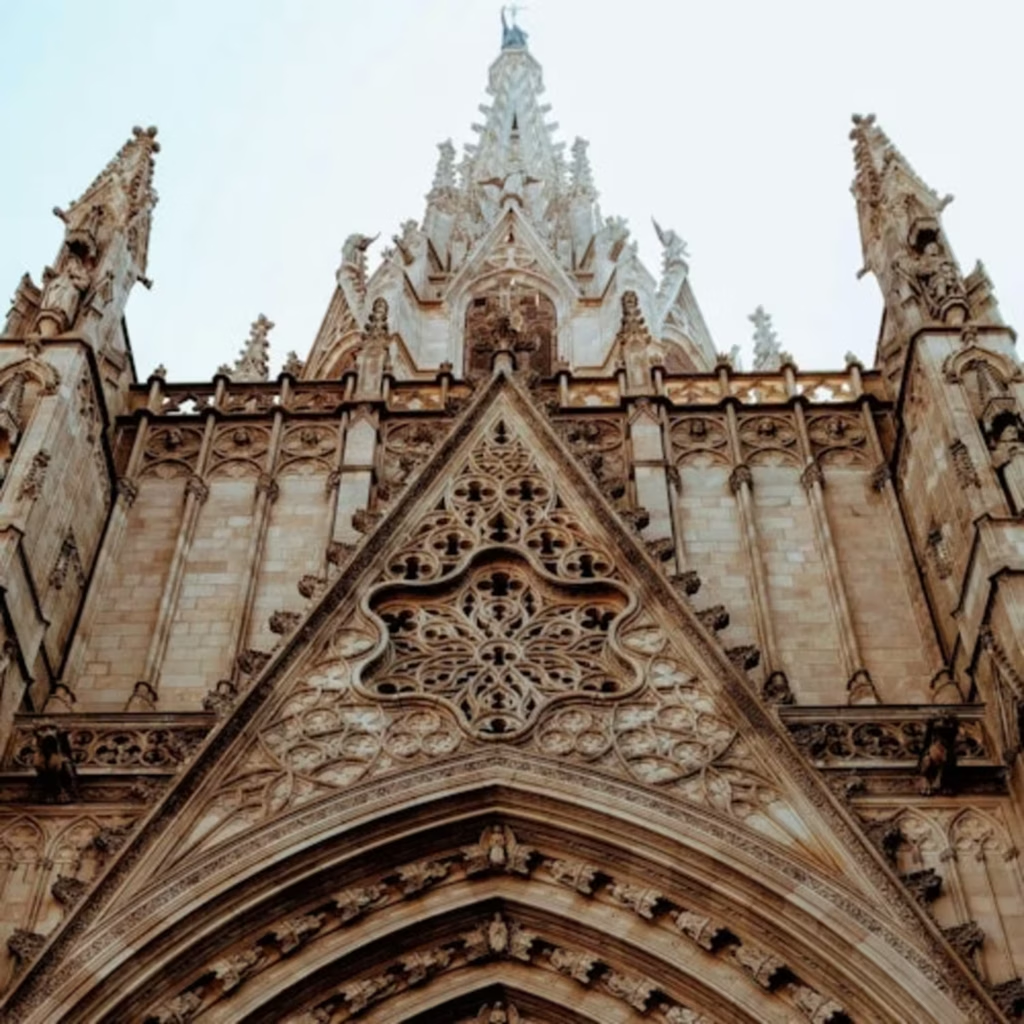
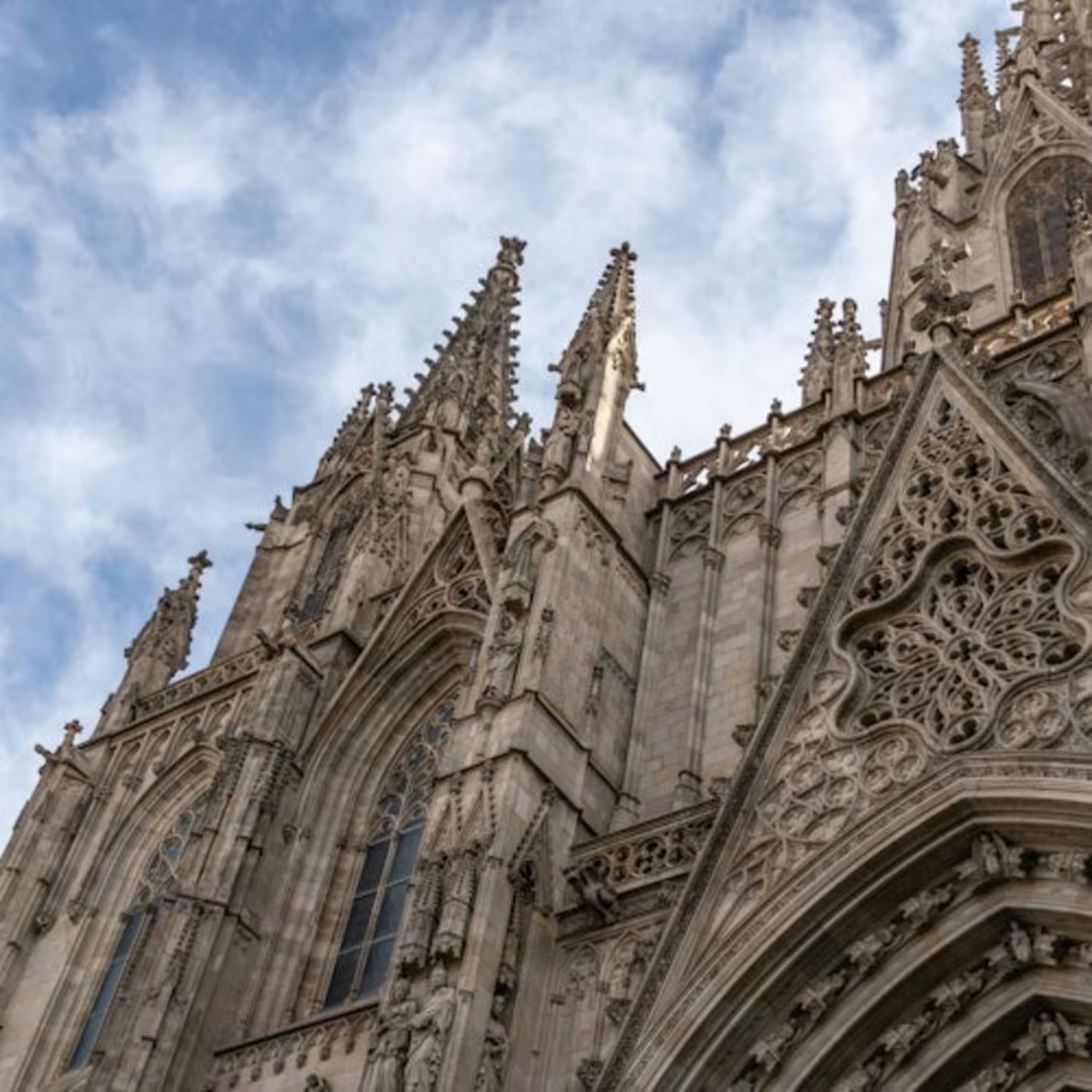
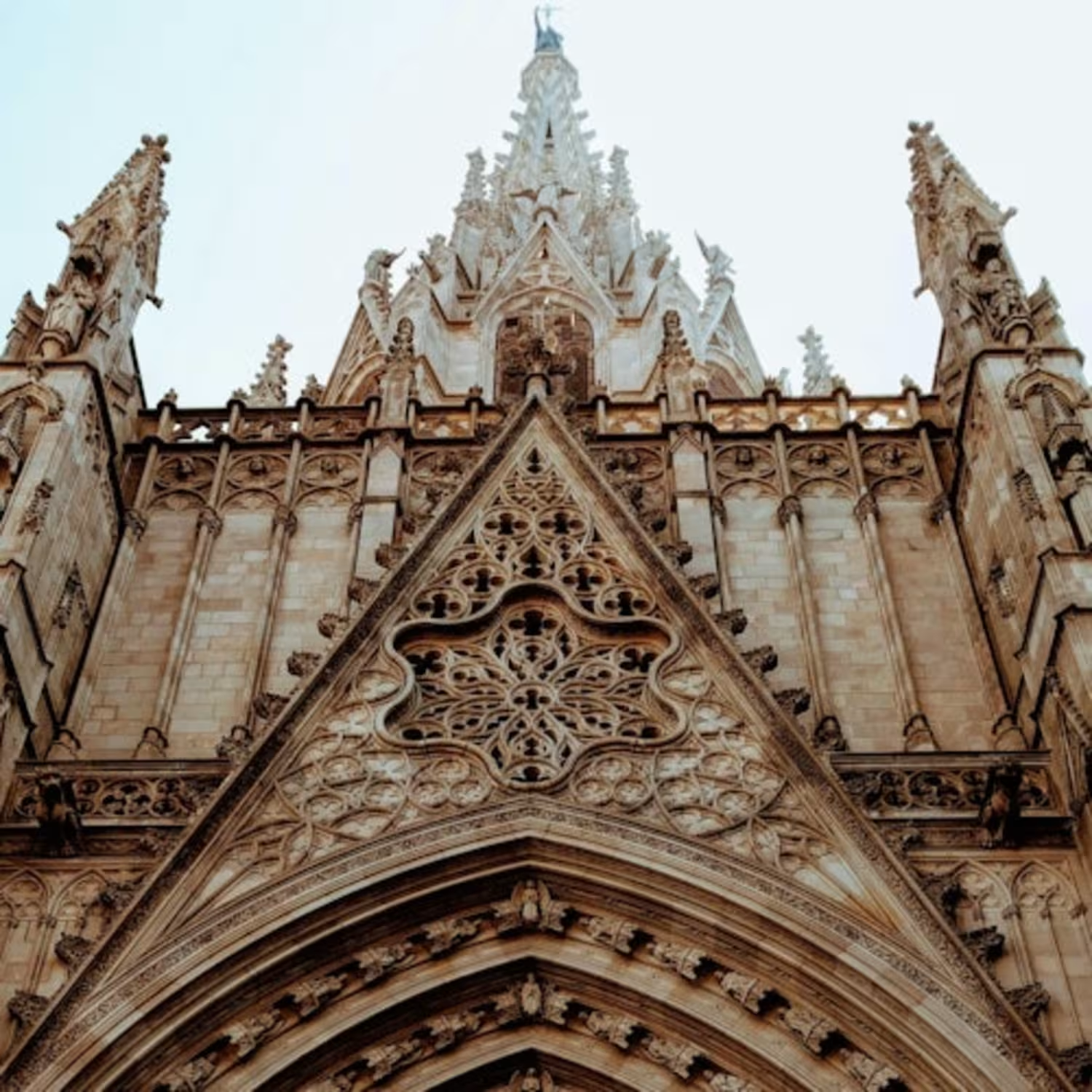
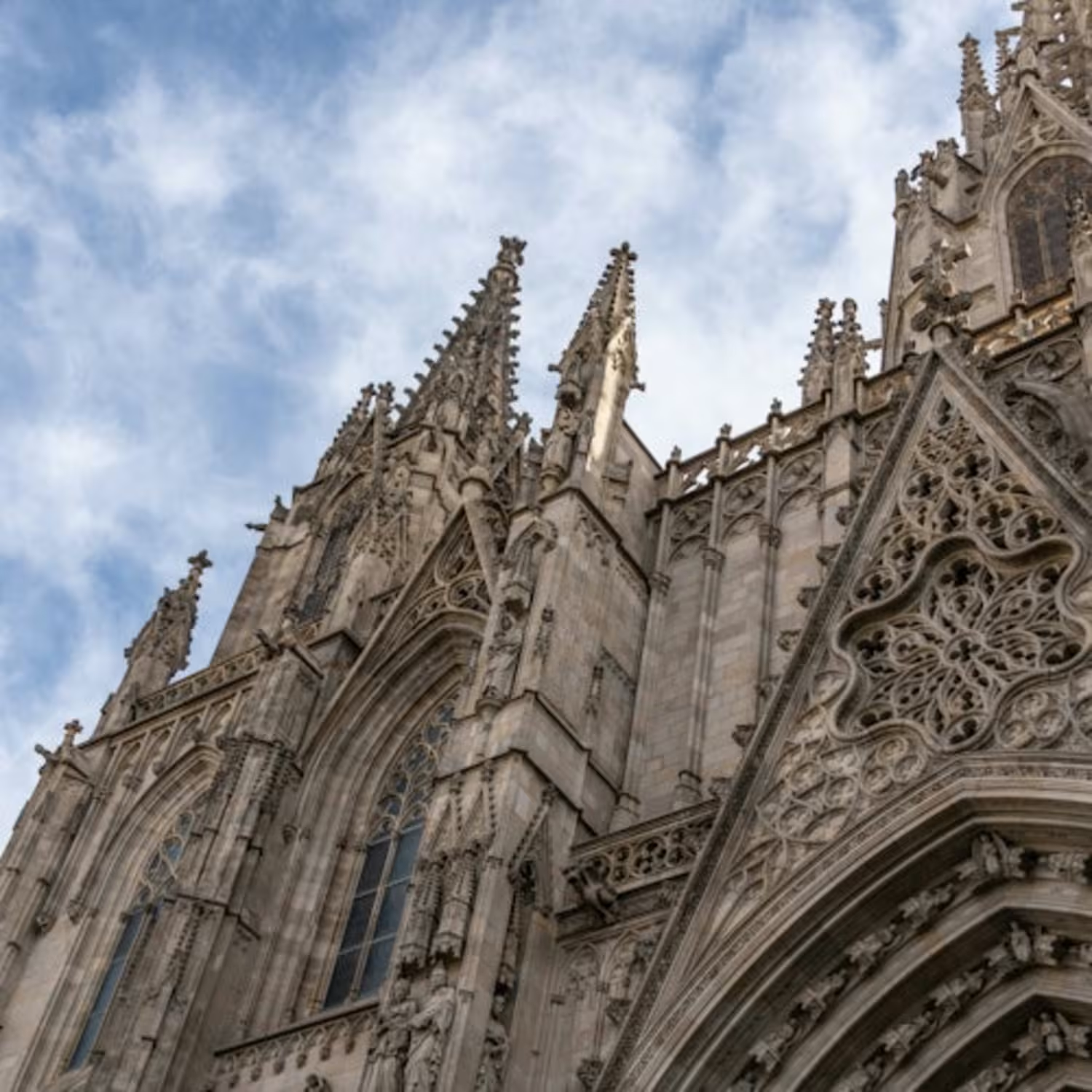
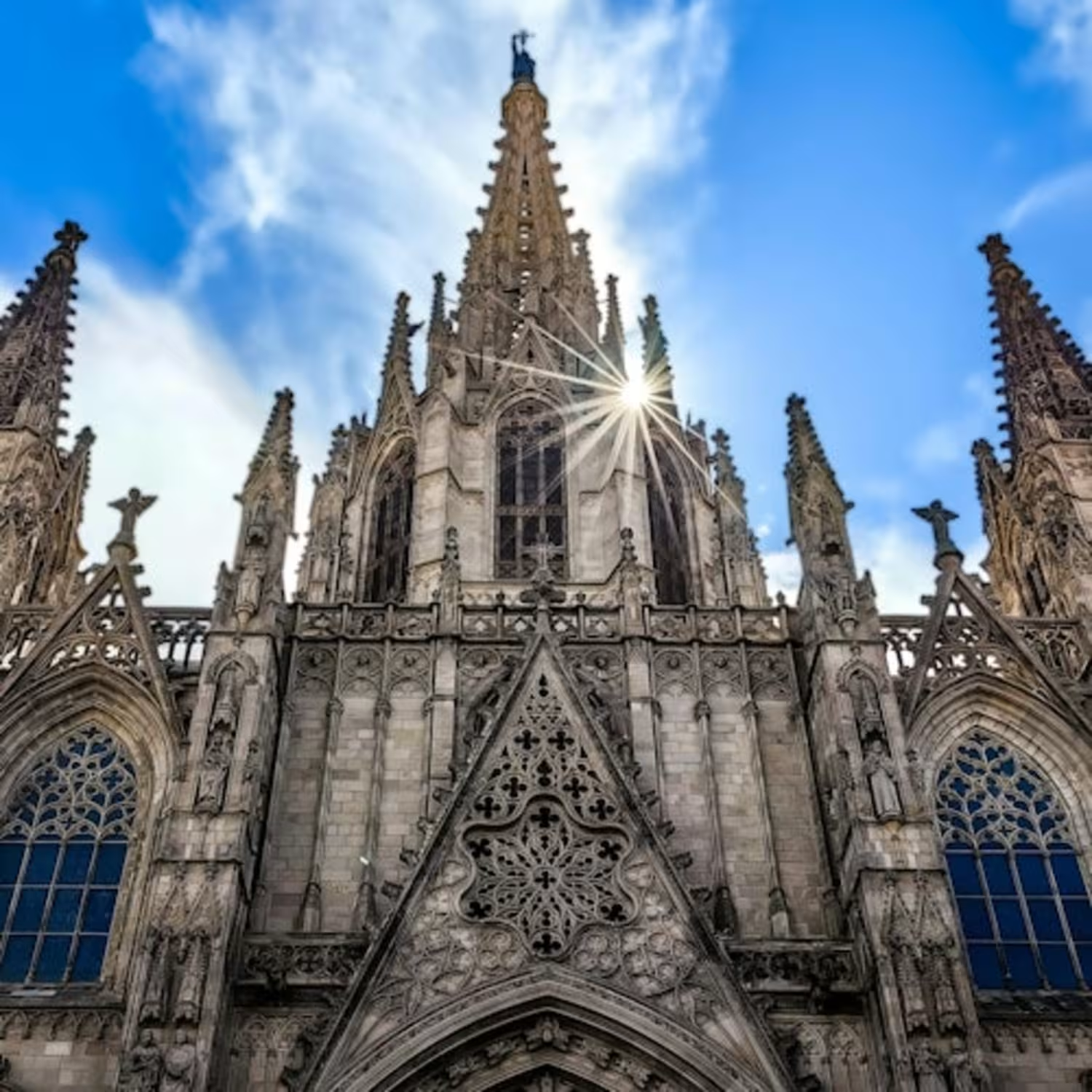
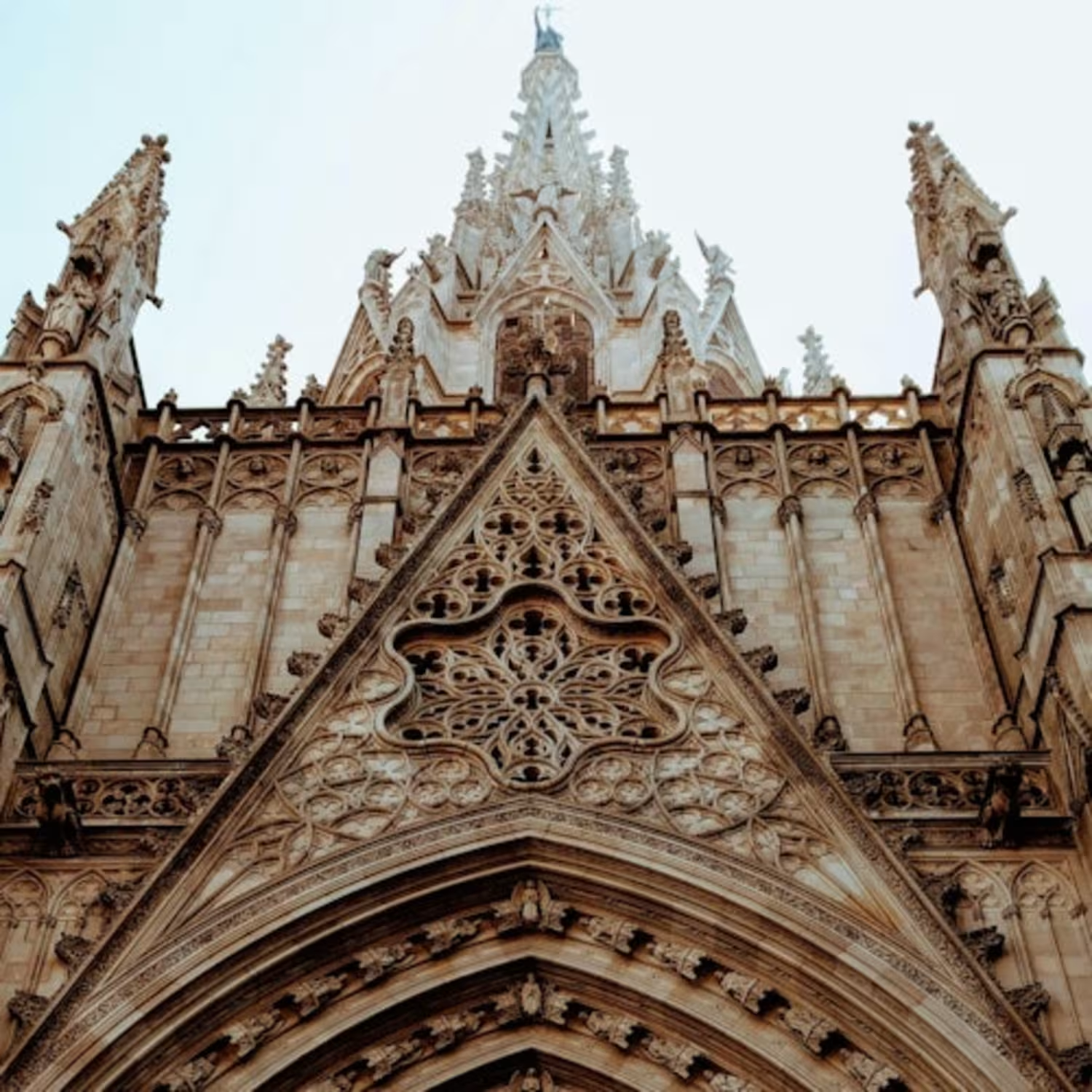
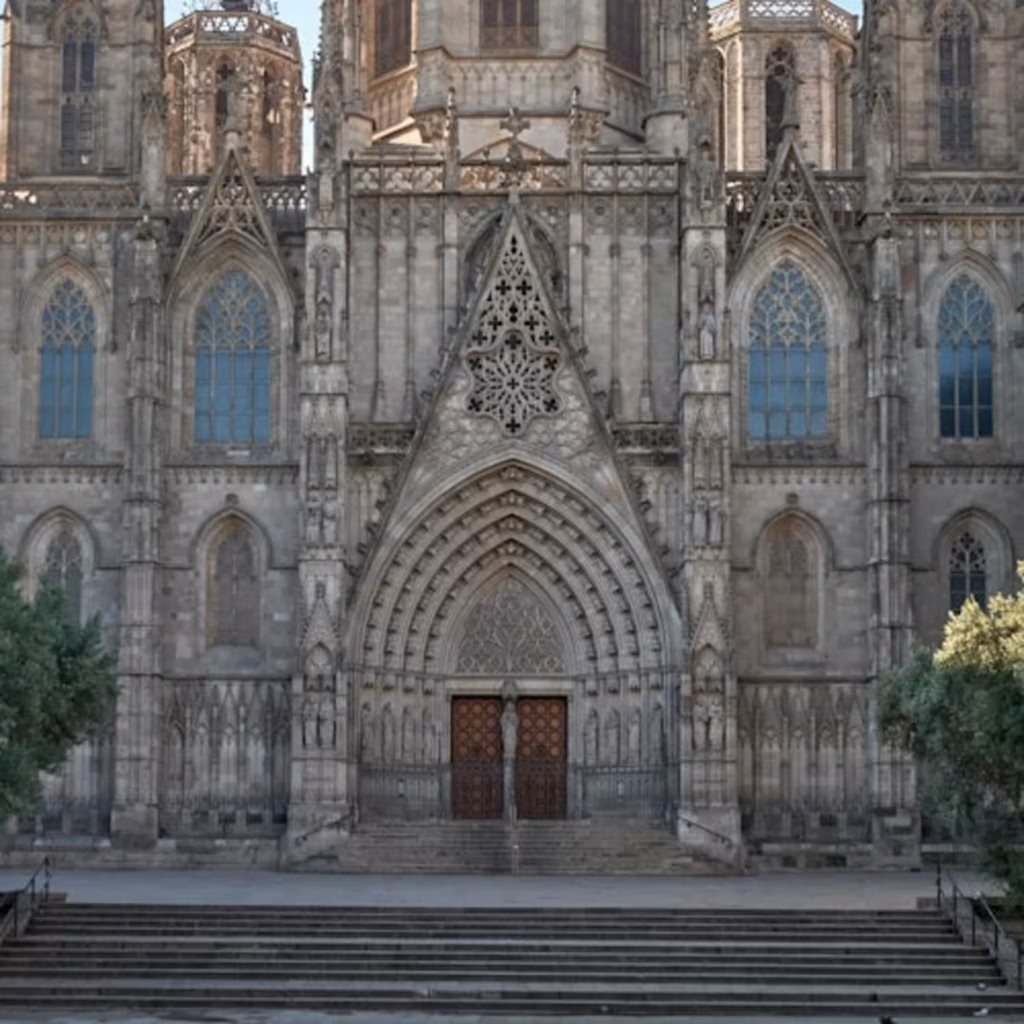
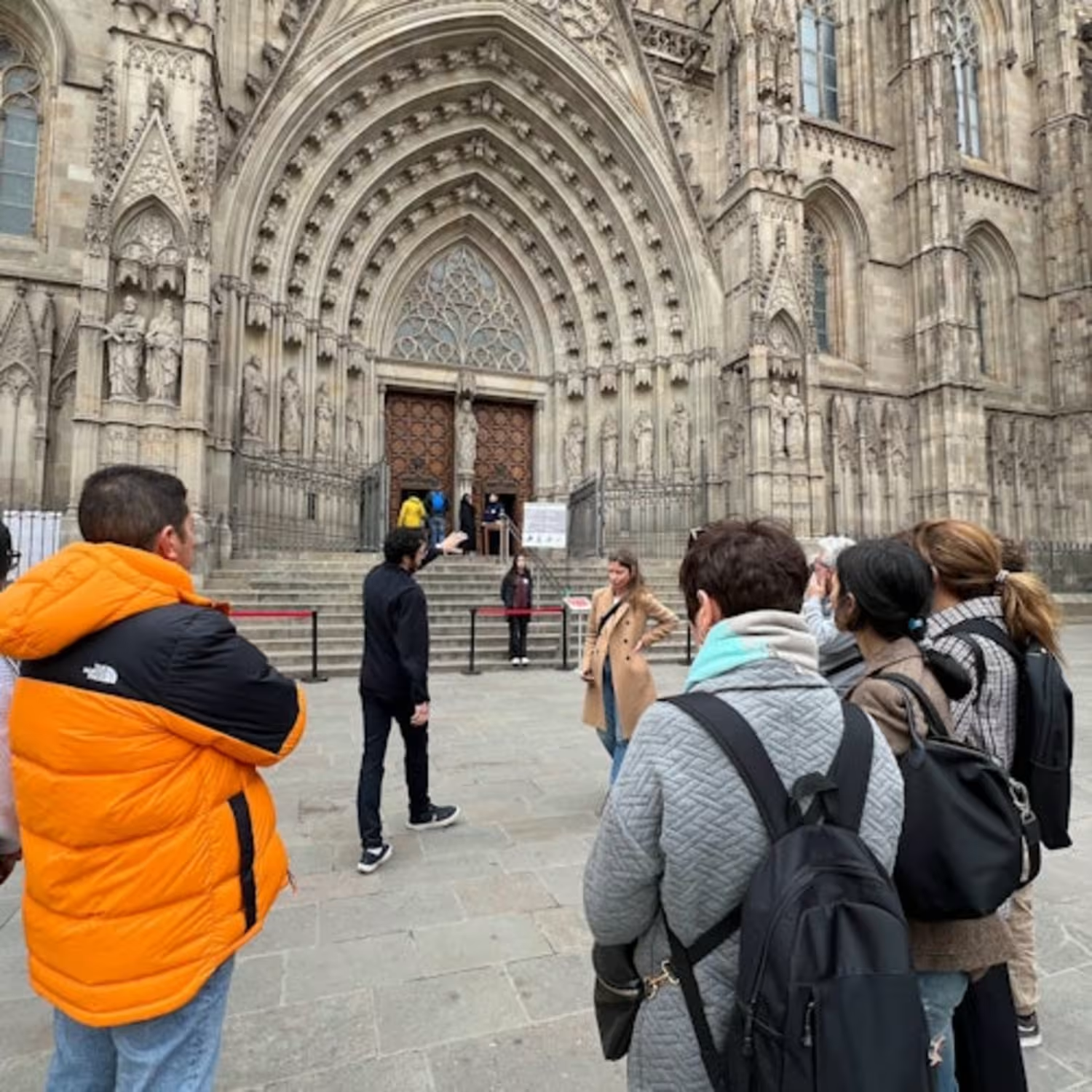
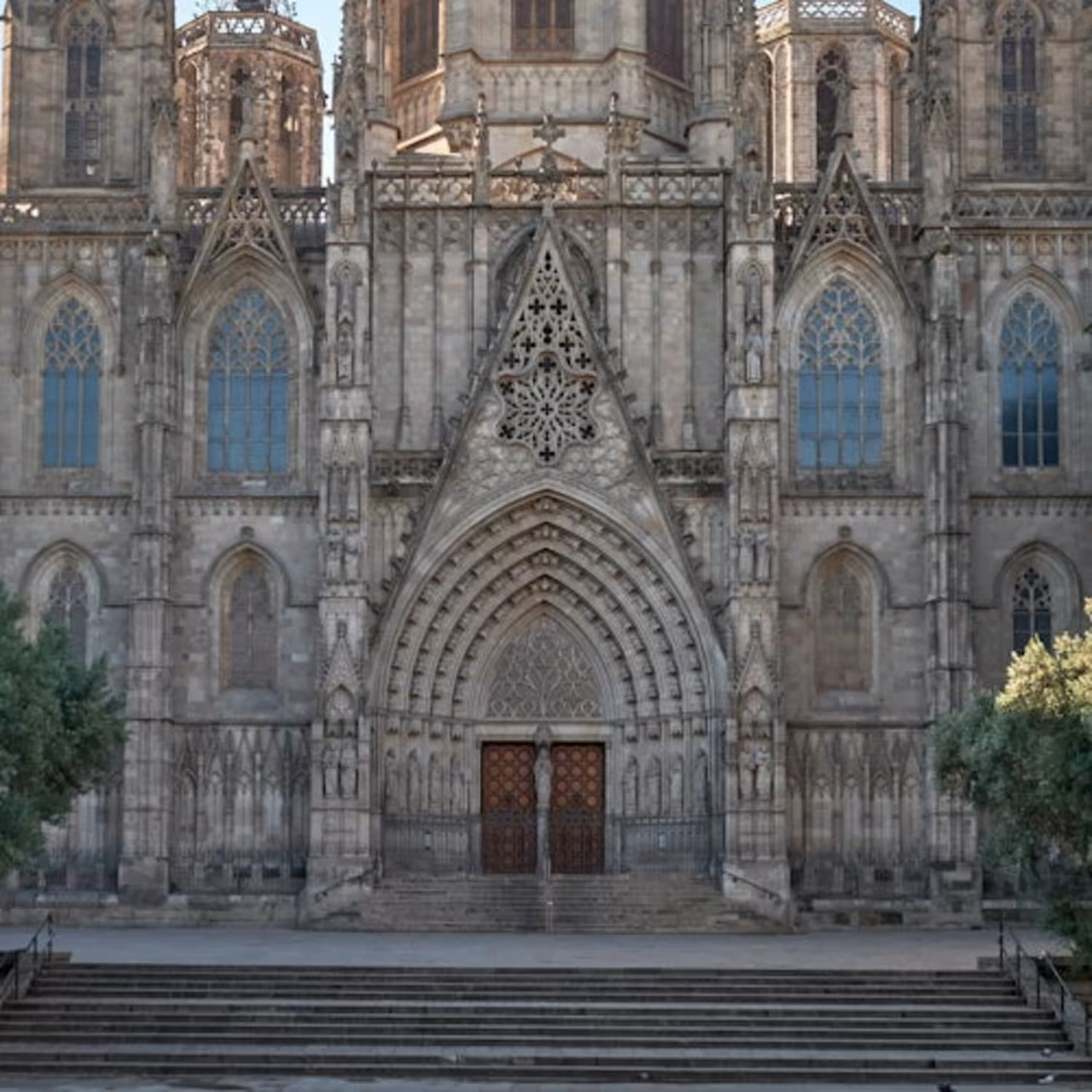
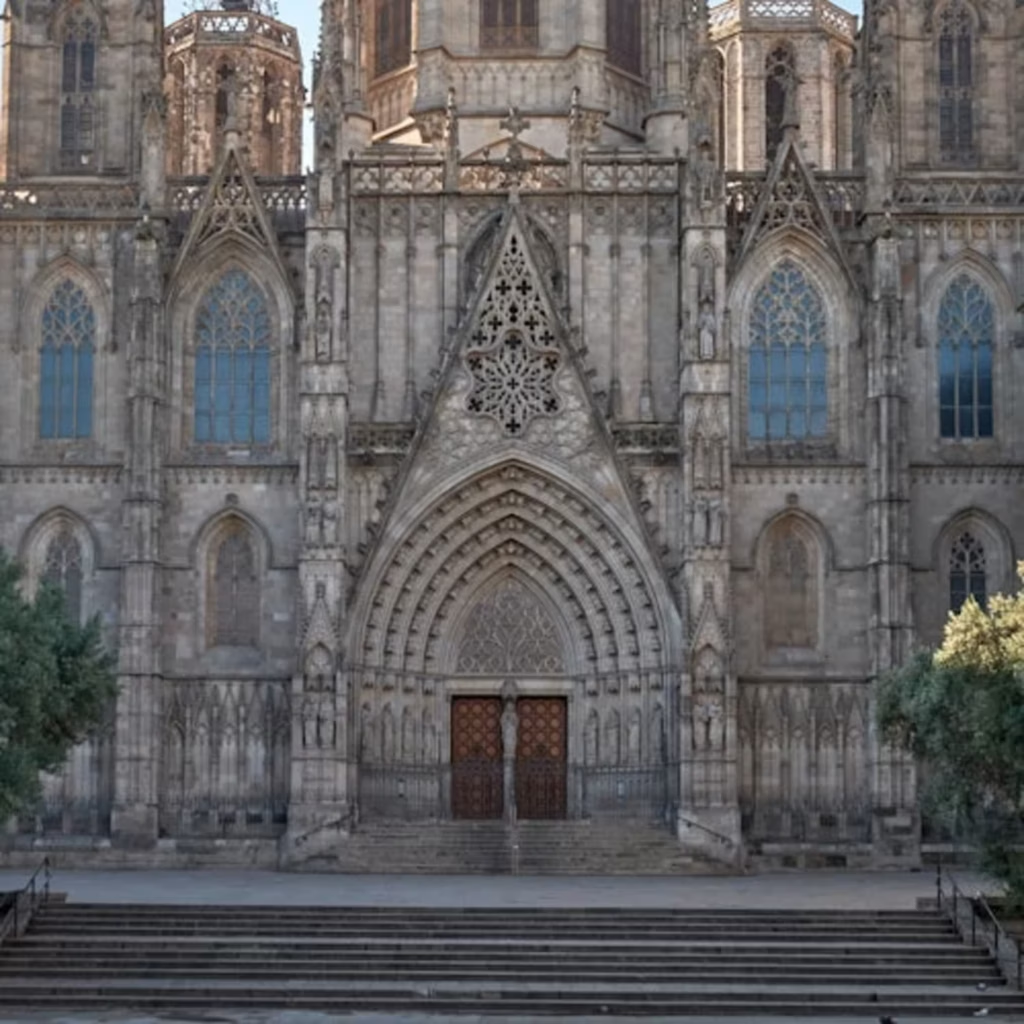
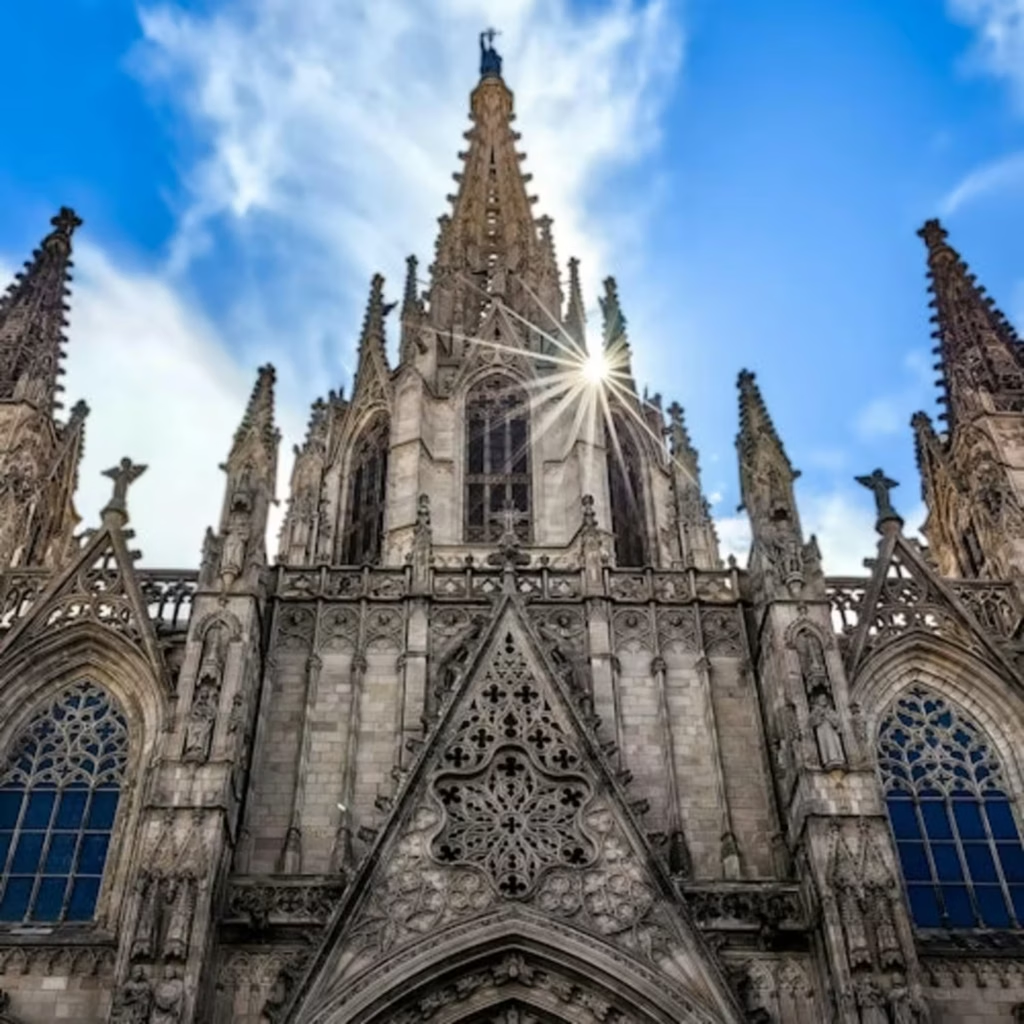
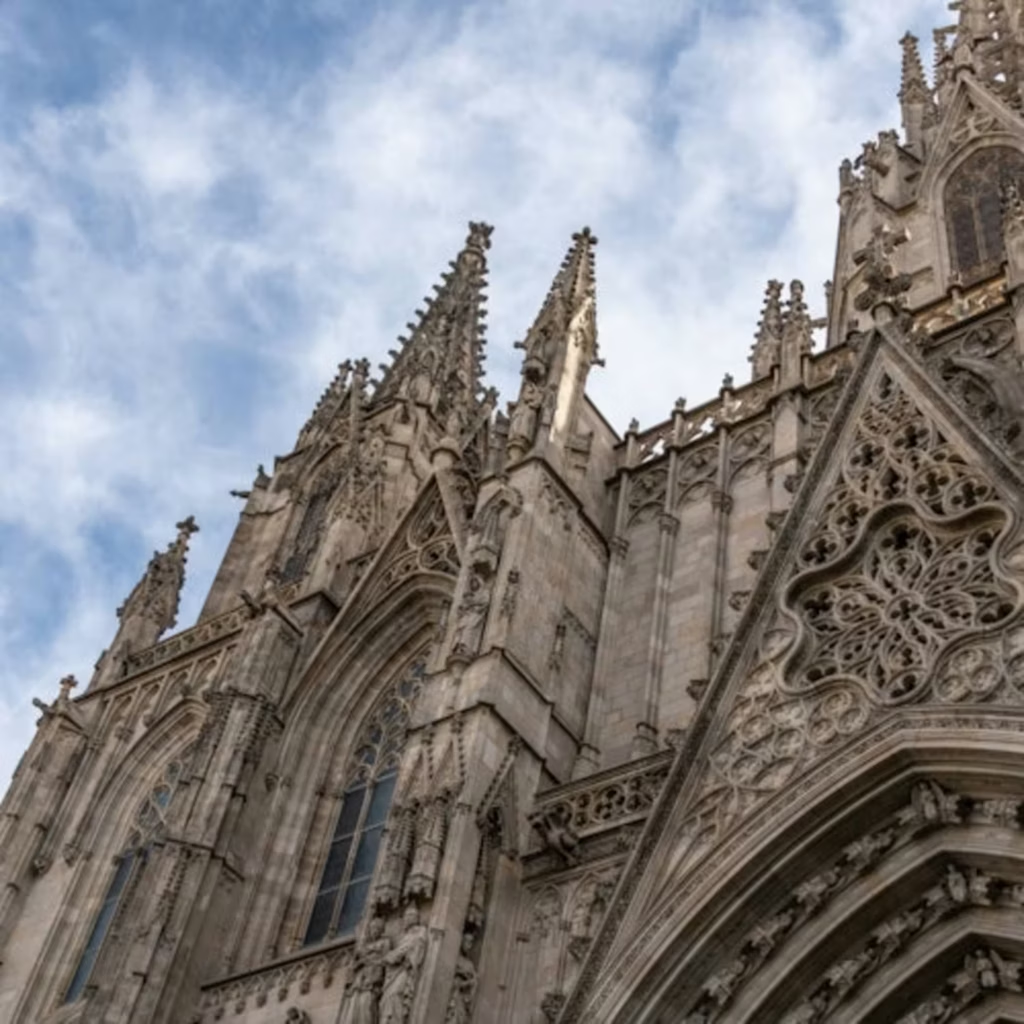
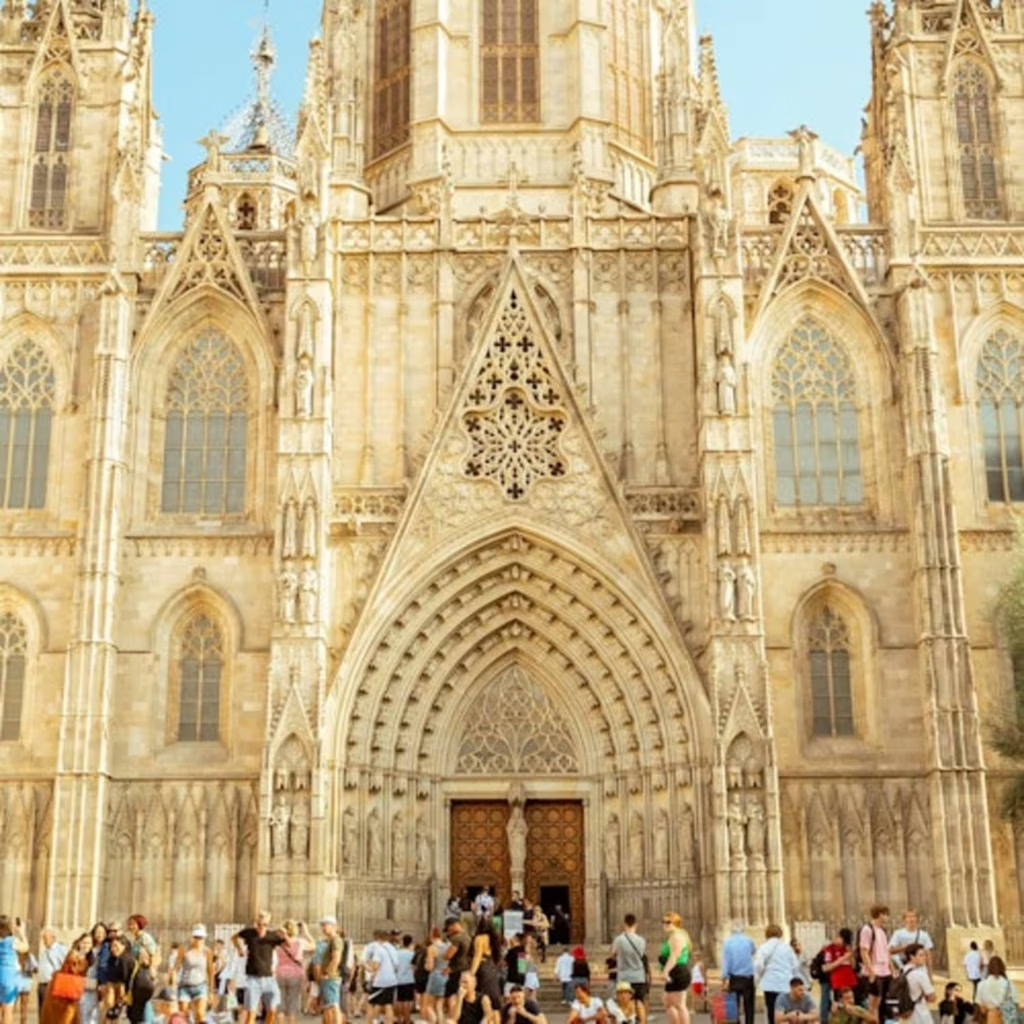
The Neo-Gothic main façade rises about 70 metres.

The cloister was built in the 14th and 15th centuries and is home to 13 white geese, documented since the 16th century.

The choir was begun in 1390, and its wooden pulpit dates from 1403.

The Chapter Hall displays a 1490 Pietà by Bartolomé Bermejo and an 11th-century baptismal font.

The rooftop

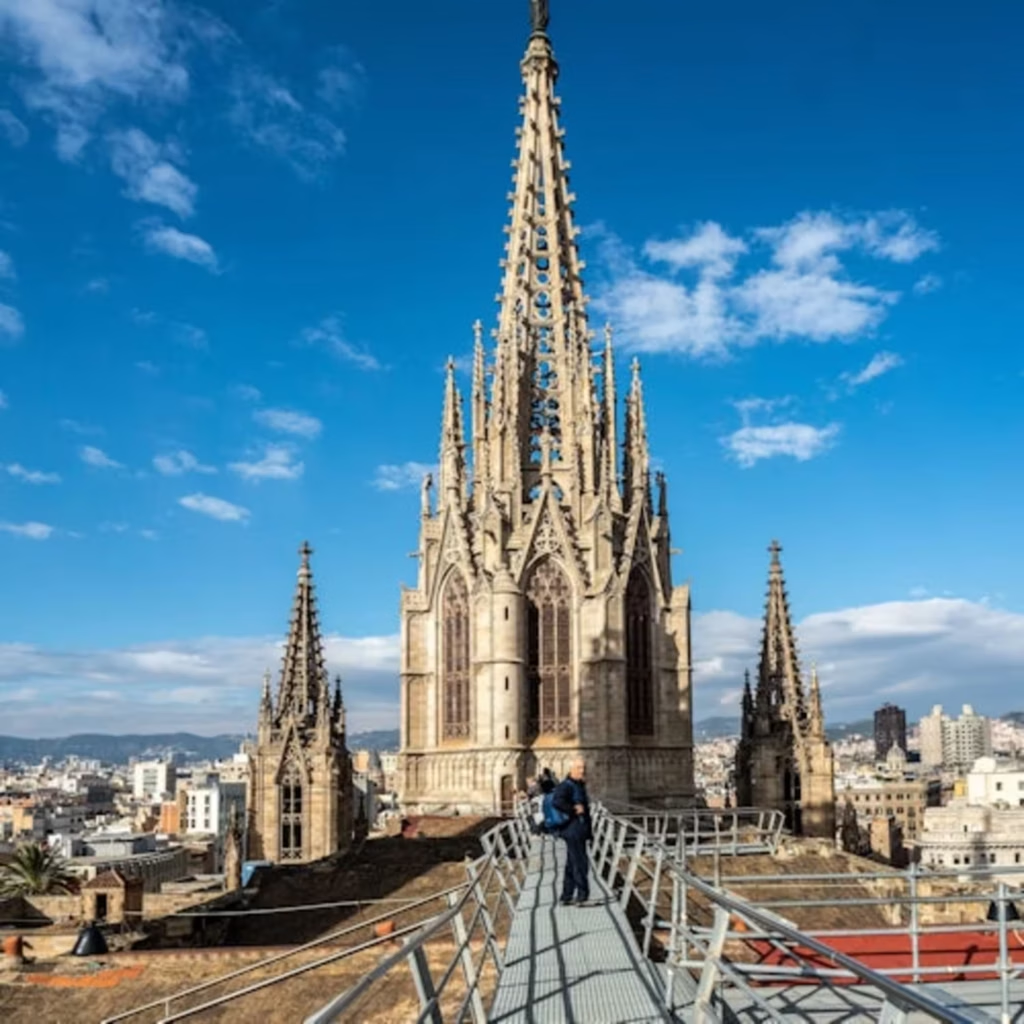
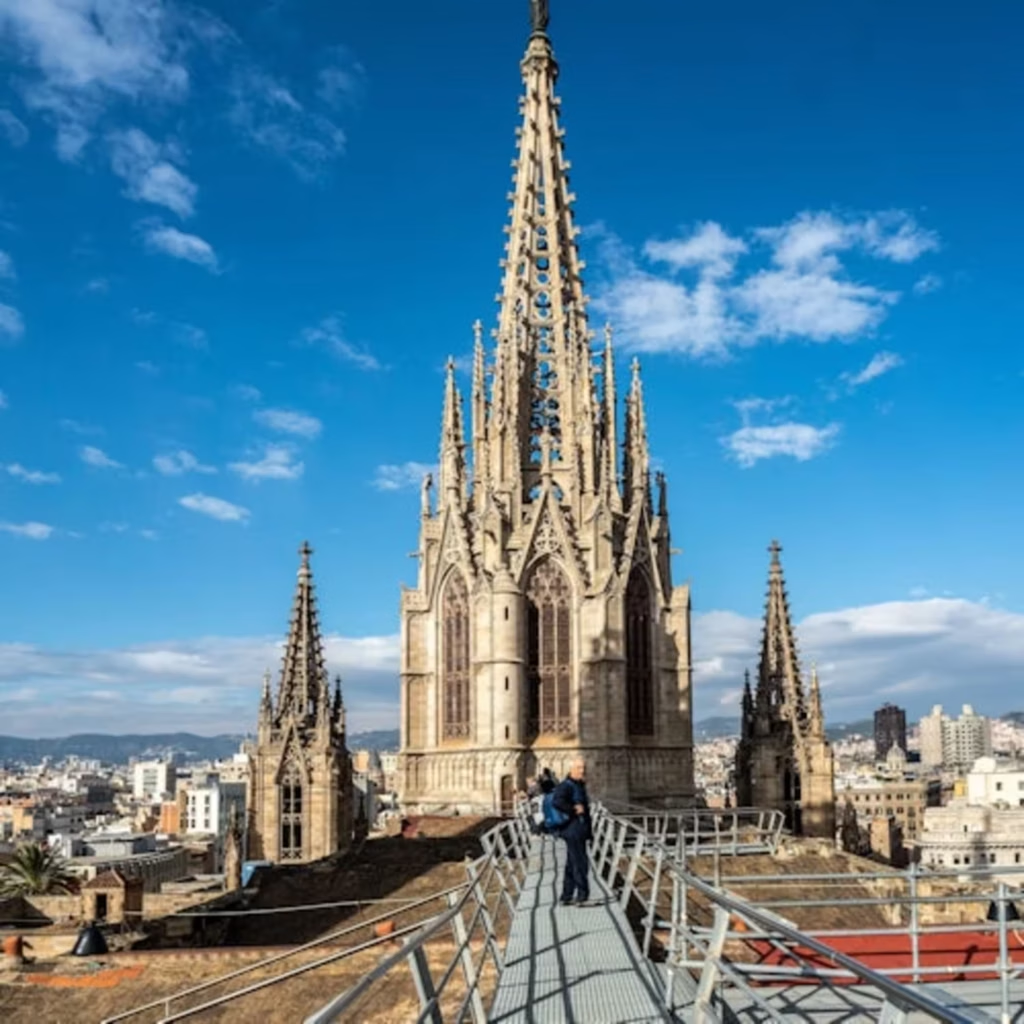
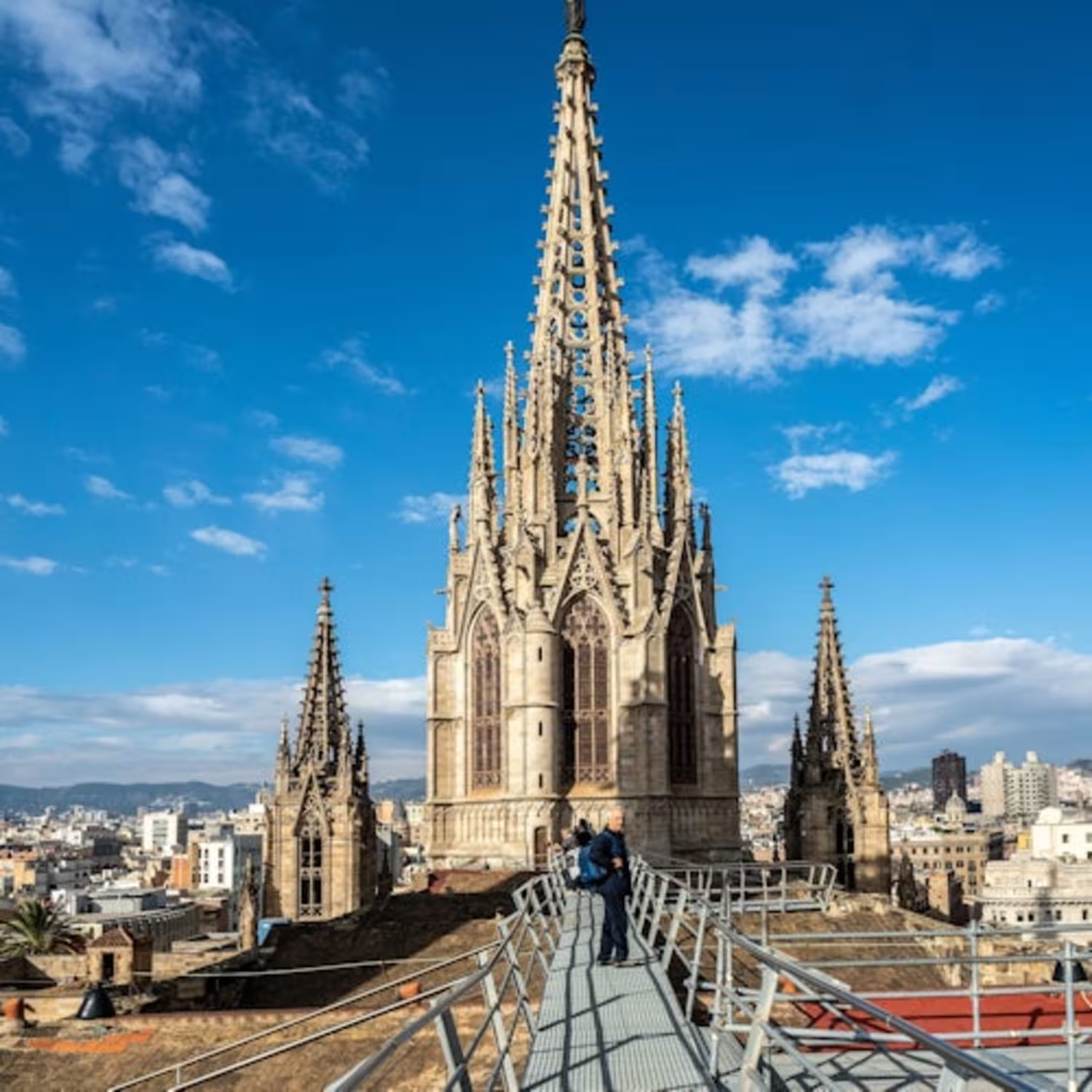
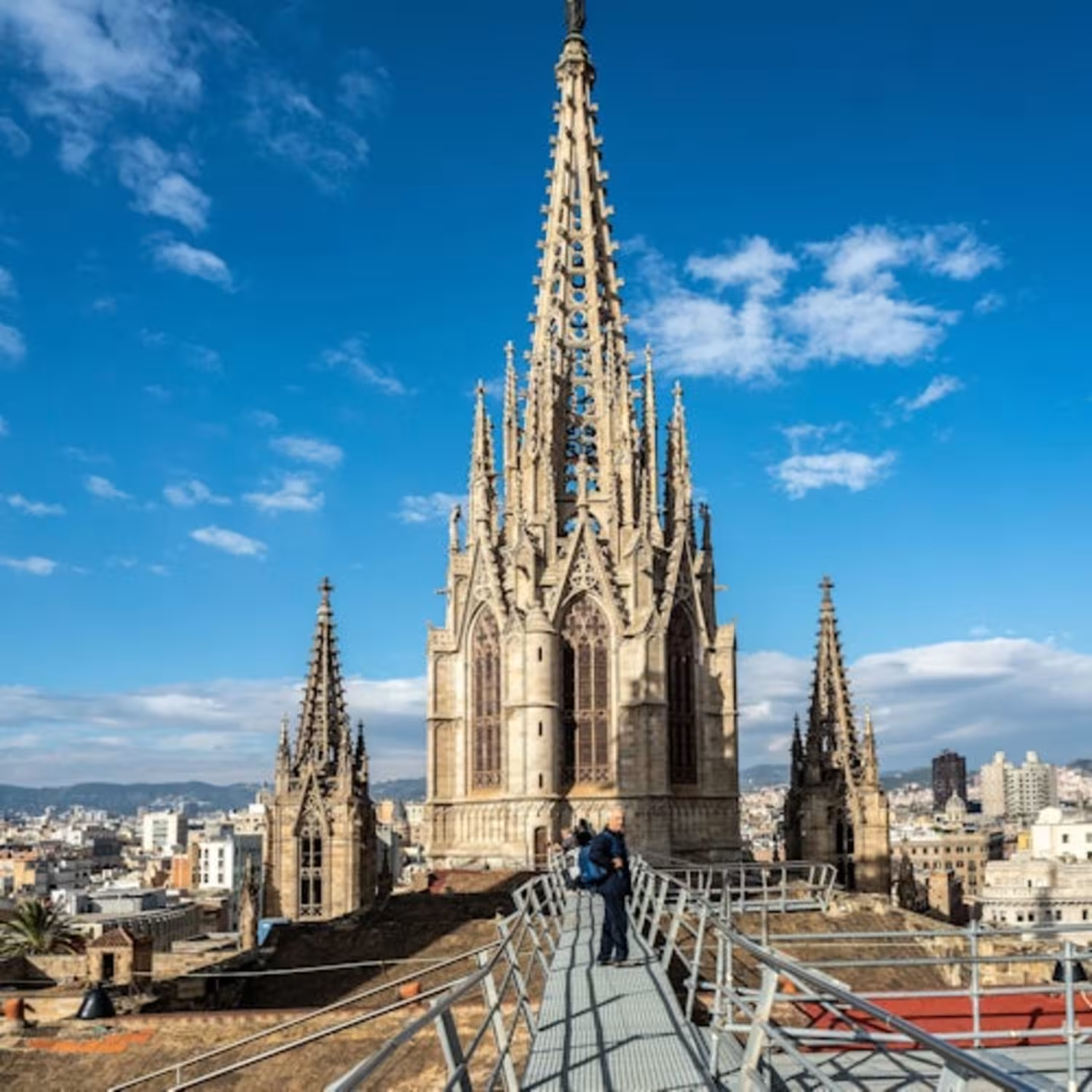
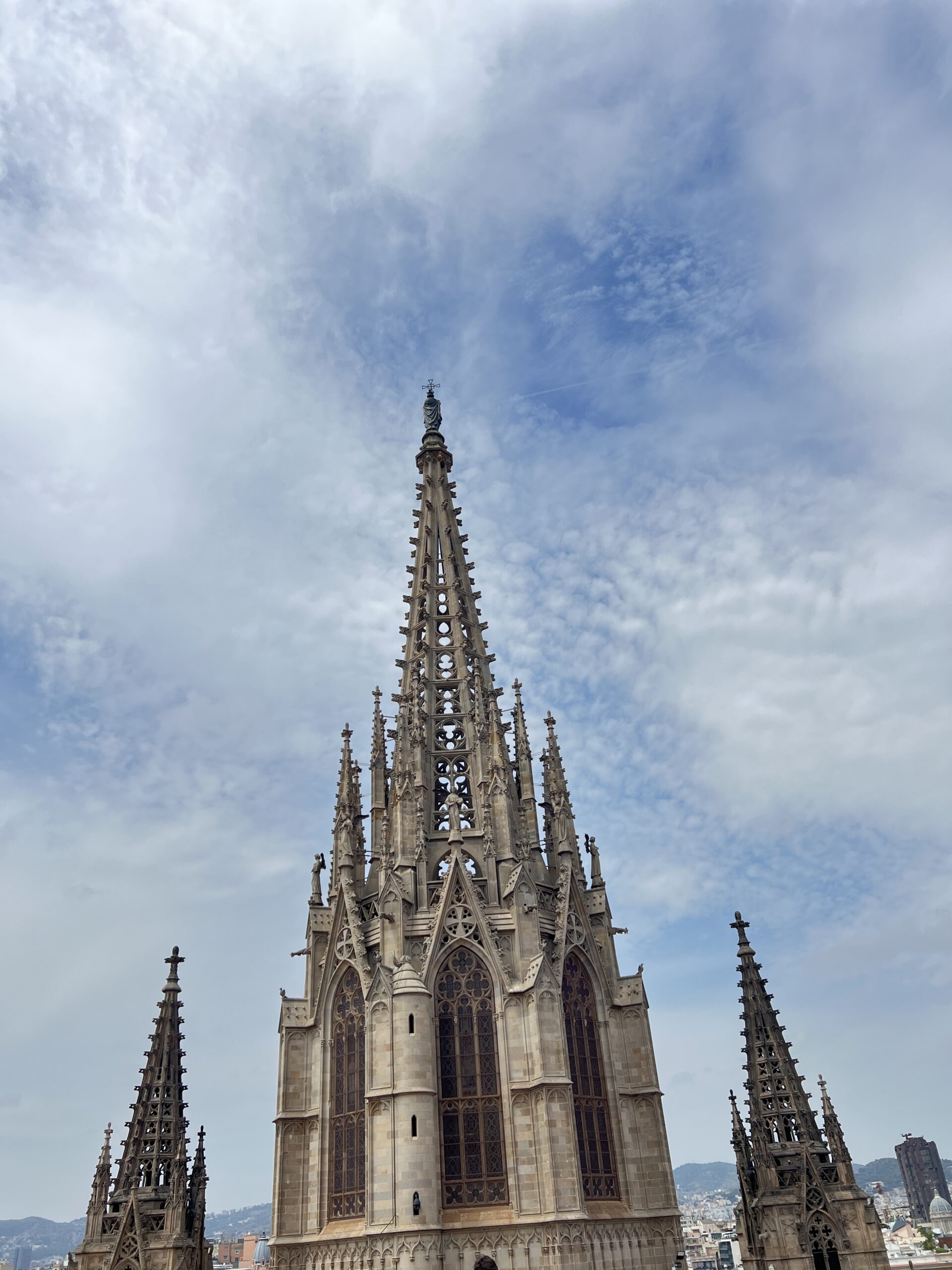
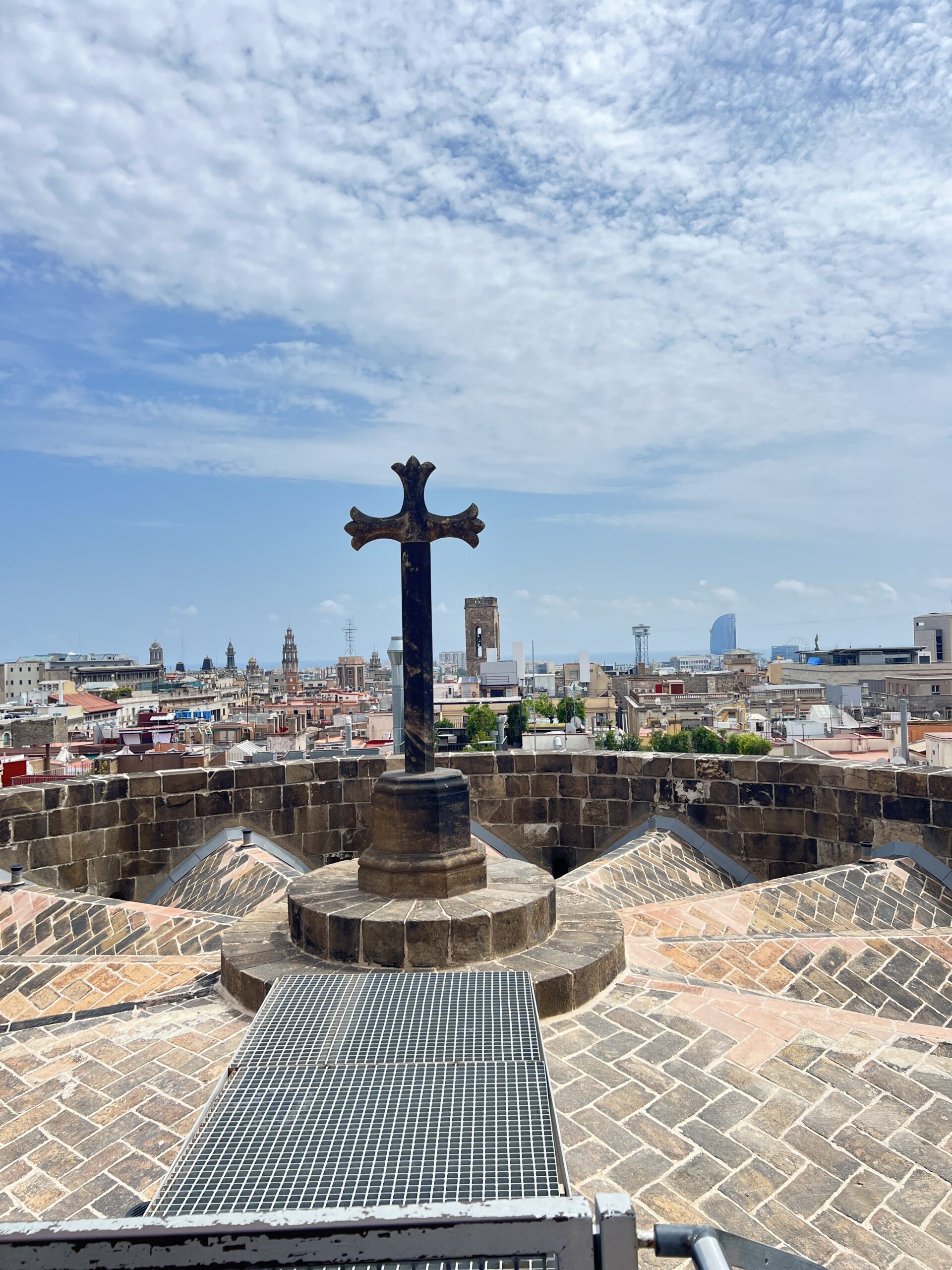
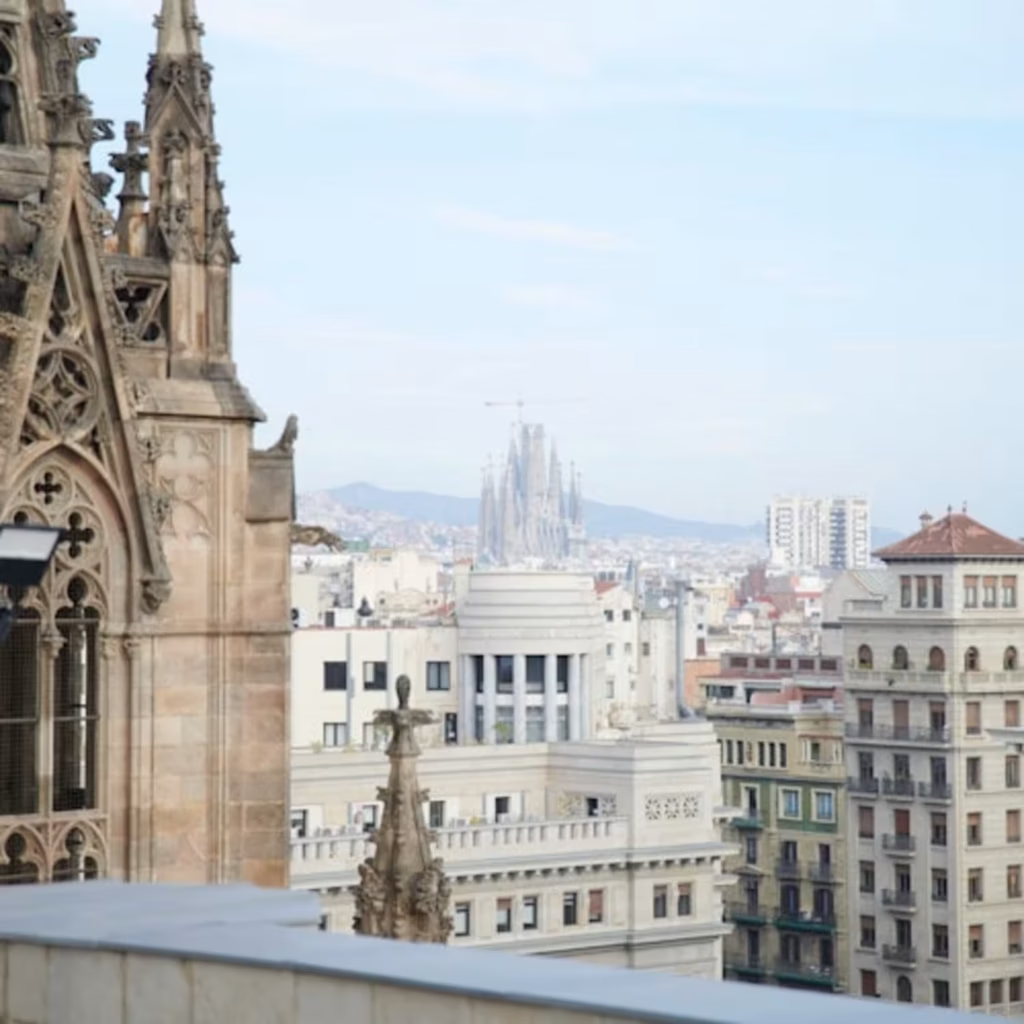
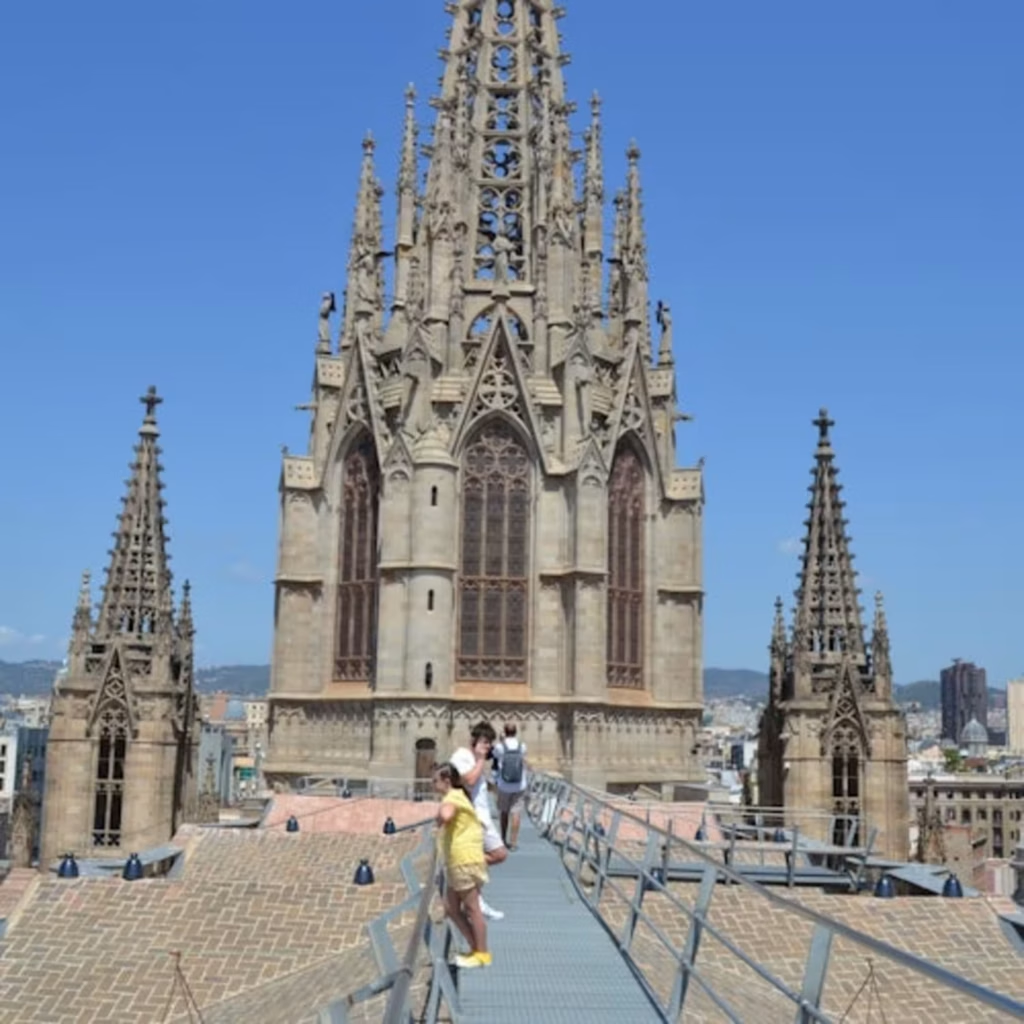
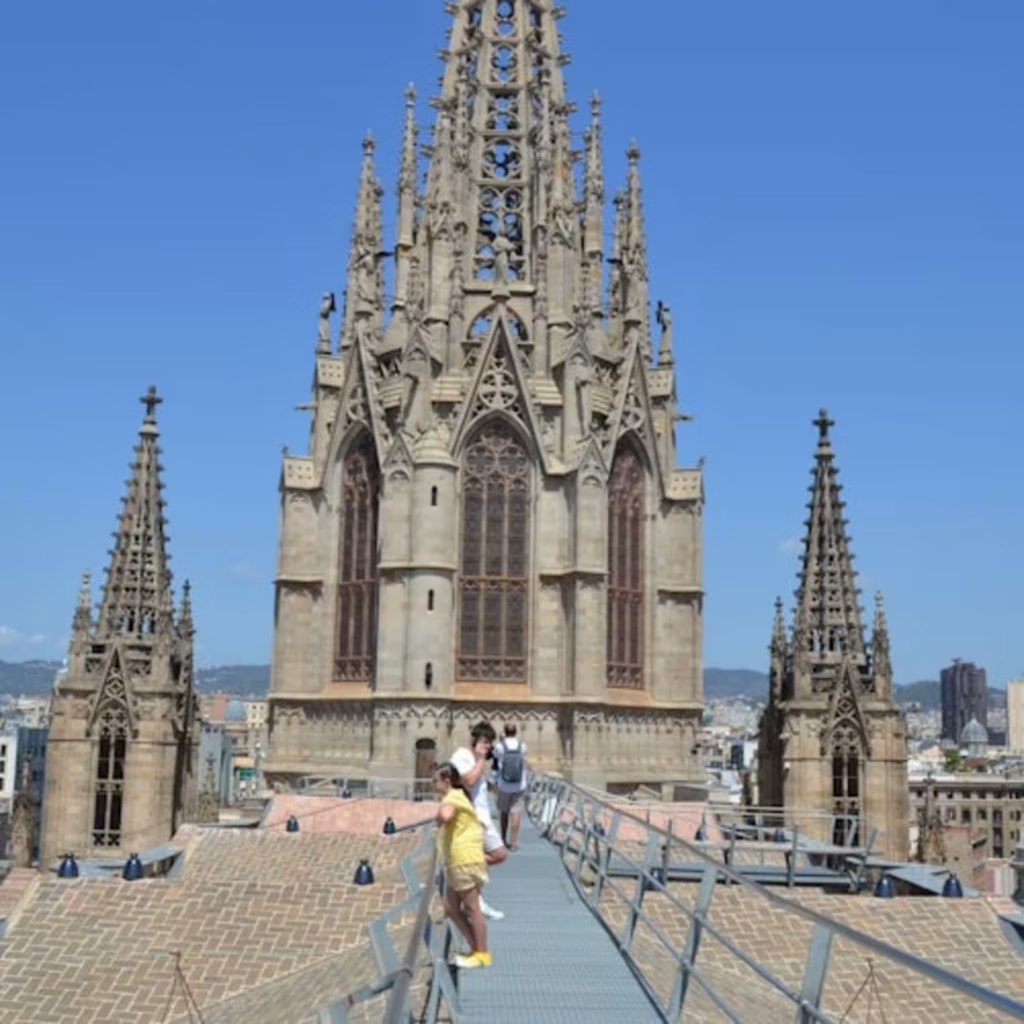
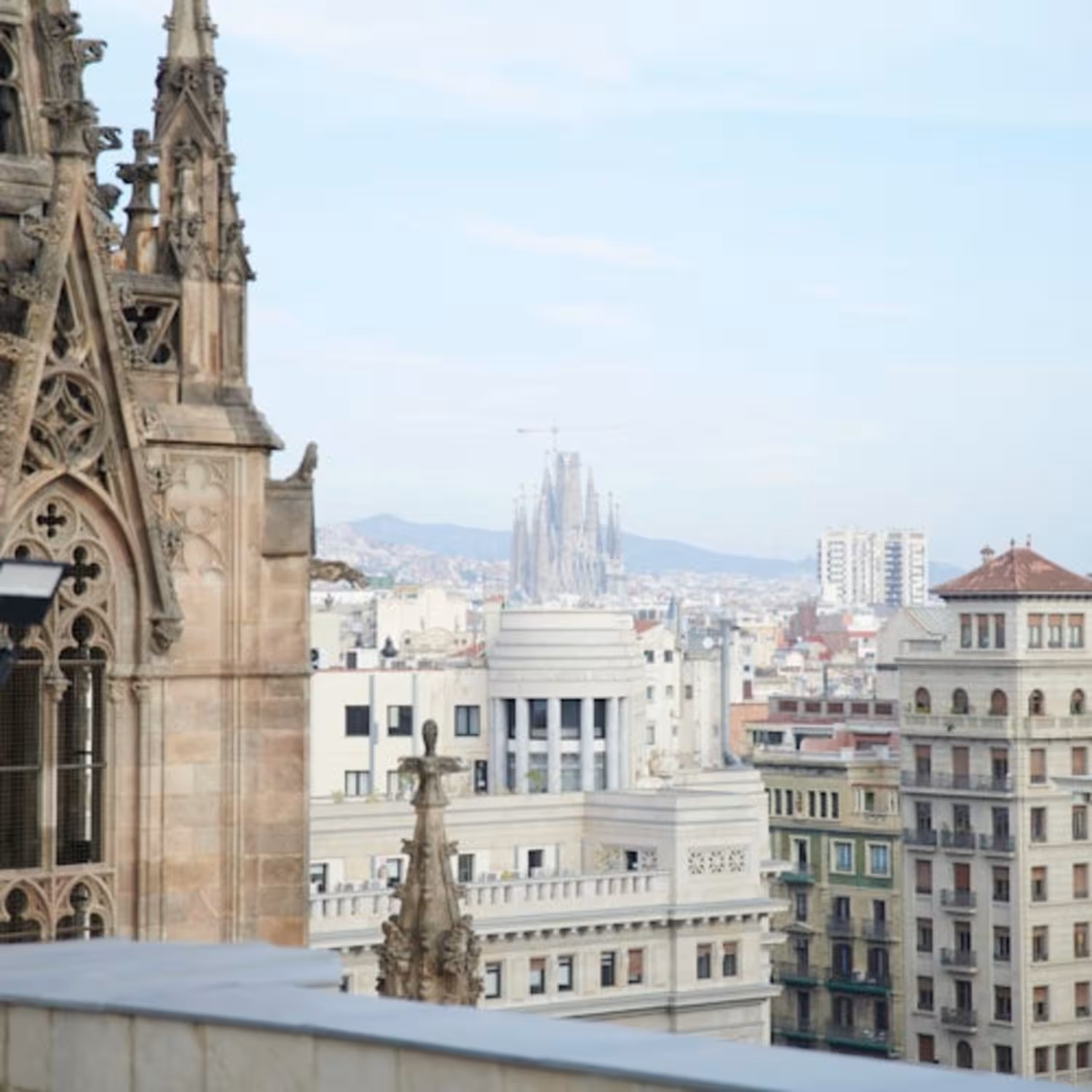
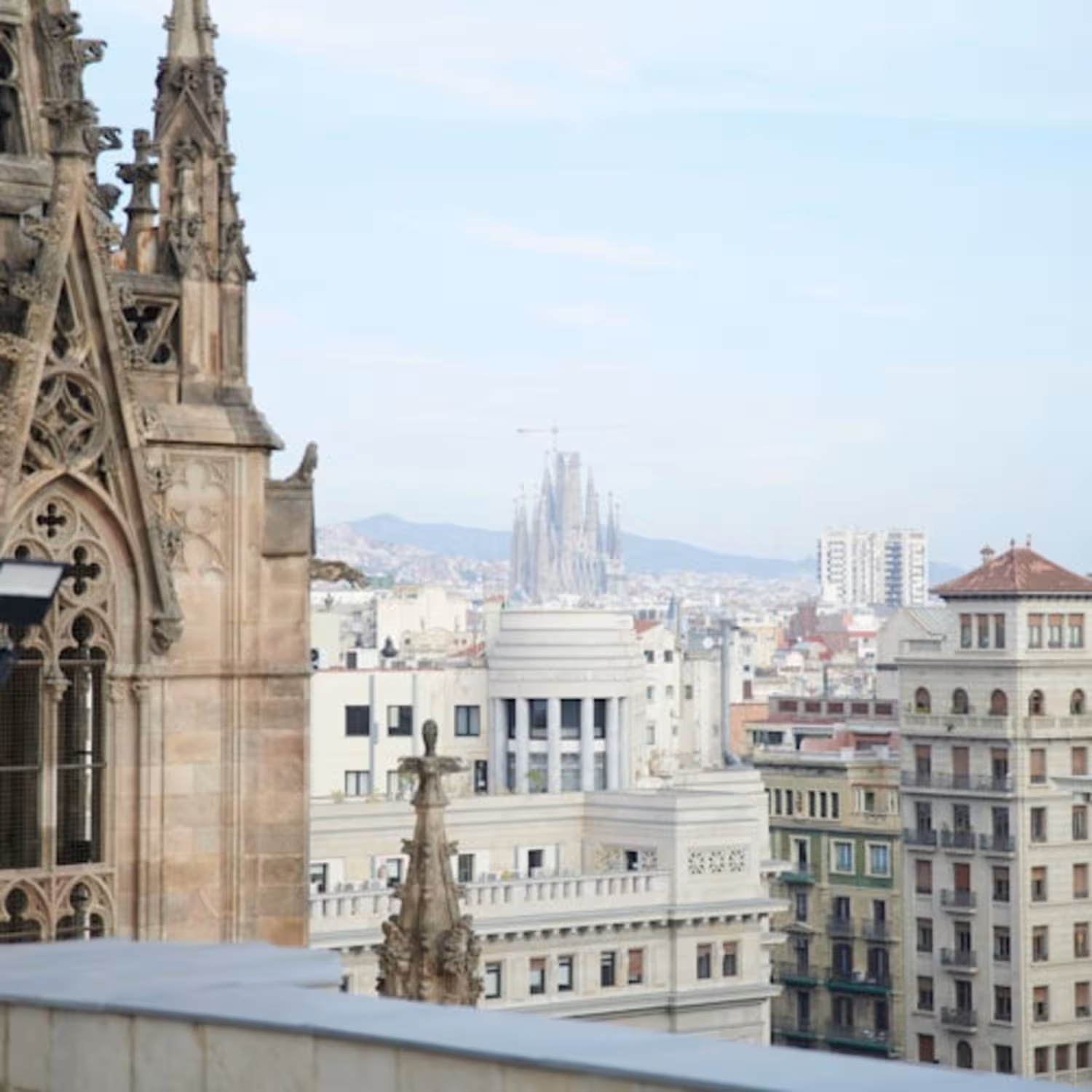
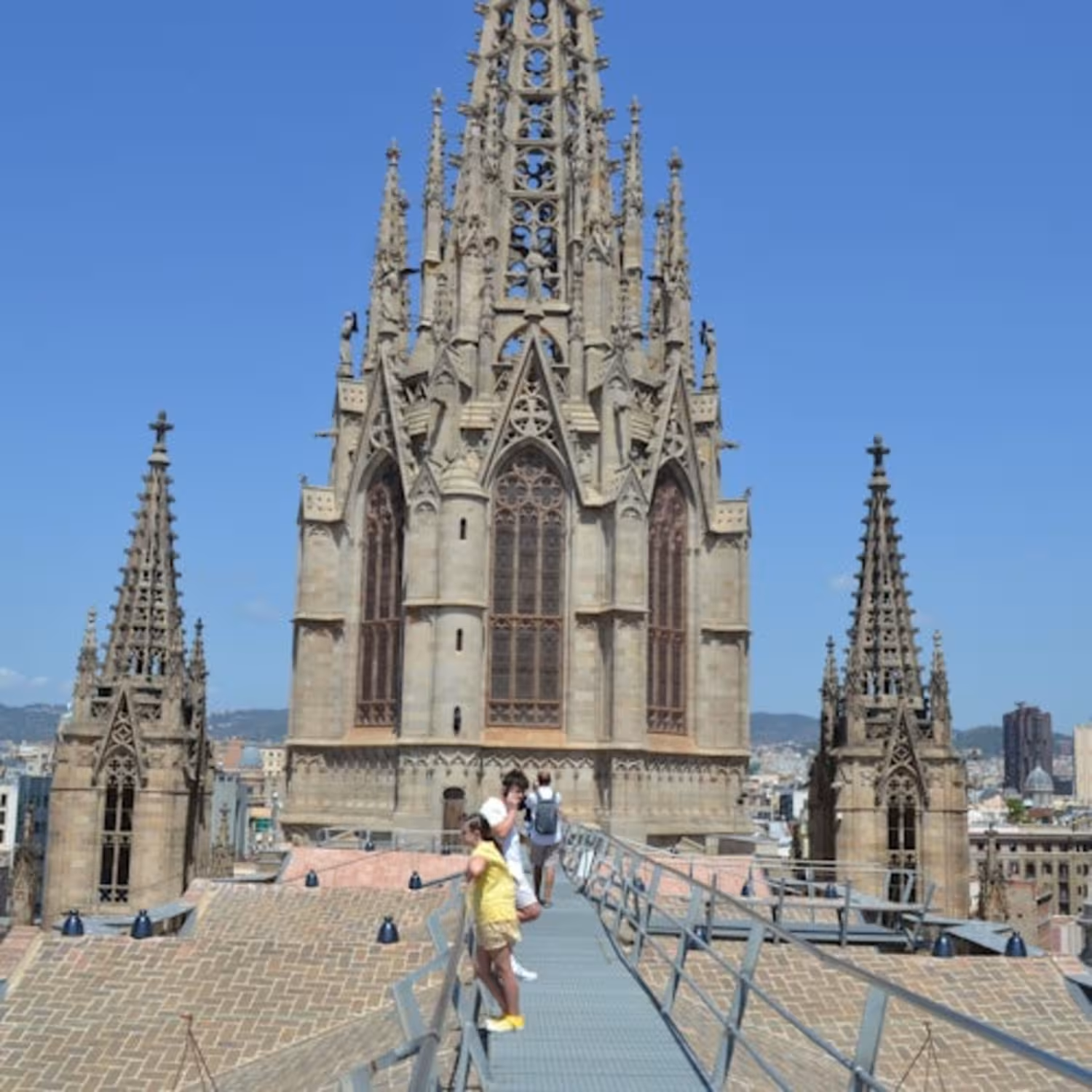
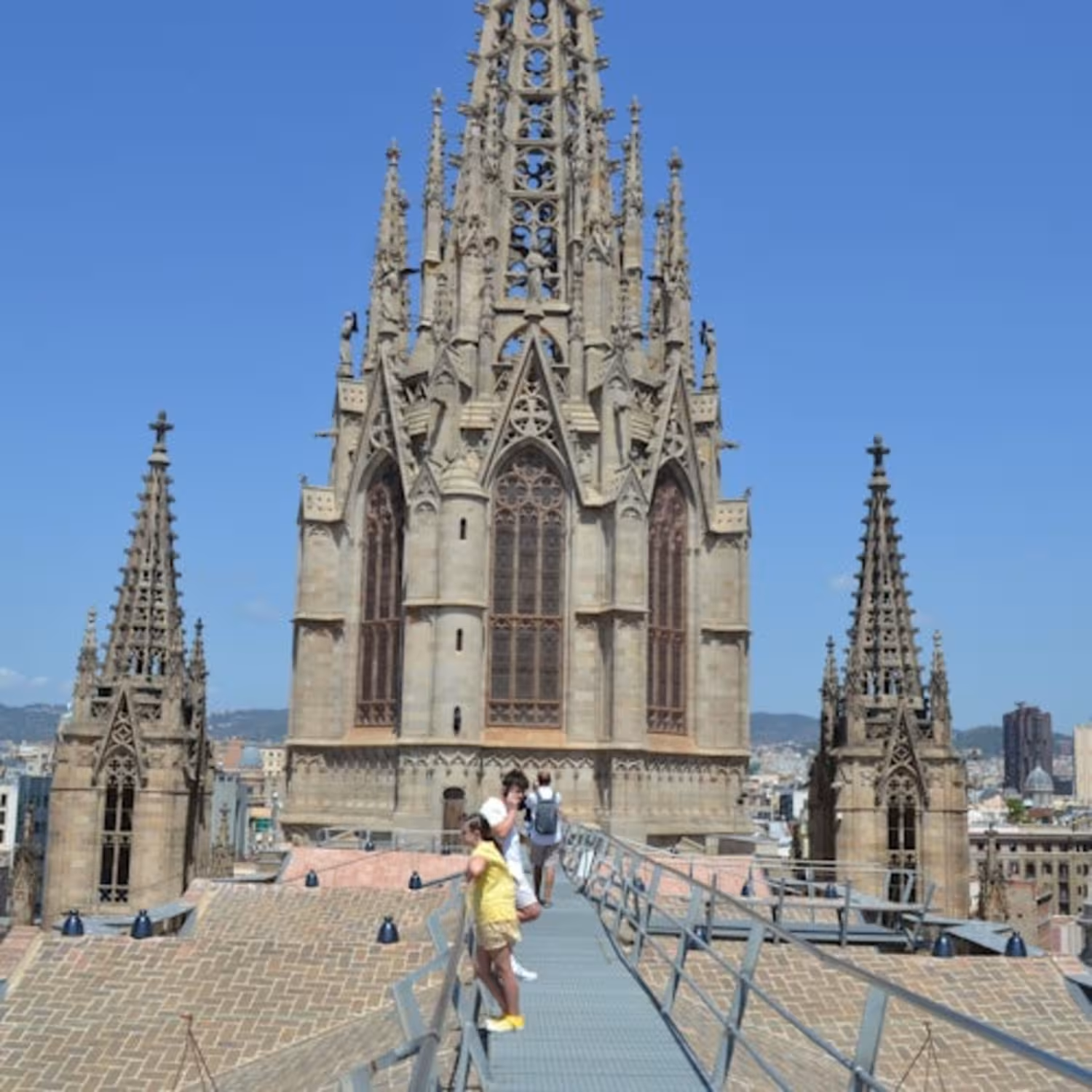
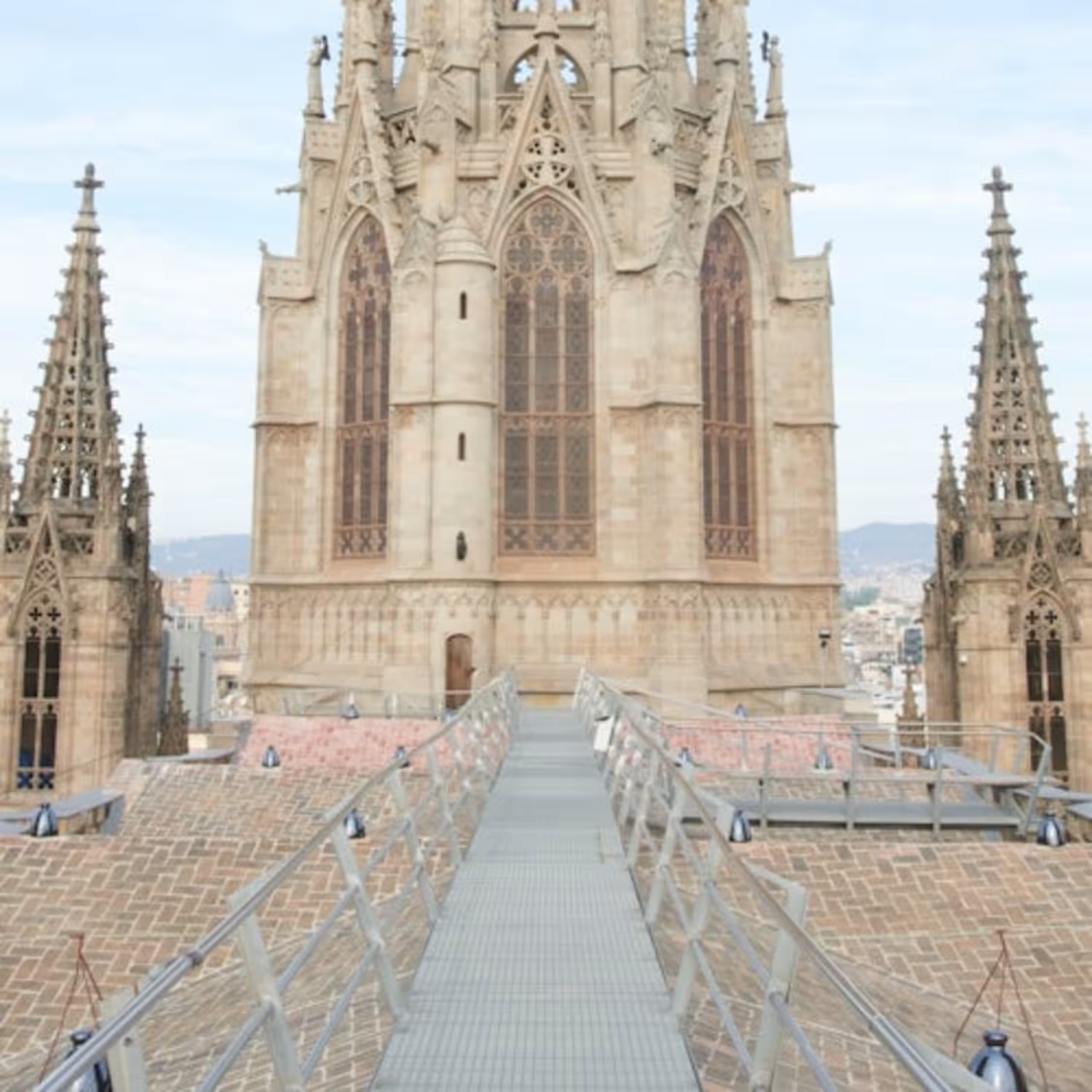
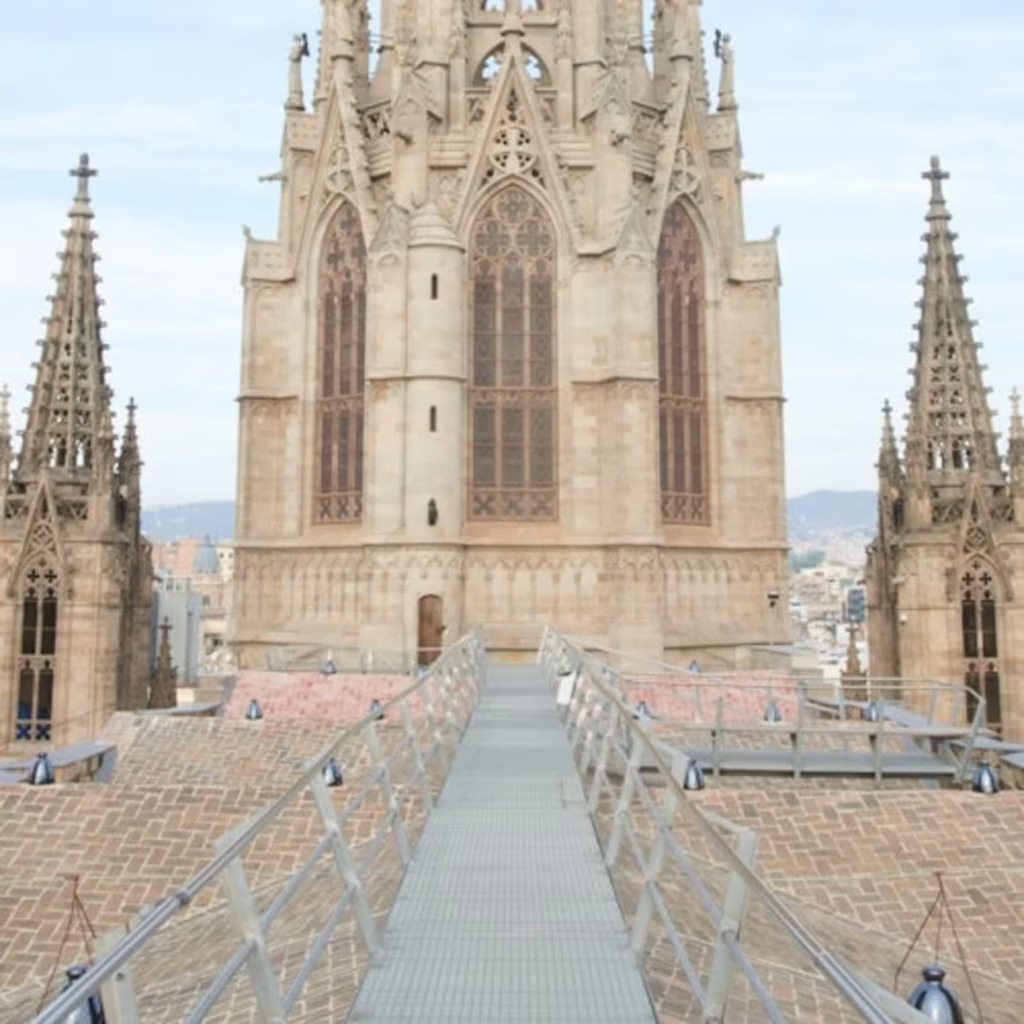
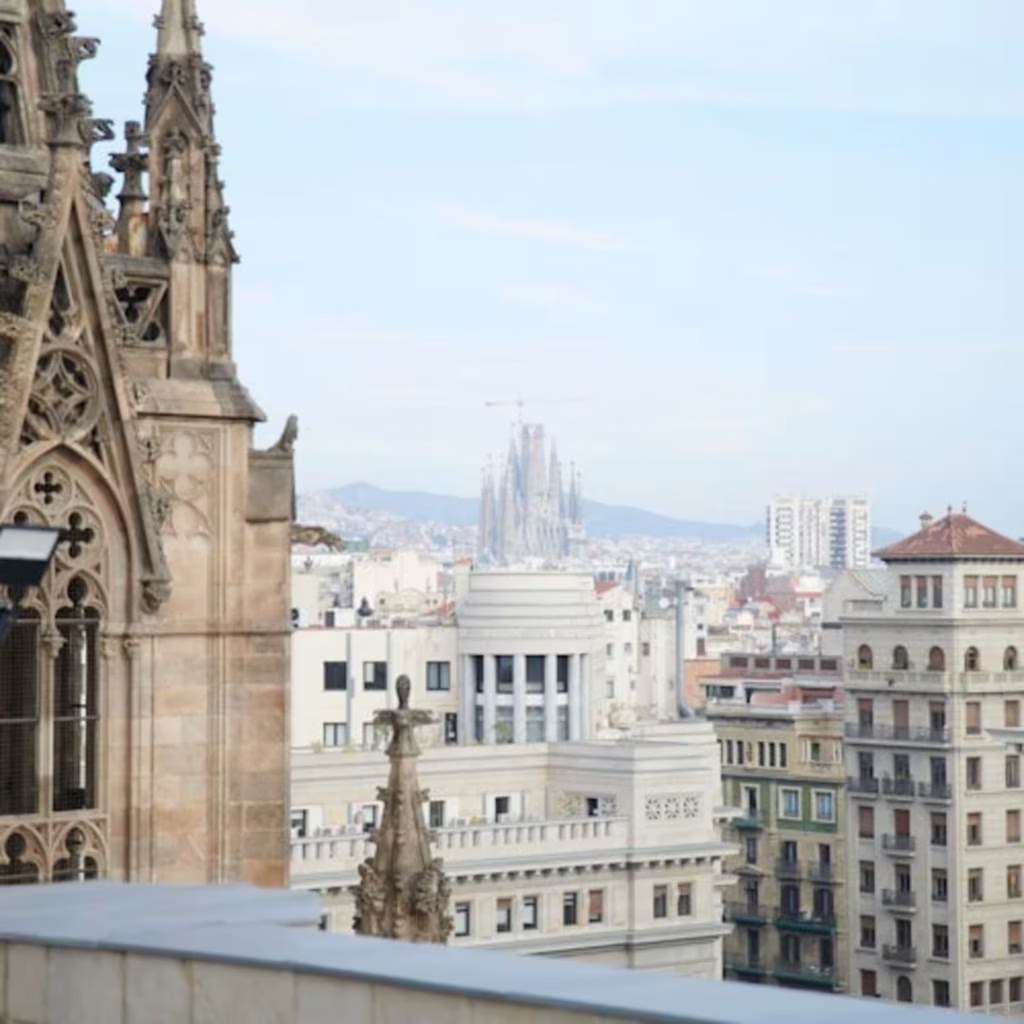
A lift takes you up to the roof, which you reach through the chapel of the Innocent Saints, next to the Sant Iu door. At the top you walk out onto terraces with a panoramic view over Barcelona.

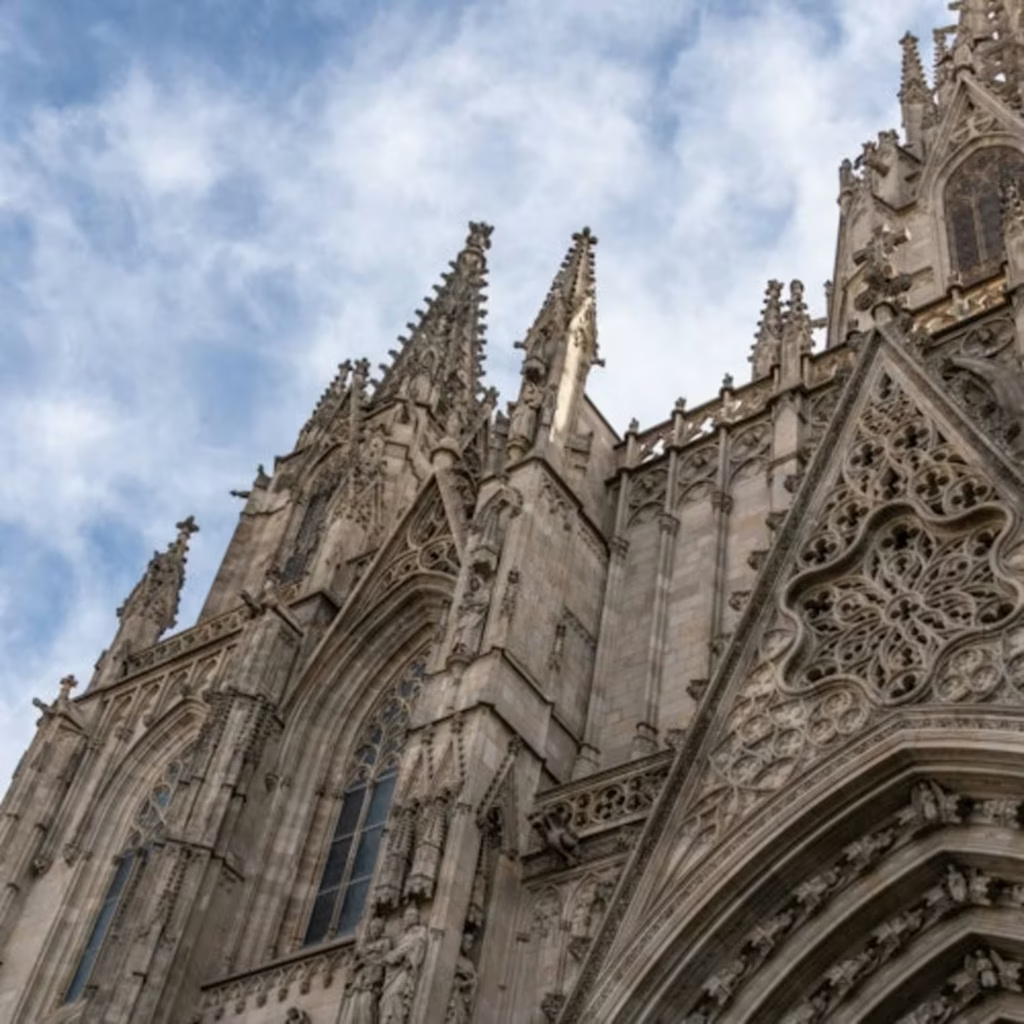
Up close you see the cathedral from an angle nobody on the street gets: the bell towers, the forest of Gothic pinnacles and the central tower crowned by the Holy Cross. The roof is not only for tourists. Every 3 May at 9:00 am, for the Day of the Holy Cross, the city is blessed from the cathedral rooftops, and anyone may attend.

The cloister and the 13 geese

The Gothic cloister, built in the 14th and 15th centuries, is a courtyard of arches around a garden. Its pond is home to the 13 white geese of the cathedral. Tradition links their number to the age of Saint Eulalia when she was martyred. Geese have been documented here since the 16th century, and today they receive veterinary care and their area is cleaned daily.

The garden fountain dates from the middle of the 15th century and is the stage for one of Barcelona's oldest customs. Every year at Corpus Christi, an egg dances on the water of the fountain, which is decorated with flowers and red cherries. The cathedral was the first place in Barcelona to present this custom, known as l'ou com balla, and the tradition goes back at least to 1636. The cloister also holds a chapel of Saint Rita, where roses are blessed after the 11:00 am Mass on 22 May.

The choir

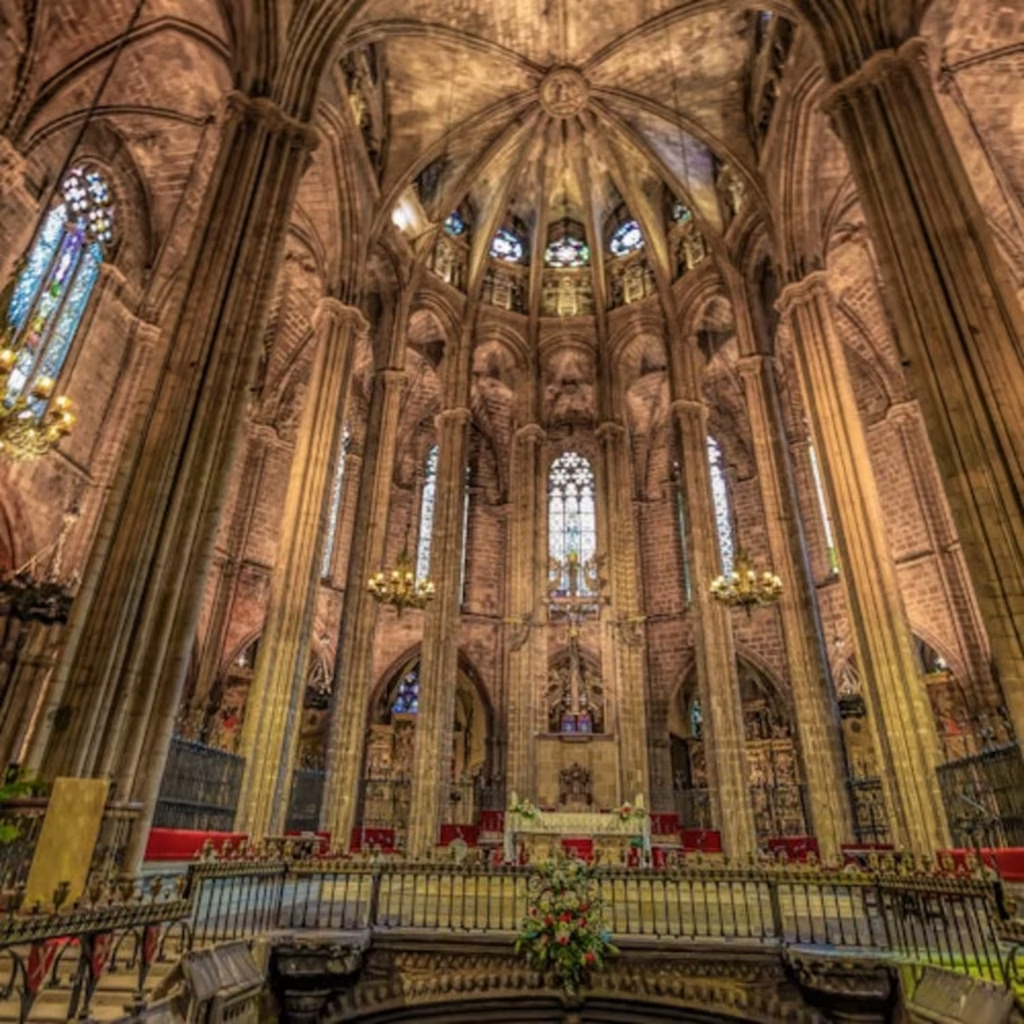
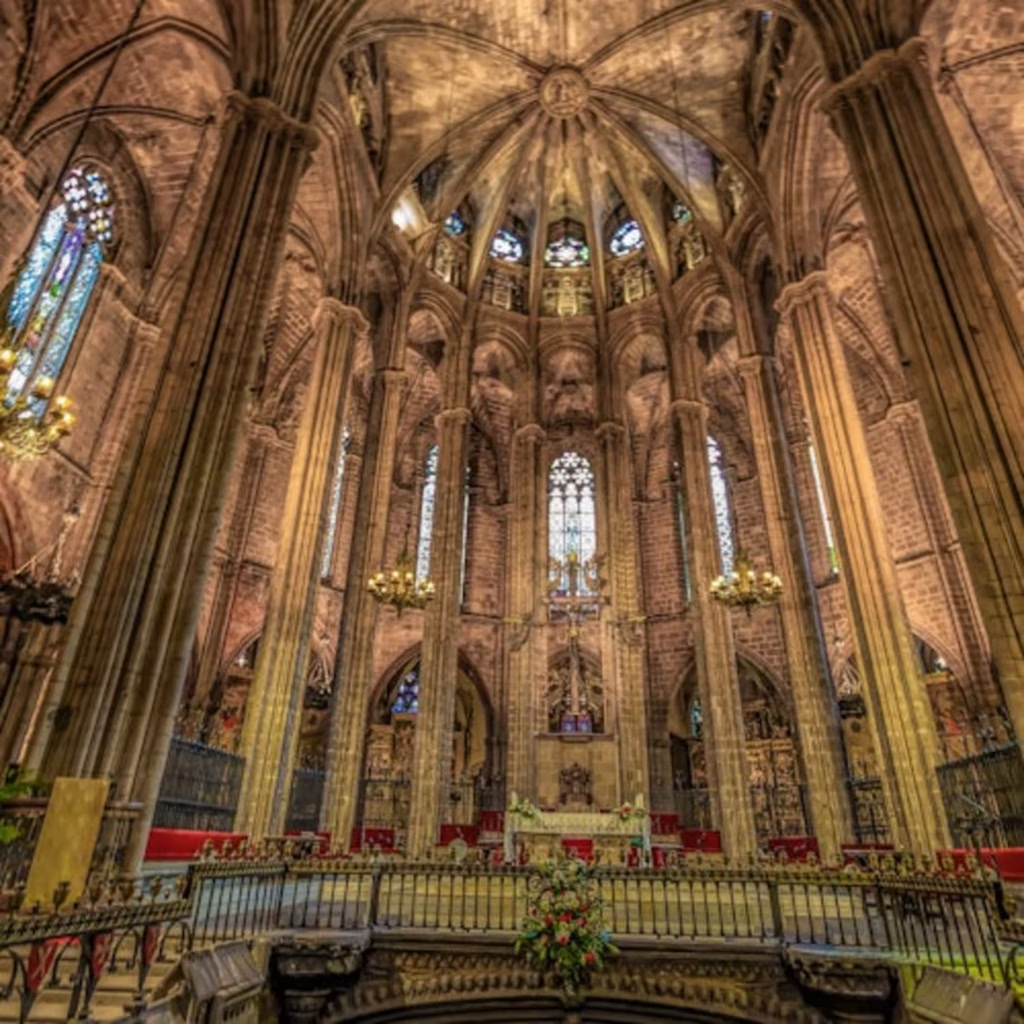
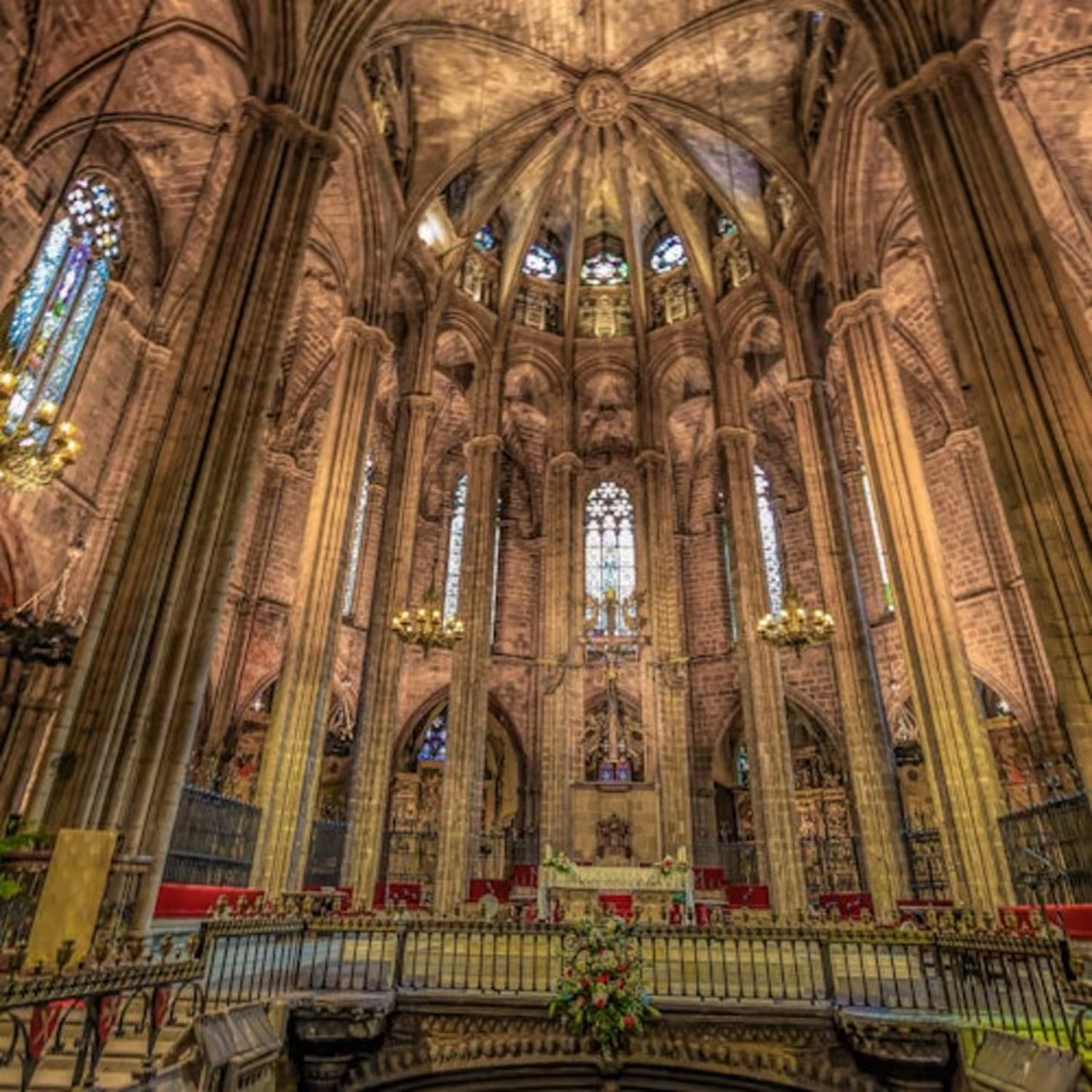
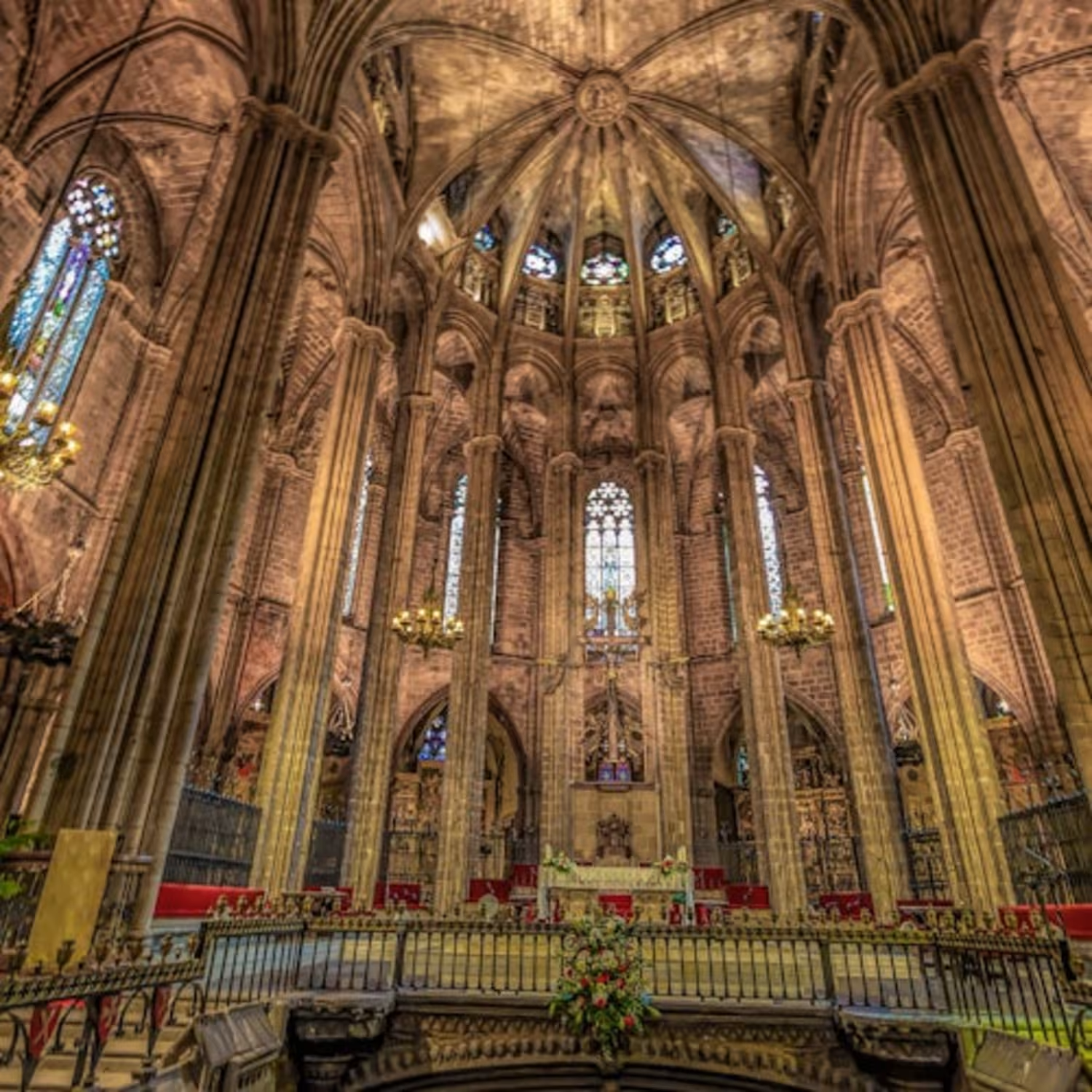
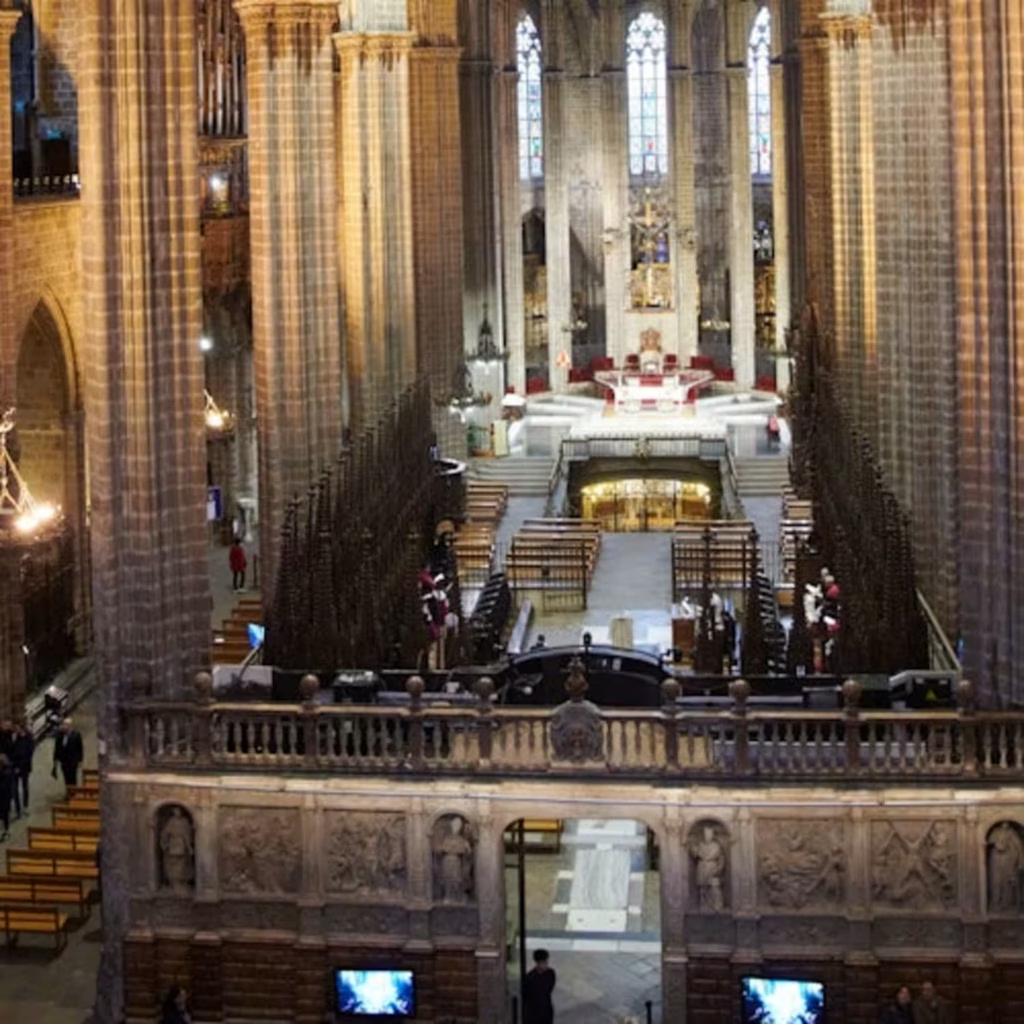
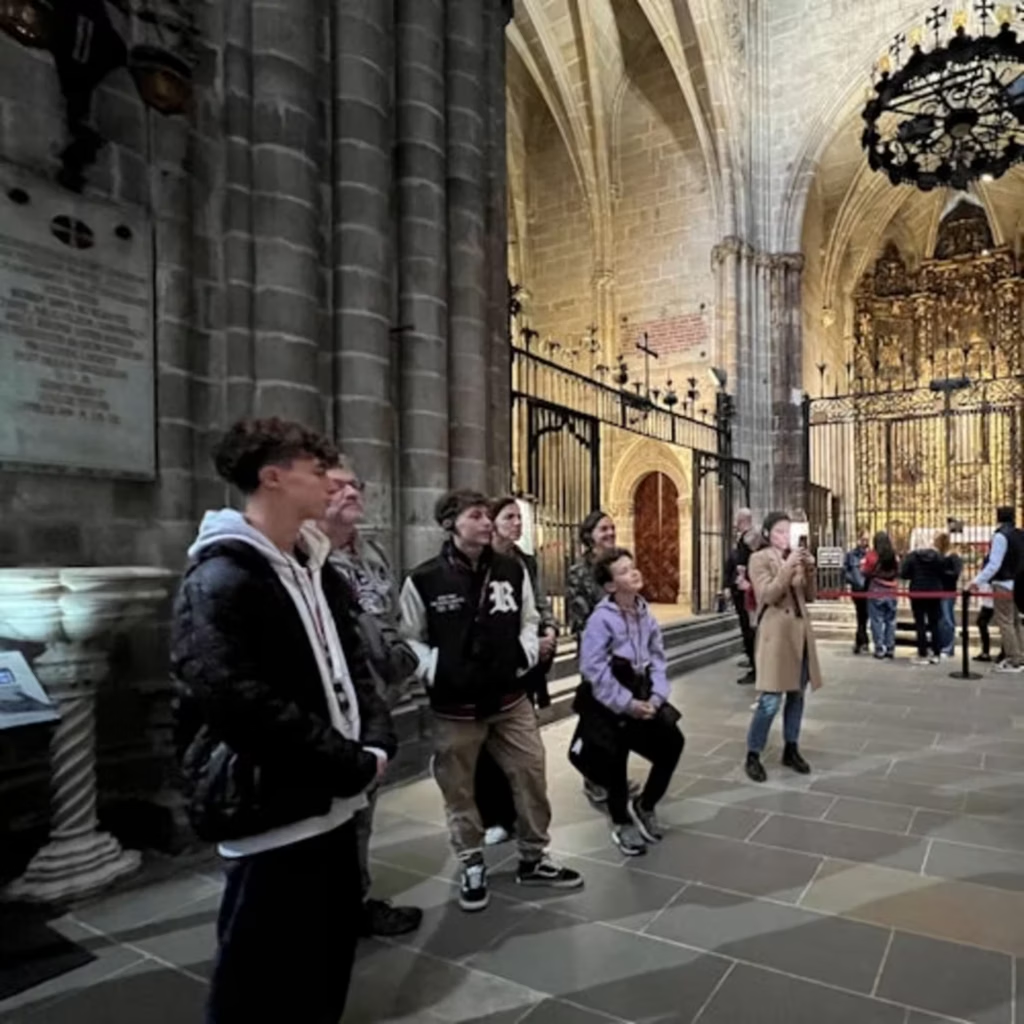
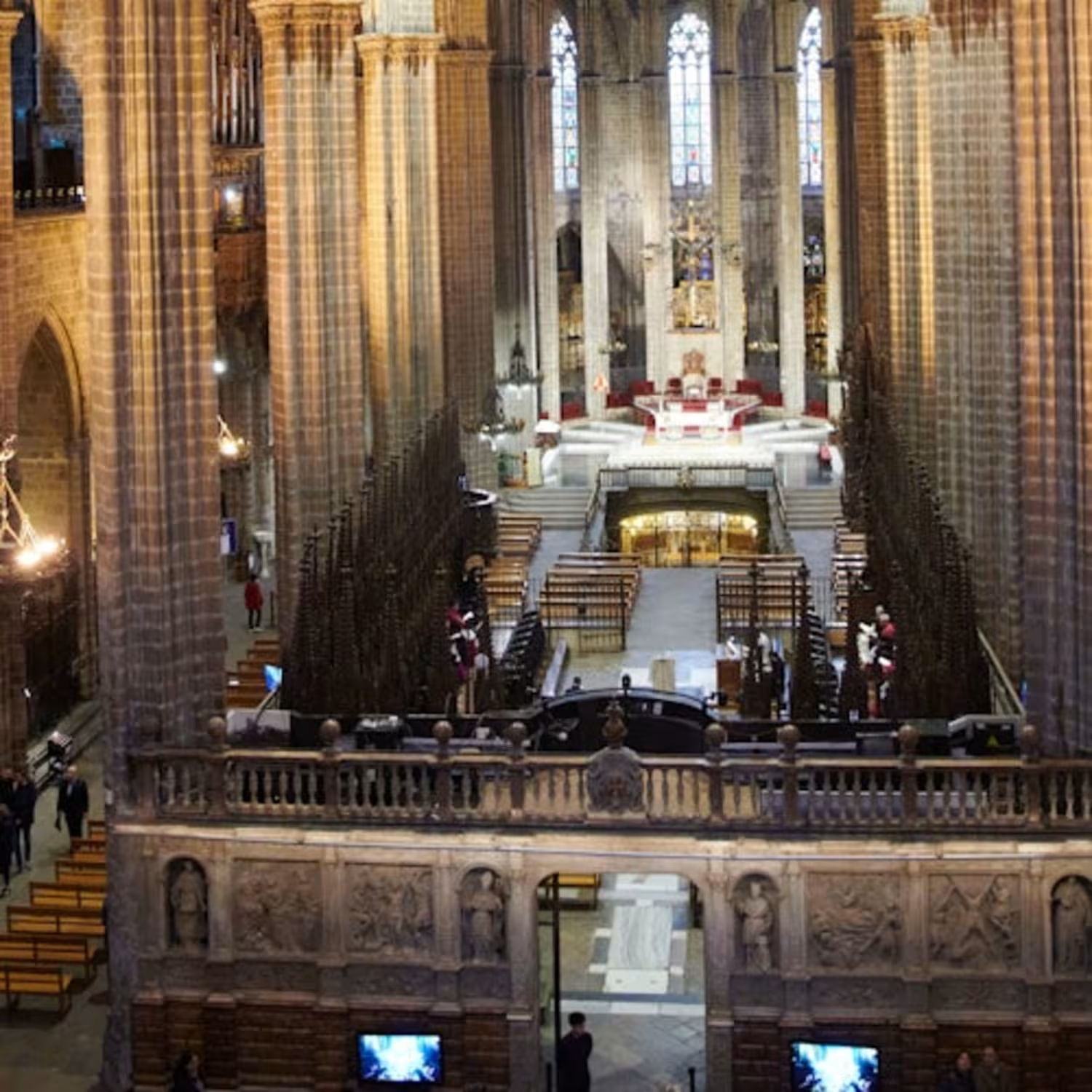
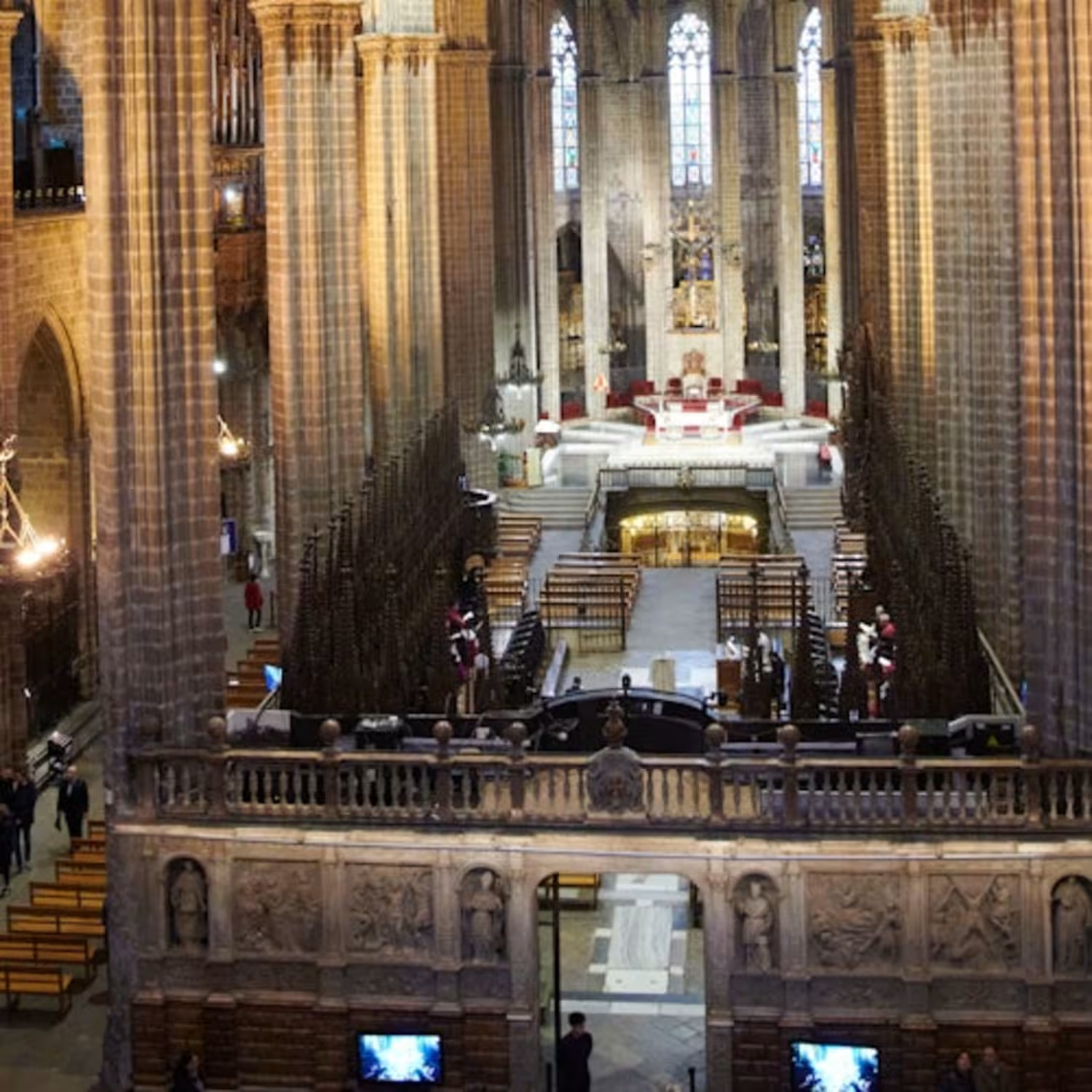
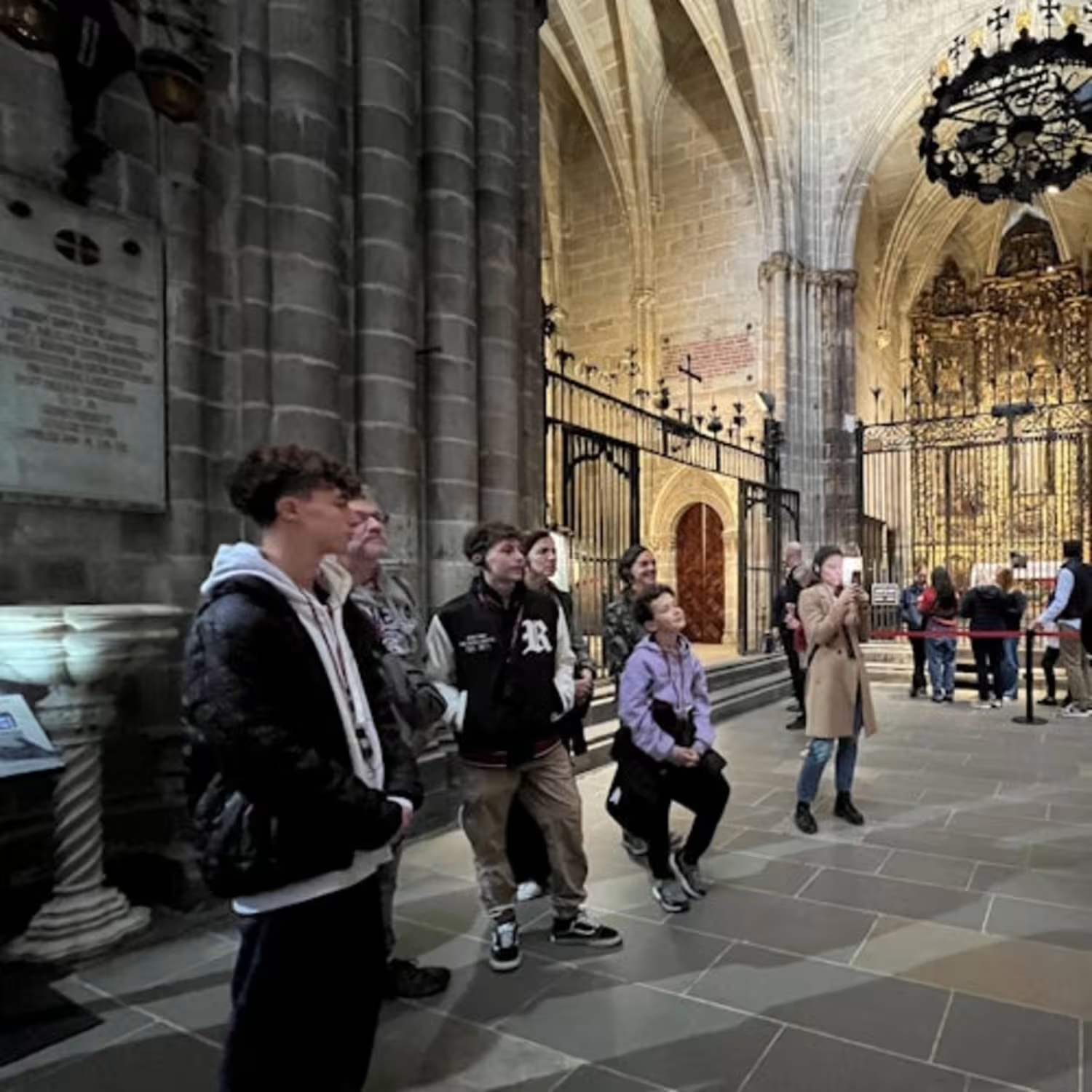
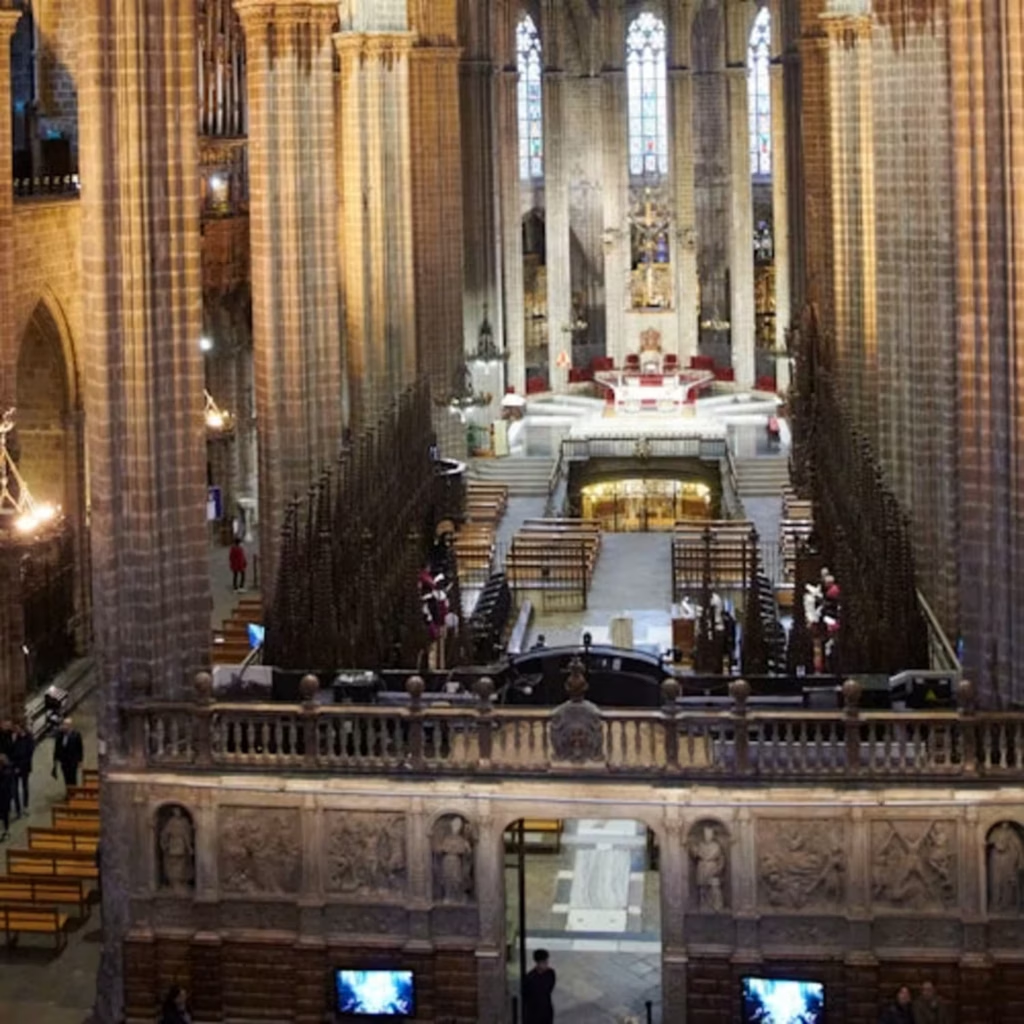
In the centre of the nave stands the choir, begun in 1390. Its carved stalls are one of the most significant works of Catalan Gothic sculpture. Look for the commemorative painted shields above the seats, which date from 1517 and 1518, and for the wooden pulpit from 1403.

Walk round to the back of the choir to see the retrochoir, started in 1519, whose reliefs feature Saint Eulalia, the saint to whom the cathedral and its crypt are dedicated.

The Chapter Hall and the archive

The Chapter Hall is now a museum space, but it was built for a very different purpose: it originally served as a soup kitchen for the poor. Its two great treasures are an 11th-century baptismal font and a Pietà painted in 1490 by Bartolomé Bermejo. A terracotta sculpture of Saint Eulalia is also on display.

The cathedral's Chapter Archive keeps parchments and books on the city's history, including documents connected with Barcelona's Jewish community. A sample from the Old Archive of 1535, with documents in Latin, Hebrew and Catalan, is on view.

The Chapel of the Holy Christ of Lepanto
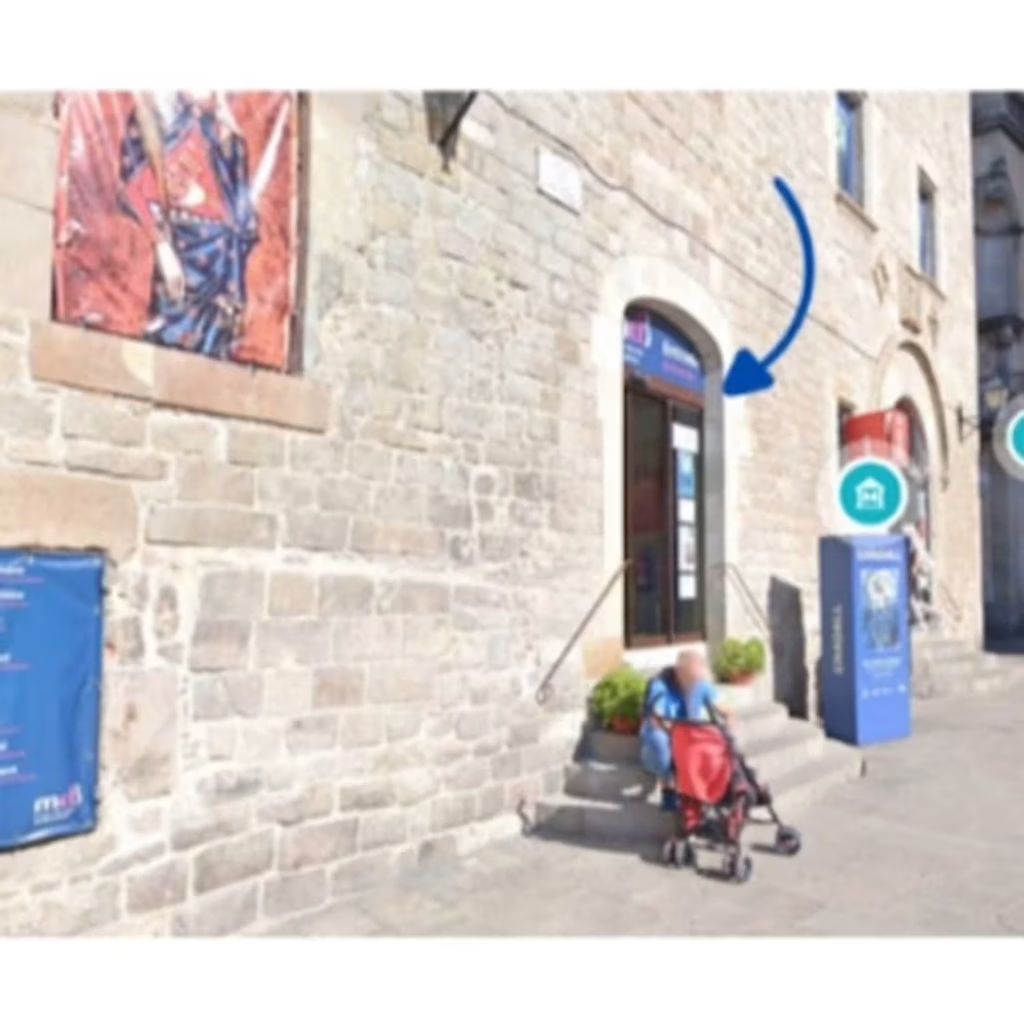
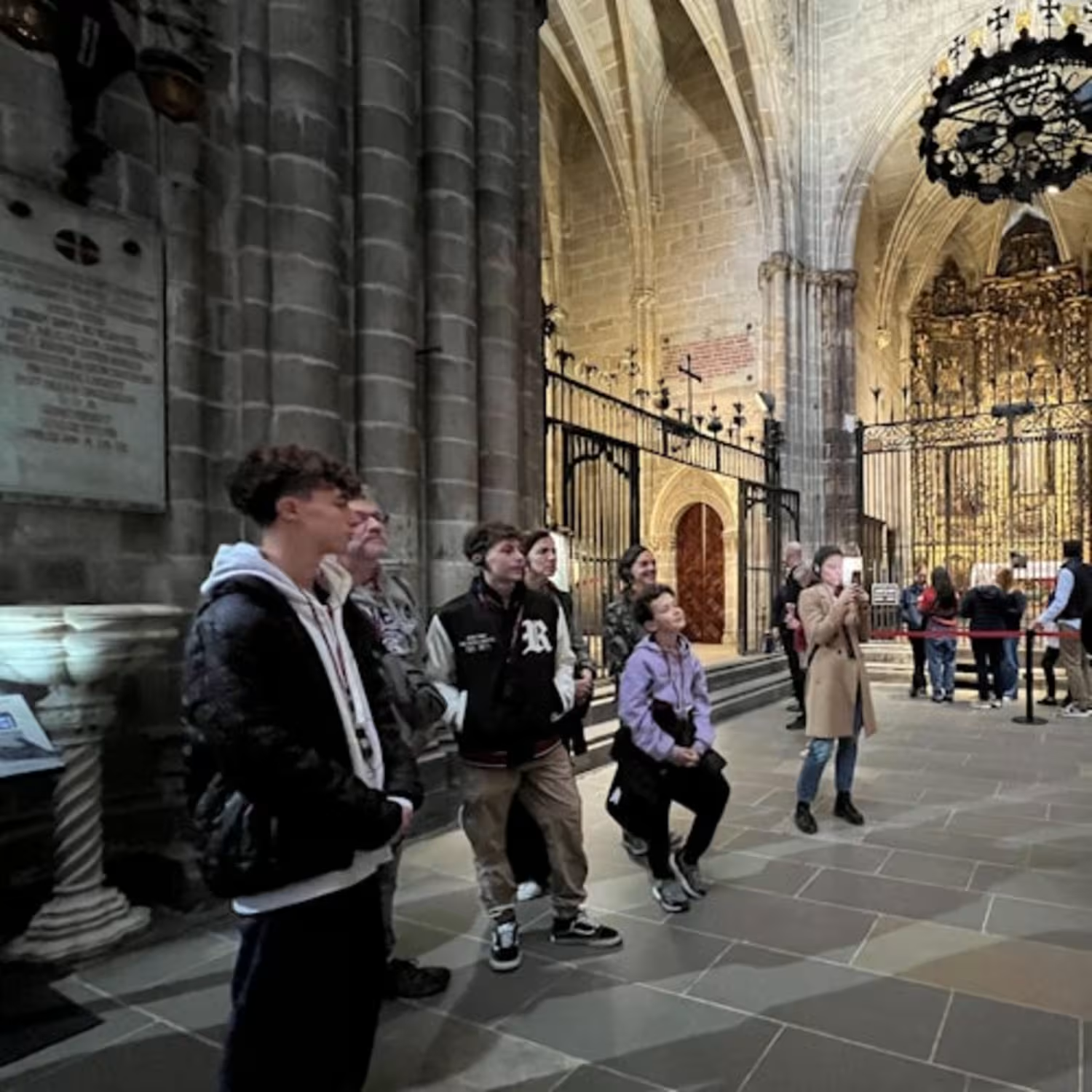
This chapel was built by Arnau Bargués in 1407. After Saint Olegarius was canonised in 1676 it became his mausoleum. It is reserved for worship and prayer, and during celebrations visitors may not enter or take photographs, so visit it quietly and check whether a service is taking place before you step in.

How the tourist visit works

The tourist visit runs from 9:30 am to 6:30 pm on weekdays, with last entry at 5:45 pm. On Saturdays and the eves of religious holidays it runs from 9:30 am to 5:15 pm, and on Sundays and religious holidays from 2:00 pm to 5:00 pm; on both, last entry is 4:30 pm. The cathedral also celebrates daily Masses for worshippers, in the Chapel of the Holy Sacrament and at the High Altar.

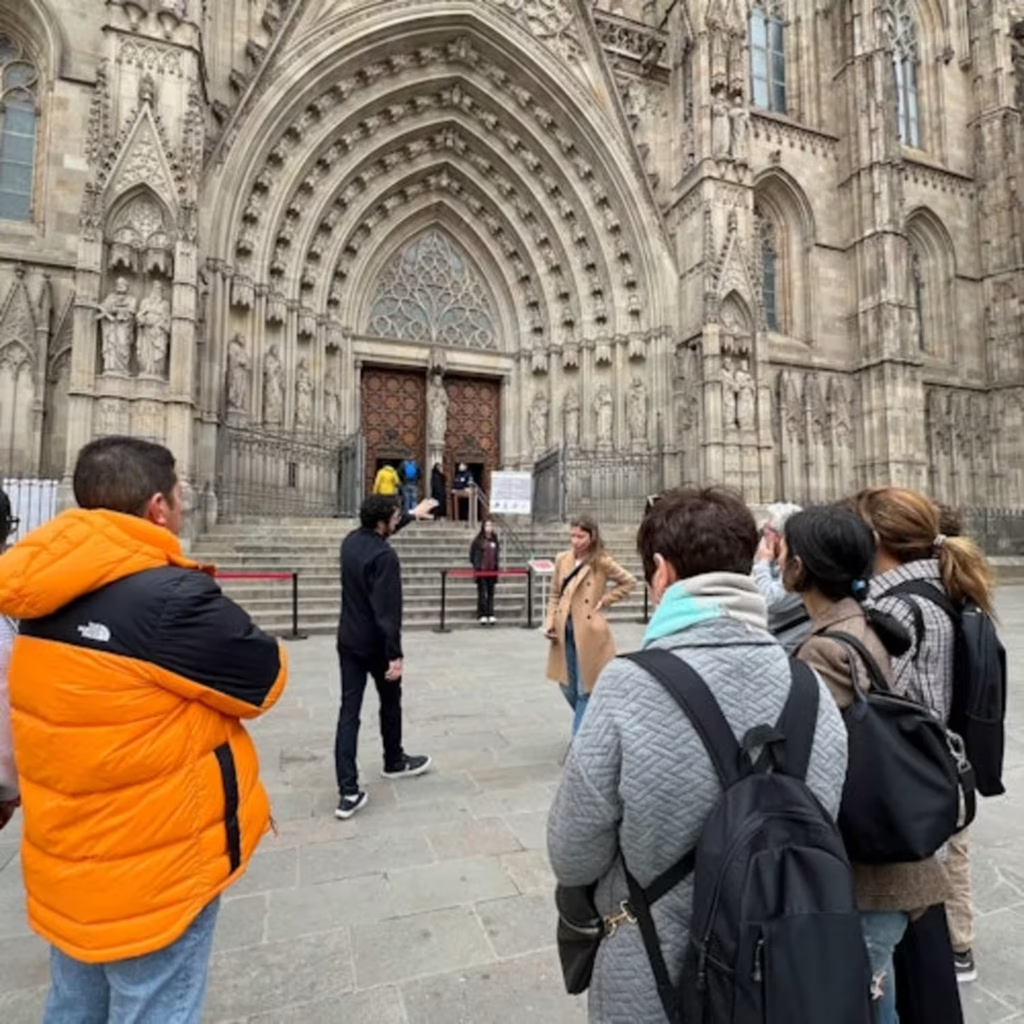
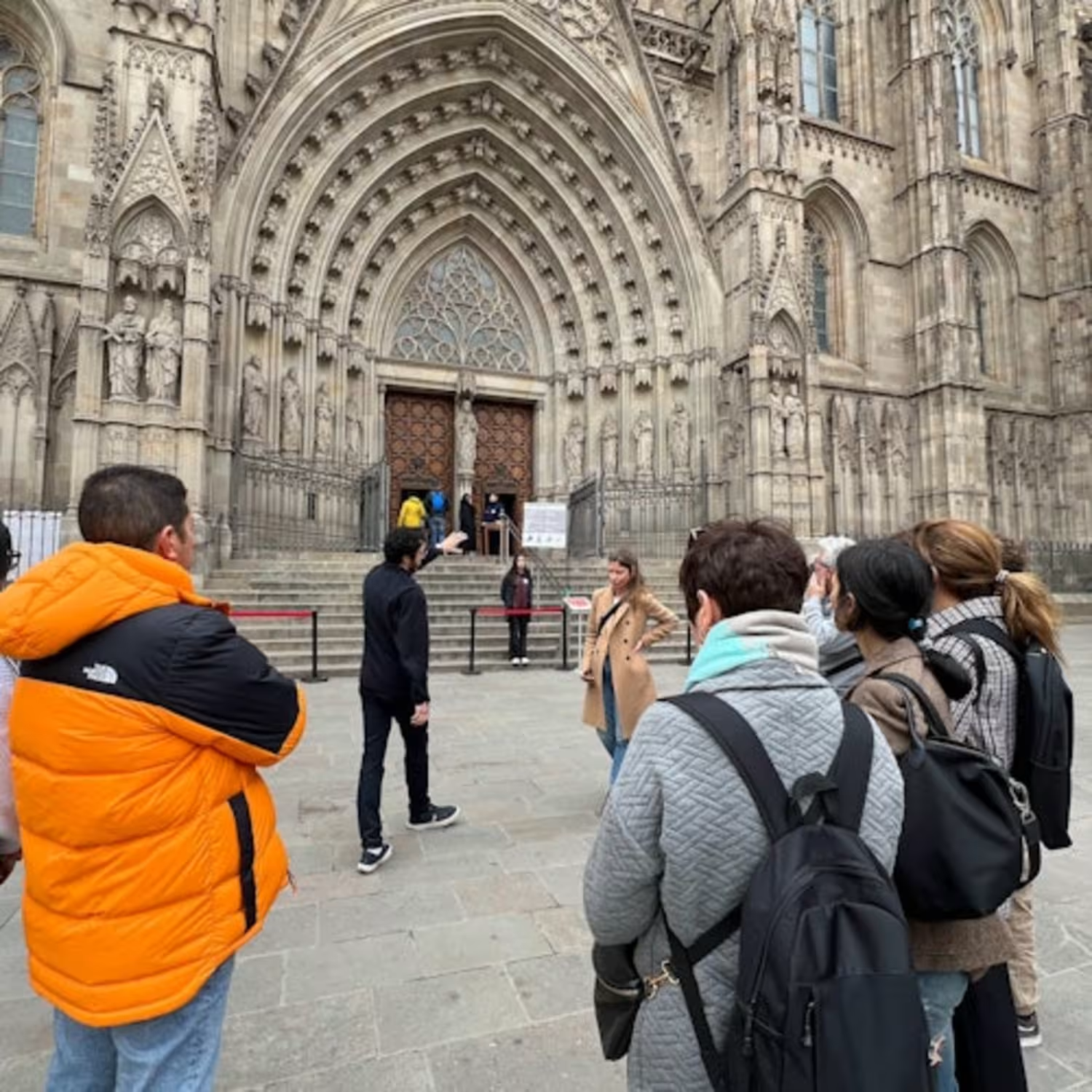
There are three doors: the main gate on Pla de la Seu, the Santa Eulàlia gate on Carrer del Bisbe, which is the access for people with reduced mobility, and the Sant Iu gate. Visitors with a disability of 33% or more enter free under the cathedral's own rules: check the age bands and ticket options shown when you book. Both of our tickets include the rooftop terraces, and the audio guide ticket also includes the Chapter Hall and an audio guide in English, Catalan, French, German, Italian and Spanish.

Tips for the rooftop and cloister

Head for the rooftop lift first, then work down through the choir, the Chapter Hall and the cloister.

On Sundays and religious holidays the tourist visit only starts at 2:00 pm, so plan weekday or Saturday mornings for a longer visit.

Dress respectfully: shoulders covered, and trousers or skirts below mid-thigh.

Bring a phone with earphones if you choose the audio guide ticket; you activate the guide through the link in your voucher.

Visit in December to combine the cathedral with the Santa Llúcia Fair, which runs on Avinguda de la Catedral from early December until the 23rd.

Pair the visit with other Gothic Quarter and Ciutat Vella sights, such as the Picasso Museum and the Palau de la Música Catalana.

Barcelona Cathedral Rooftop and Cloister: FAQs

Can you go on the roof of Barcelona Cathedral?

Yes. A lift takes visitors up to the rooftop terraces, which you reach through the chapel of the Innocent Saints, next to the Sant Iu door.

What can you see from the rooftop?

A panoramic view of Barcelona, plus close-up views of the bell towers, the Gothic pinnacles and the central tower crowned by the Holy Cross.

Is the rooftop included in your tickets?

Yes. Both of our Barcelona Cathedral tickets include access to the rooftop terraces.

Why are there geese in Barcelona Cathedral?

13 white geese live in the cloister pond. Tradition links their number to the age of Saint Eulalia when she was martyred.

How long have geese lived in the cloister?

Their presence has been documented since the 16th century. Today they receive veterinary care and daily cleaning.

What is l'ou com balla?

A Corpus Christi custom in which an egg dances on the water of the cloister fountain, decorated with flowers and cherries. At the cathedral it dates back at least to 1636.

What is in the Chapter Hall?

An 11th-century baptismal font, a 1490 Pietà by Bartolomé Bermejo and a terracotta sculpture of Saint Eulalia. The hall was originally a soup kitchen for the poor.

Who is the cathedral crypt dedicated to?

Saint Eulalia. The cathedral is dedicated to the Holy Cross and Saint Eulalia, and its crypt bears her name.

What are the tourist visit hours?

Weekdays 9:30 am to 6:30 pm, Saturdays 9:30 am to 5:15 pm and Sundays and religious holidays 2:00 to 5:00 pm.

Is there a dress code?

Yes. Shoulders must be covered, and trousers or skirts should reach below mid-thigh.

Is the cathedral accessible?

Yes. The Santa Eulàlia gate on Carrer del Bisbe is the access for people with reduced mobility, and our tickets are wheelchair accessible.

About this guide

Sources: Catedral de Barcelona, Visitable spaces; Catedral de Barcelona, Traditions; Catedral de Barcelona, Visiting hours; Catedral de Barcelona, Services for the faithful; Catedral de Barcelona, Masses; Barcelona City Council, La Catedral.